
Original briefings. Zero spin.
Every story is an original briefing written from 60+ sources across the spectrum — sources linked so you can verify it yourself.
 tech
Notable (6/10)
June 19, 2026 at 01:31 AM
tech
Notable (6/10)
June 19, 2026 at 01:31 AM
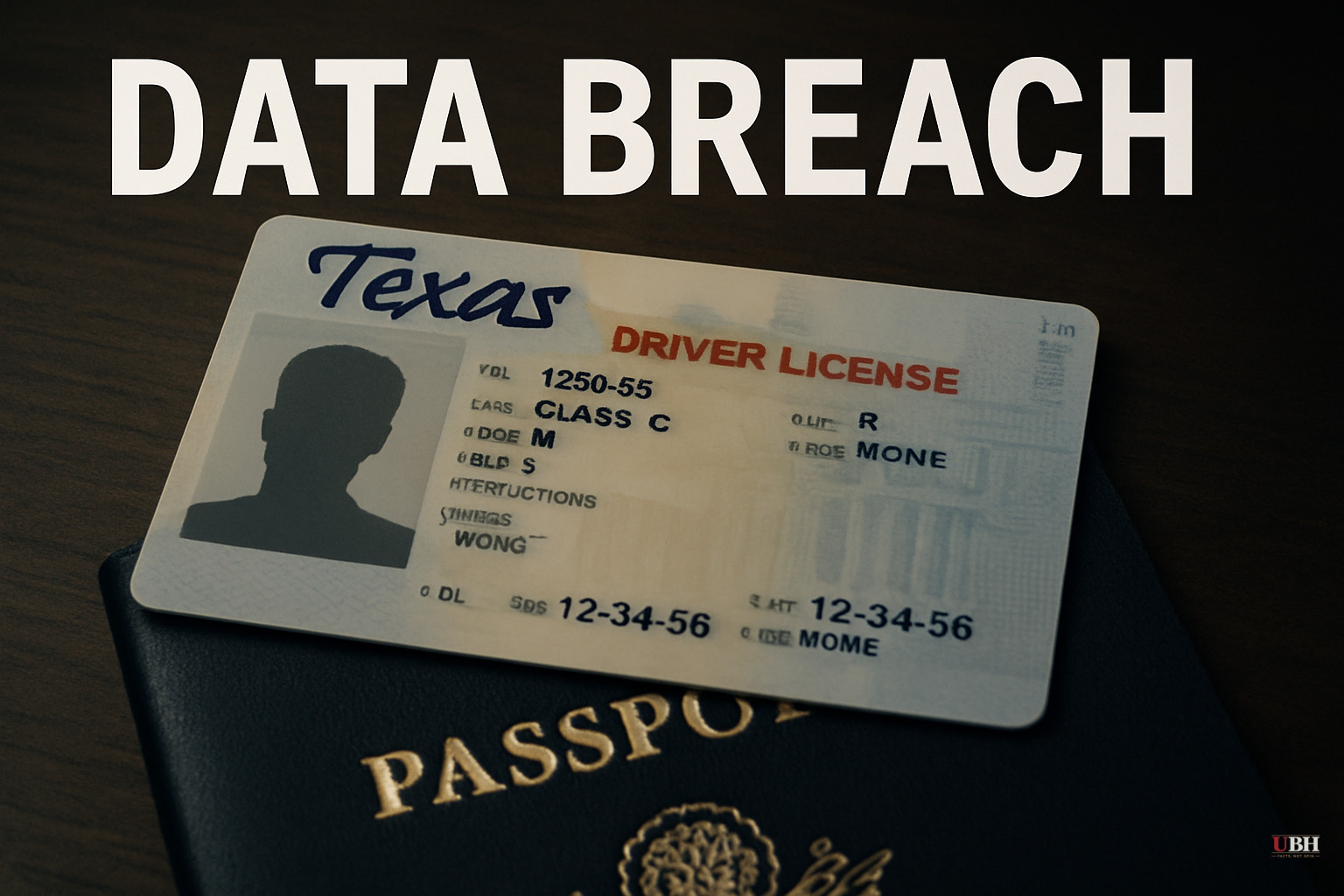
Texas Parks and Wildlife Data Breach Exposed Driver's Licenses and Passports of 3 Million People
What Happened
Texas Cyber Command detected a cybersecurity incident involving an unnamed third-party vendor that handles the sale of hunting and fishing licenses for the Texas Parks and Wildlife Department (TPWD). According to a data breach notice posted on the TPWD website, unauthorized actors obtained driver's license information, passport numbers (where provided), email addresses, phone numbers, and residential addresses for more than 3 million license holders.
Claim Depot, which aggregates state attorney general filings, put the affected total at 3,087,721 individuals. The Texas Attorney General's office confirmed the breach and categorized it as one of the largest state-level data incidents of 2026, according to TechCrunch.
What Was NOT Taken
TPWD was specific on this point: Social Security numbers, dates of birth, and financial information including credit card details were NOT obtained. The department also stated there is no evidence that customers under 18 were involved or that any specific demographic group was targeted.
Driver's license numbers and passport numbers are serious exposure but fall short of the combination of ID plus SSN plus date of birth that makes synthetic identity fraud easiest to execute.
What's Still Unknown
Nearly everything about the mechanics of the breach remains undisclosed. TPWD has not named the vendor. It has not said when the intrusion began, how long access persisted before detection, or what method the attackers used. The department did not respond to TechCrunch's request for comment.
Claim Depot noted that publicly available filings contain no timeline for when unauthorized access began or was contained, and no description of the attack method. Publicly available filings lack this detail for a breach affecting over three million people.
As of June 18, 2026, there is no public information indicating the stolen data has appeared for sale, and no report of ransom demands, according to TechCrunch and Zamin.uz.
The Vendor Problem
This breach follows a pattern that security professionals have flagged for years: government agencies outsource functions to third-party vendors, and the vendor's security posture becomes the weakest link. TPWD did not run this system. A private company did. That company's name is being withheld.
There is a legitimate reason agencies sometimes delay naming vendors during active investigations. It can complicate containment and legal proceedings. But at some point, the public has a right to know which company was responsible for storing their documents, especially if that same vendor serves other states.
TPWD says it has "identified and implemented additional security options" and is working with the vendor on increased safeguards. License sales are set to continue on schedule for August and the next license year.
Discrepancy in Public Filings
Claim Depot's listing includes Social Security numbers and dates of birth in its "Types of Information Affected" summary. This directly contradicts TPWD's official breach notice, which explicitly states those data types were NOT obtained. Claim Depot's own caveat acknowledges that "affected information types" are "not yet disclosed," suggesting its category list may be templated rather than specific to this incident. The TPWD's own statement on its website is the authoritative source on what was and was not taken.
What Affected People Can Do
TPWD is offering one year of free credit monitoring through Kroll. Affected customers can call (844) 959-7123, available Monday through Friday, 8 a.m. to 5:30 p.m. CT. The enrollment deadline is September 14, 2026.
The department also recommends freezing credit with Equifax, Experian, and TransUnion, which is free, and placing a fraud alert with any of the three bureaus. Given that residential addresses and phone numbers were included in the breach, phishing and impersonation attempts are a real risk going forward.
The Timeline Gap
TPWD says Texas Cyber Command "recently detected" the incident but refuses to say when. The gap between when intrusion began, when it was discovered, and when the public was notified could be days or months. That timeline matters for anyone trying to assess their exposure. Until TPWD or the Texas Attorney General's office publishes a complete incident timeline, the 3 million affected license holders have no way to know how long their data was accessible.
Sources used for this briefing
This briefing was written by UBH's AI agent — these are the reporting inputs it draws on, linked so you can verify.