
Unbiased headlines. Facts, not spin.
Unbiased Headlines is an independently owned news organization. We bring you the facts, not opinions, written fresh from 110+ named sources. Sources linked so you can verify it yourself.
 tech
Major Story (7/10)
Test Accounts Posing as 13-Year-Olds Downloaded 135 Nudify Apps From Apple and Google Stores, Tech Transparency Project Says
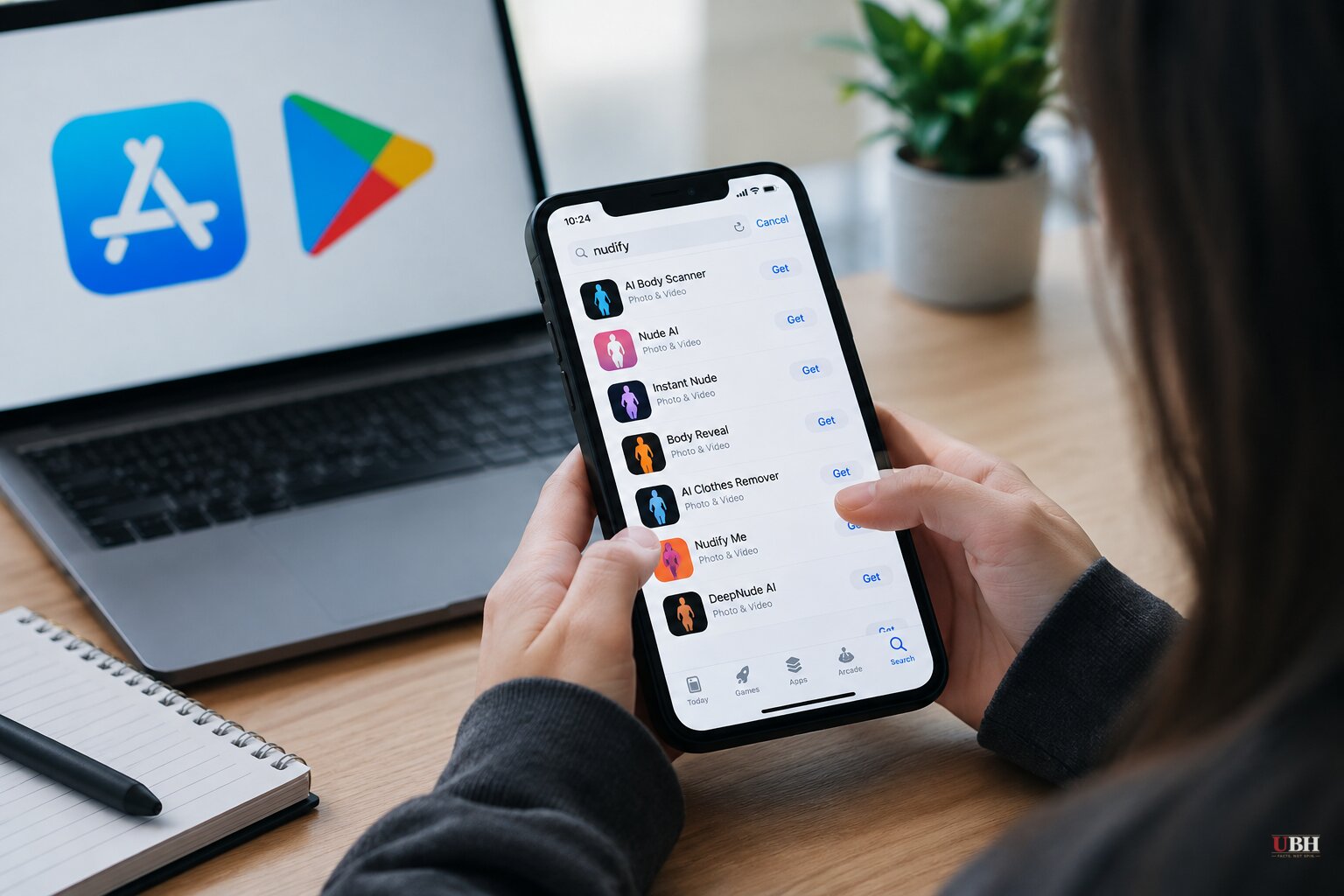
Since Apple updated its App Review Guidelines on Friday, Oct. 16 to cover AI-generated nonconsensual intimate imagery, a report released today, Oct. 19, by the digital advocacy group Tech Transparency Project (TTP) has put the new rules to a harder test. The group says accounts set up as a 13-year-old could still download 135 "nudify" apps from the Apple App Store and Google Play.
The report was shared exclusively with The Guardian before release.
What the test accounts could download
TTP created four accounts, two on Apple and two on Google, all registered to a 13-year-old boy. One account in each pair used default settings. The other had parental controls set to allow only apps rated suitable for 13-year-olds, with parental approval required.
Researchers searched for image-editing and face-swapping tools using terms like "AI video generator" and "adult AI." TTP reports the following per-account results:
- Default Apple account: access to 61 nudify apps.
- Parent-supervised Apple account: 24.
- Default Google account: 47.
- Parent-supervised Google account: 51.
The per-account counts add up to more than 135, which means many of the same apps showed up across accounts. The 135 figure is TTP's total across the tests.
TTP says the Apple accounts were served ads for 13 nudify apps and the Google accounts for five.
Age ratings and the missing parental check
Both stores prohibit these apps. TTP's finding is that age protections depend heavily on developers rating their own apps correctly. The group calls it essentially a self-reporting system.
The parental approval step also did not kick in. TTP says neither company required or suggested parental signoff for the nudification apps, despite the controls the researchers had configured.
One face-swapping app, rated for ages four and up, offered paid pornographic templates. Researchers bought a subscription through the 13-year-old's account. No alert reached the linked parental account, TTP says.
Another app, rated for ages nine and up, opened to a topless image and advertised a tool promising to digitally undress anyone.
An Apple account registered as 13 downloaded an adult-rated app after tapping a prompt confirming the user was at least 17. Google's account without parental controls blocked three age-restricted downloads. It still allowed other apps whose developers had rated them as age-appropriate.
Scale of the apps
TTP's report cites data from the mobile analytics firm AppMagic to say the apps have been downloaded 5.5 billion times and generated $3.9 billion in revenue. Those are the group's figures, built on its own definition of a nudify app.
That definition is broad. TTP counted an app if it could render a woman fully or partially naked, or dressed in a bikini or lingerie.
The tests also have limits. Researchers used AI-generated images of women, not photographs of real women. The report measures what the test accounts could access and what the apps could do. It does not count how many teenagers actually use them.
What Apple and Google say
TTP says Apple strengthened its guidelines after the group sought comment. The Oct. 16 update requires developers to proactively prevent and remove nonconsensual intimate imagery, including AI-generated images. Apps that host user-generated content must filter objectionable material, give users a way to report it and let users block abusive accounts.
The update also adds a rule against hidden or undocumented features. That targets the bait-and-switch tactic in which an app misrepresents itself during review and reveals harmful capabilities after approval.
Apple's own announcement framed the change as routine: "as new risks and novel user experiences emerge, we evolve our App Review Guidelines to maintain the trust of users and developers alike."
Apple also told TTP it reviews every app before publication and removes apps and developers that misrepresent their features. It described adding prohibited capabilities after review as a bait-and-switch tactic and said it removes developers who do it.
Google said it regularly takes "proactive steps to detect and remove apps with harmful content." When violations are detected or reported, it said, the company investigates and takes swift action against the apps.
During TTP's investigation, Apple removed 25 apps and Google removed six, according to the report.
The human cost
In December 2025, Morgan Dorfman learned that a student at her daughter's Pennsylvania high school was using an app called Movely to make sexual videos from pictures of her daughter and five other girls.
Dorfman said the free version of the app pushed templates with names like "clothes explosion," "brassiere unfasten" and "underwear drop." The paid version, she said, offered more explicit templates, matching what a classmate described seeing.
"I knew what a deepfake was, but I thought it was like Taylor Swift and people using celebrities' [images]," Dorfman said. "I didn't know it was possible to take any picture or any screenshot of anybody that you have and do this."
The Guardian reports that students at high schools across the US are describing similar cases. Most US states have laws criminalizing possession of AI-generated child sexual abuse material.
Rules abroad
Overseas governments have moved faster on statute. In March 2026 the European Parliament approved a ban on nudify apps. It was not total: removing clothing from AI-generated characters remains allowed, as does depicting a person who consents.
The United Kingdom added an amendment to its Crime and Policing Bill requiring tech companies to remove nonconsensual intimate images within 48 hours. Technology Secretary Liz Kendall said it puts "the onus where it belongs, on the tech firms with the power and resources to act."
What comes next
Apple's new rules put more of the burden on developers to police their own apps, and TTP's central complaint is that the existing age-rating system already relies on developers describing their own products honestly. Whether the Oct. 16 guidelines change what a supervised 13-year-old's account can download is the open question. TTP's results show 24 such apps on Apple and 51 on Google reachable under parental controls before the update took effect.
Sources used for this briefing
7 links from 6 independent newsrooms (syndicated copies of the same report count once)
These are the sources it draws on, linked so you can verify.


