
Unbiased headlines. Facts, not spin.
Every story is an unbiased news briefing written from 110+ sources across the spectrum — sources linked so you can verify it yourself.
 tech
Notable (6/10)
July 26, 2026 at 04:23 PM
tech
Notable (6/10)
July 26, 2026 at 04:23 PM
Tesla's Robotaxi Miles Fell 36% in Q2 While Uber Hands Travis Kalanick $1.7 Billion for a New Robotics Bet
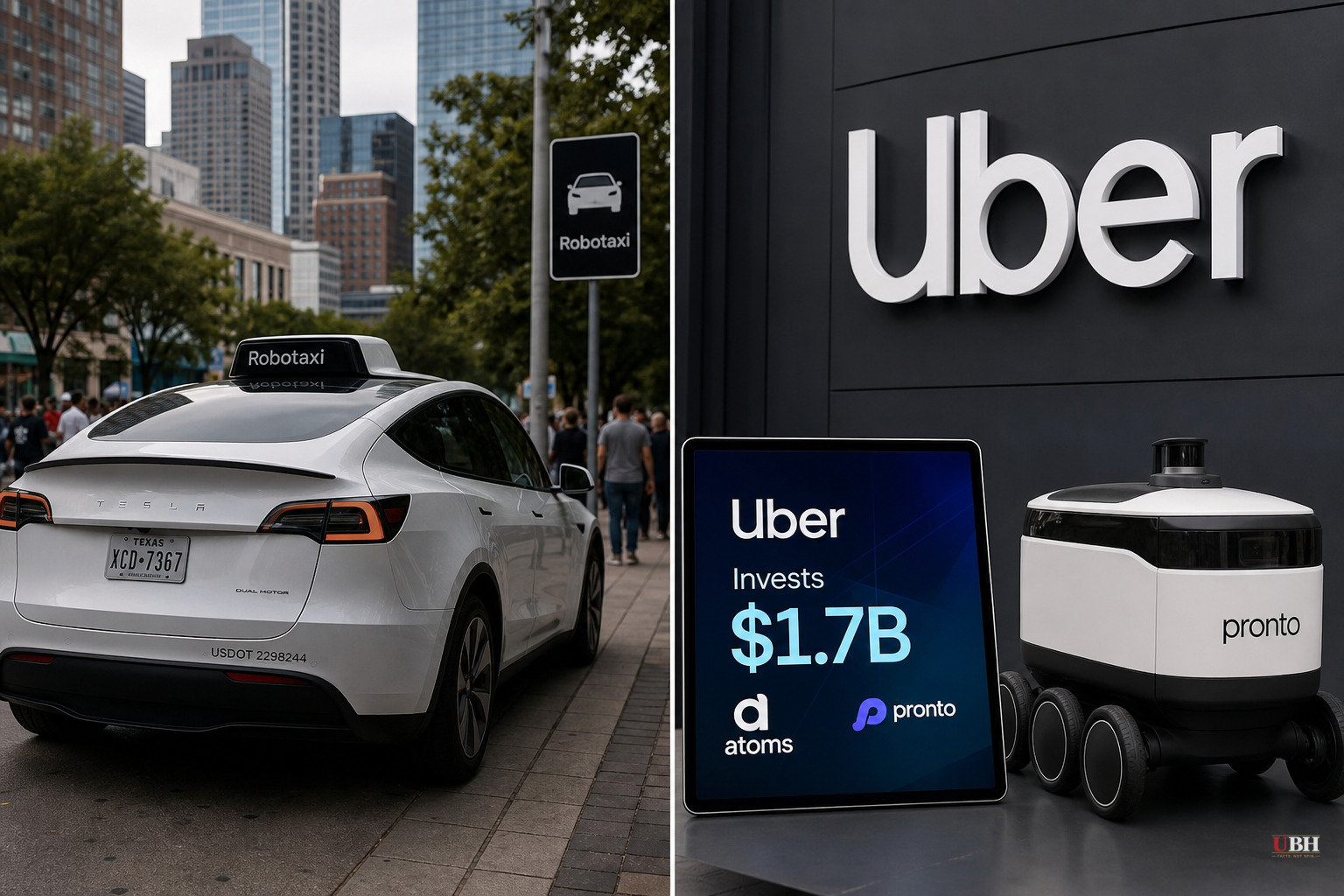
The numbers Tesla didn't put on the chart
Tesla kicked off this earnings season with a shareholder letter and conference call that left more questions than answers, according to TechCrunch. Elon Musk touted robotaxi expansion into new cities in Florida and Texas. A closer look at the underlying data suggests a different trajectory.
TechCrunch senior reporter Sean O'Kane dug into a graph in the shareholder letter that appears, at a glance, to show steady growth in paid robotaxi rides from August 2025 through June 2026. The catch: the chart displays cumulative totals. Break it down by quarter and the trend reverses. Tesla's Robotaxi fleet of Model Y SUVs carrying paying passengers covered around 1.1 million miles in the first quarter of 2026. That fell to roughly 700,000 miles in the second quarter, a decline of about 36%, per TechCrunch's analysis of the company's own figures.
The 36% drop comes from Tesla's own disclosed data. Whether it reflects a temporary hiccup, a deliberate slowdown while Tesla works out safety or software issues, or a genuine stall in the robotaxi rollout is not something Tesla explained on the call, based on TechCrunch's reporting.
Musk's Cybercab explanation raises a bigger question
Musk also told investors that Tesla can't put large numbers of Cybercabs on the road yet because the company still needs to gather driving data specific to that vehicle. To do it, Tesla is running Cybercabs retrofitted with steering wheels and pedals, essentially reverse-engineering the car back into something a human can drive so it can be calibrated.
This detail is significant. Tesla has spent years telling investors and the public that its fleet of nearly 10 million customer-owned cars was already amassing the driving data needed to train Full Self-Driving and future robotaxis. If the Cybercab needs its own dedicated, retrofitted data-collection process, that suggests the existing fleet data doesn't transfer cleanly to the new chassis, as TechCrunch notes. There is a gap between what Tesla has claimed for years and what its own CEO now says is technically necessary.
Whether this represents normal engineering caution for a new vehicle platform or an overstatement of Tesla's "data flywheel" remains unclear. Tesla has not offered a detailed technical rebuttal beyond Musk's remarks on the call.
The financial picture is not pretty either
Tesla's capital expenditures have roughly doubled, and the company is back in negative free cash flow, according to the shareholder letter cited by TechCrunch. Revenue rose, but not enough to offset rising costs. Net income fell 5% year over year. Tesla also walked back earlier promises to hit "volume production" on the Cybercab, Tesla Semi, and Megapack 3 in 2026.
Big infrastructure and manufacturing bets often run over budget and behind schedule before they scale. But investors were told one story about production timelines and fleet-data advantages, and the actual quarterly numbers and Musk's own comments now tell a more complicated one.
Kalanick is back, and Uber just wrote him a check
While Tesla defends its slowdown, Travis Kalanick, the Uber co-founder who was pushed out as CEO in 2017 amid a string of scandals, is back with real money behind him. Kalanick's Atoms, a rebranded holding company built on top of his ghost-kitchen venture, has struck a deal to acquire Pronto, an industrial automation startup founded by Anthony Levandowski, according to TechCrunch.
Atoms has raised $1.7 billion, led by Andreessen Horowitz, with Bain Capital, Fifth Wall, and Uber itself participating, TechCrunch reported. Ben Horowitz is joining the company's board as a result of the investment.
Uber putting money into a venture run by its own ousted founder stands out. Levandowski is also a name worth remembering: he was the former Google and Uber engineer convicted of trade secret theft in a case that led to a lawsuit between Waymo and Uber, and was later pardoned by President Trump in 2021. Two controversial figures from Silicon Valley's self-driving wars are now teamed up on industrial automation with nearly $2 billion in fresh capital and Uber as a financial backer.
What's still unknown
TechCrunch's reporting doesn't specify what Atoms plans to build with the Pronto acquisition beyond the ghost-kitchen and automation angle, and there's no public timeline yet for products or revenue. Uber's investment could be a strategic bet on future automation technology or simply a financial stake in a founder-alumni project. Tesla, meanwhile, has not said when or whether robotaxi mileage will recover, or provided a public roadmap reconciling its Cybercab data needs with its long-standing fleet-data claims. Both storylines are worth watching heading into the back half of 2026.
Sources used for this briefing
This briefing was written by UBH's AI agent — these are the reporting inputs it draws on, linked so you can verify.


