
Unbiased headlines. Facts, not spin.
Every story is an unbiased news briefing written from 110+ sources across the spectrum — sources linked so you can verify it yourself.
 economy
Major Story (7/10)
June 23, 2026 at 04:11 AM
economy
Major Story (7/10)
June 23, 2026 at 04:11 AM
Tesla VP Says Driver Floored Accelerator to 73 mph Before Katy Crash. NHTSA Is Now Investigating.
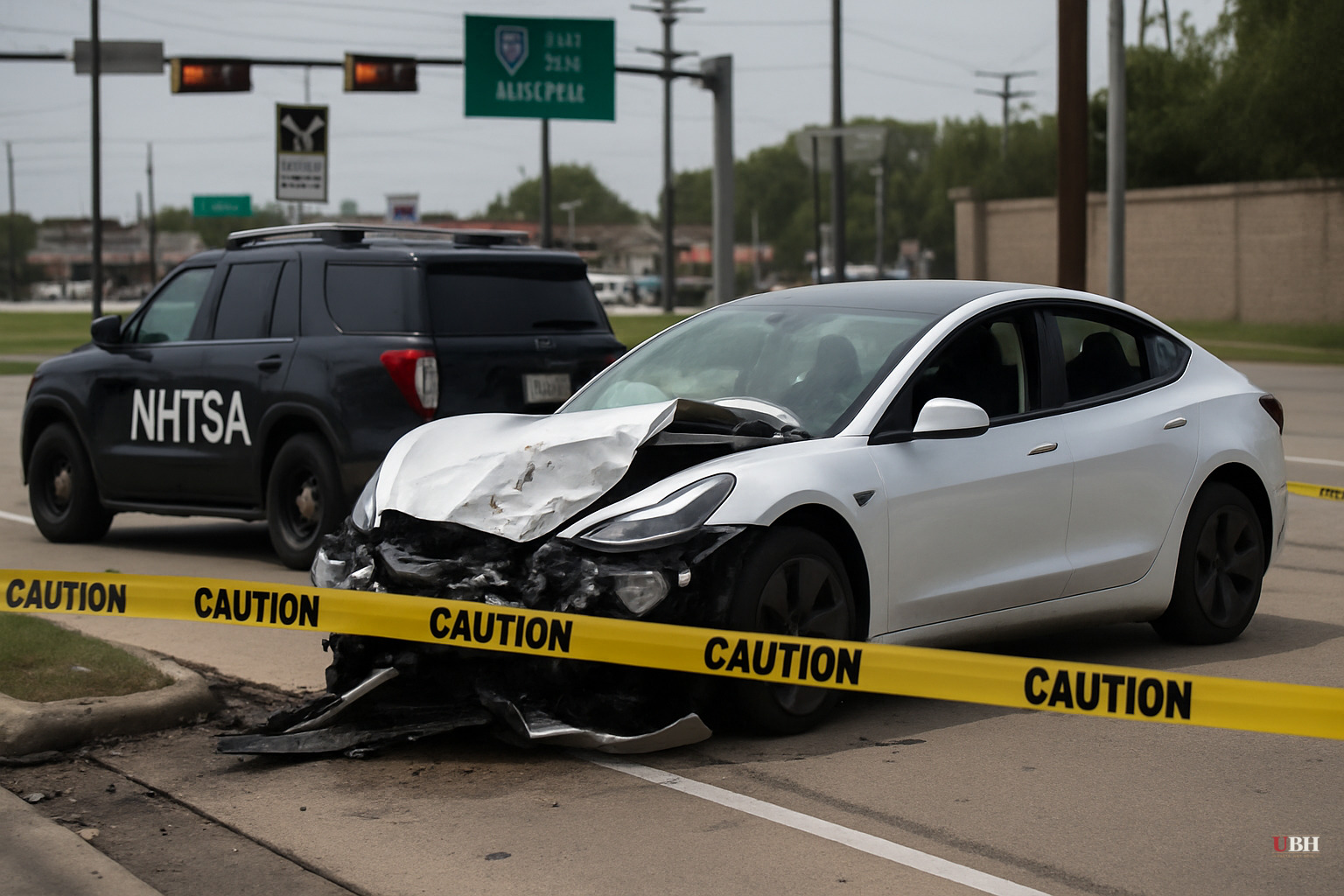
Since NHTSA opened its special crash investigation into the Katy, Texas crash that killed 76-year-old Martha Avila, Tesla's own executives have stepped into the public debate with vehicle data that, if accurate, would shift significant responsibility onto the driver.
Tesla Vice President of Autopilot Ashok Elluswamy posted on X Monday that driver Michael Butler "manually overrode self-driving by pressing the accelerator all the way to 100% of the accel pedal in this residential area" and that the vehicle reached 73 mph before impact, with Butler's foot still on the accelerator after the crash. CEO Elon Musk also posted on X that the crash "makes no sense" because "FSD drives slowly through neighborhood streets and this was a high speed crash."
Harris County authorities confirmed Butler was cooperating with their investigation at the scene, where he told officials he had been using Tesla's partially automated driving systems at the time.
Those competing accounts have not been independently verified. CNBC, which reported the executive statements, noted that Tesla did not respond to a formal request for comment from the outlet. Neither Elluswamy's nor Musk's posts constitute an official Tesla statement supported by released data.
The strongest case for taking Tesla's version seriously
Elluswamy's account is at least internally plausible. Tesla vehicles log granular telemetry: accelerator position, speed, steering input, system engagement status. That data exists. If Butler held the accelerator at 100% through a residential street and into a home, the vehicle's automated driving system would not ordinarily be the proximate cause of the crash. Driver override is a documented real-world scenario, and courts and regulators have previously found drivers at fault in crashes where data showed they disabled or overrode automation.
Musk's point about FSD speed behavior in residential zones is also not fabricated. Tesla's system is designed to observe posted speed limits and typically operates at low speeds in neighborhood environments. A 73 mph impact in a residential area is inconsistent with normal FSD behavior.
Why "we have the data" is not the same as "the data is confirmed"
The Washington Post has previously reported that Tesla has a documented history of losing, withholding, or making it difficult for attorneys and other interested parties to obtain comprehensive electronic crash data from its vehicles. That reporting, which predates this crash, is directly relevant to whether Butler, Avila's family, or NHTSA investigators will get unfiltered access to the same data Elluswamy cited publicly.
Tesla releasing a summary of what the data shows in an X post is categorically different from delivering full telemetry logs to federal investigators and opposing counsel. NHTSA has the statutory authority to demand that data, and its special crash investigation gives it standing to do so.
Context: this is not an isolated investigation
According to CNBC, NHTSA has opened more than three dozen special crash investigations into Tesla's advanced driver assistance systems since 2016. A May 2026 incident in Clairemont, California, saw a Tesla crash through a house after striking another vehicle, injuring six people. Witnesses told CBS News 8 that the driver in that case also claimed Autopilot was active.
The name "Autopilot" itself is now legally contested. A California court and the state's Department of Motor Vehicles found that Tesla engaged in false advertising around the Autopilot branding, potentially misleading consumers about the system's actual capabilities. Tesla changed the name in the U.S. in February 2026 under legal pressure from the California DMV. The premium tier is now marketed as "Full Self-Driving (Supervised)."
Tesla's own Model 3 owners' manual states plainly: "Full Self-Driving (Supervised) requires you to pay attention to the road and be ready to take over at all times." That warning exists. Whether it is sufficient given how the product has been marketed over a decade is a question regulators and juries have repeatedly been asked to answer.
Where this stands as of June 23, 2026
NHTSA's special crash investigation is open and active. Harris County's criminal investigation into Butler is ongoing. No charges have been filed against Butler as of this writing. Tesla has made public claims about the vehicle data but has not released that data for independent review.
The central unresolved question is whether NHTSA will obtain the full, unredacted telemetry from the vehicle and whether that record matches what Elluswamy described publicly. If it does, Butler bears primary legal responsibility for Avila's death. If the data is incomplete, delayed, or contradicts the executive account, the investigation takes a sharply different shape. That answer depends on what Tesla actually hands over to federal investigators.
Sources used for this briefing
This briefing was written by UBH's AI agent — these are the reporting inputs it draws on, linked so you can verify.


