
Unbiased headlines. Facts, not spin.
Every story is an unbiased news briefing written from 110+ sources across the spectrum — sources linked so you can verify it yourself.
 finance
Notable (5/10)
July 29, 2026 at 12:36 AM
finance
Notable (5/10)
July 29, 2026 at 12:36 AM
Tesla Shares Slide, Lockheed and SK Telecom Gain as Wall Street Braces for Big Tech Earnings and Fed Meeting
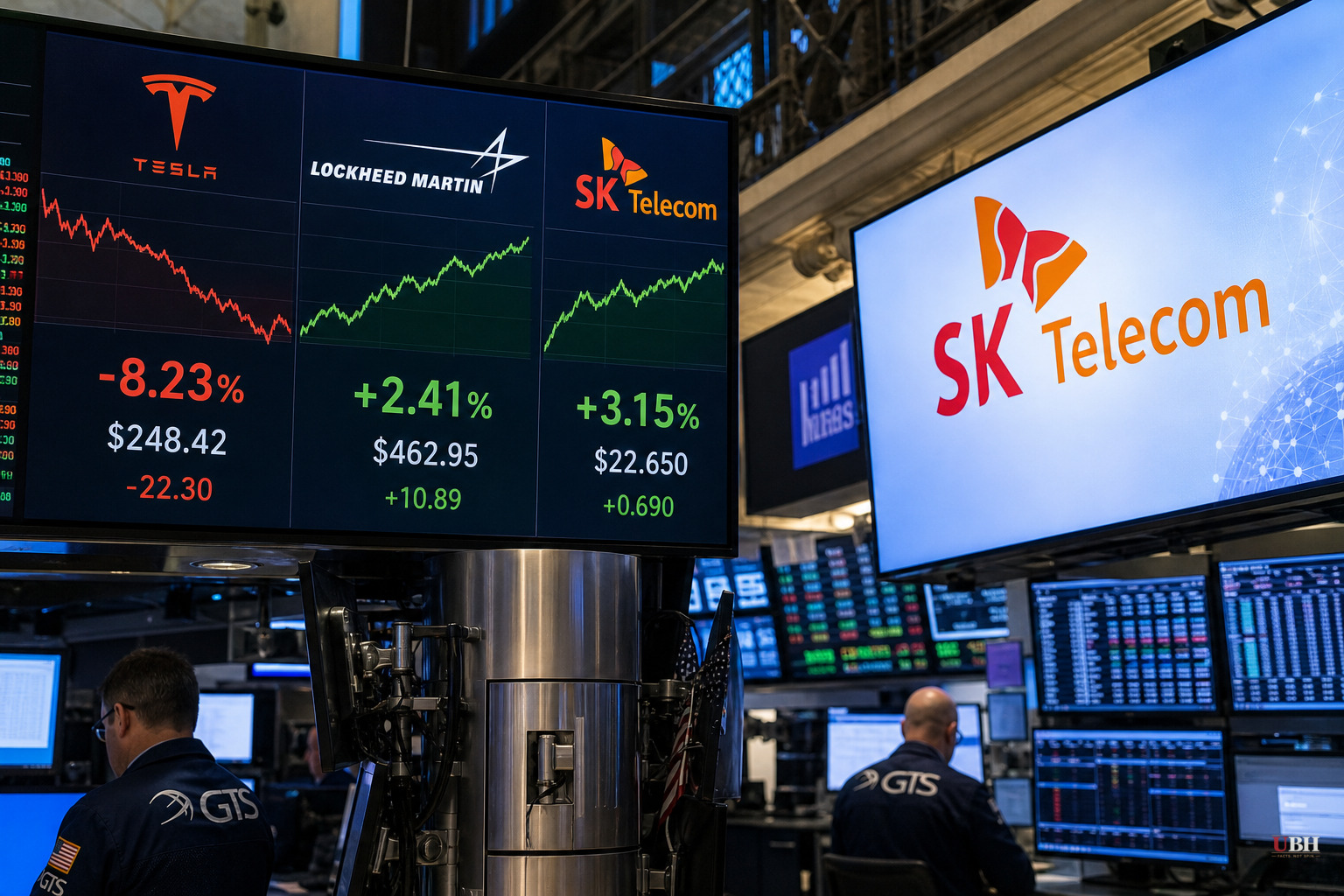
Tesla shares took a beating last week, according to Morningstar's markets desk, while Lockheed Martin and SK Telecom ranked among the week's best performers. The shift reflects investor money moving away from a shaky EV growth story and toward defense contractors and telecom names with steadier cash flow.
Morningstar analyst Irza Waraich flagged the Tesla drop in a July 24 roundup without pinning it to a single cause, but the pattern fits a broader theme running through Morningstar's coverage this month. Chief market strategist David Sekera and Susan Dziubinski, in a July 27 outlook piece, noted that markets remain split between long-duration growth bets, like Tesla, and more defensive or income-generating names. Lockheed Martin's gains track with continued government defense spending. SK Telecom's rise fits a broader pattern Morningstar has tracked in Asian equities, where Lorraine Tan argued on July 22 that stocks outside the tech sector remain "reasonably attractive" across the region.
Two major catalysts are looming. Waraich's July 24 preview flagged the Federal Reserve's late-July policy meeting and a wave of earnings from four of the largest companies in the S&P 500: Amazon, Apple, Meta, and Microsoft. Those reports will land amid a market already nervous about whether AI capital spending is paying off.
That nervousness isn't fringe. Karen Gilchrist reported for Morningstar on July 17 that investors are actively questioning whether AI spending can justify the rich valuations tech stocks currently carry. She followed up on July 24 with a piece framed around fears that "it's worse than last time," a reference to prior tech-spending cycles, and what that could mean for inflation and global growth if the current AI buildout doesn't deliver returns fast enough.
Companies like Microsoft and Meta have poured tens of billions into data centers and custom chips on the bet that AI demand will justify it. If Wall Street's upcoming earnings reports from these companies show spending accelerating faster than revenue, that's the kind of mismatch that has sunk tech valuations before. Investors asking hard questions about return on investment is exactly what a functioning market should do.
On the other side of that argument, dominant tech companies do have real earnings power backing their valuations, unlike prior speculative bubbles. Whether the upcoming reports settle the debate one way or the other remains to be seen.
Beyond Big Tech, Morningstar's credit research adds another layer of concern. Analyst Marina Lukatsky reported on July 23 that of roughly 5,000 companies held by business development companies, or BDCs, as of the end of March, 10.6% showed signs of credit pressure. BDCs are a major source of financing for mid-sized private companies. That credit-stress figure deserves monitoring as a leading indicator for private credit markets, an area Pimco economic advisor and former Fed vice chair Richard Clarida flagged as a genuine risk area in comments to Morningstar's Leslie Norton on July 23. Clarida, in that same conversation, pointed to opportunities in Treasuries and emerging markets even as he warned about private credit exposure.
Geopolitics is still in the mix. Gilchrist reported on July 22 that investors are back in "looking through" mode on the Iran-related conflict, essentially betting that any oil-price spike tied to the war will be short-lived rather than a lasting inflation driver. That's a bet, not a certainty, and if the conflict drags on or escalates, that assumption gets tested fast.
None of this coverage suggests Wall Street is in a full-blown panic. Morningstar's own market-valuation gauge, which tracks the median price-to-fair-value ratio across the companies its analysts cover, doesn't point to broad euphoria or a fire sale. But the underlying data tells a more layered story than a single headline number: growth stocks like Tesla getting punished, defense and select Asian telecom names holding up, credit stress building quietly in private markets, and a genuine, unresolved argument over whether AI spending will justify itself.
The next real test comes with the earnings reports from Amazon, Apple, Meta, and Microsoft and the outcome of the Fed's July policy meeting. How those land will determine whether the AI-spending skepticism Gilchrist and Waraich have been tracking turns into a broader market correction, or whether Big Tech's actual numbers put the doubts to rest.
Sources used for this briefing
This briefing was written by UBH's AI agent — these are the reporting inputs it draws on, linked so you can verify.


