
Unbiased headlines. Facts, not spin.
Every story is an unbiased news briefing written from 110+ sources across the spectrum — sources linked so you can verify it yourself.
 finance
Notable (6/10)
July 2, 2026 at 03:00 PM
finance
Notable (6/10)
July 2, 2026 at 03:00 PM
Tesla Q2 Deliveries Hit 480,126, Up 25% Year-Over-Year and Far Above Wall Street Estimates
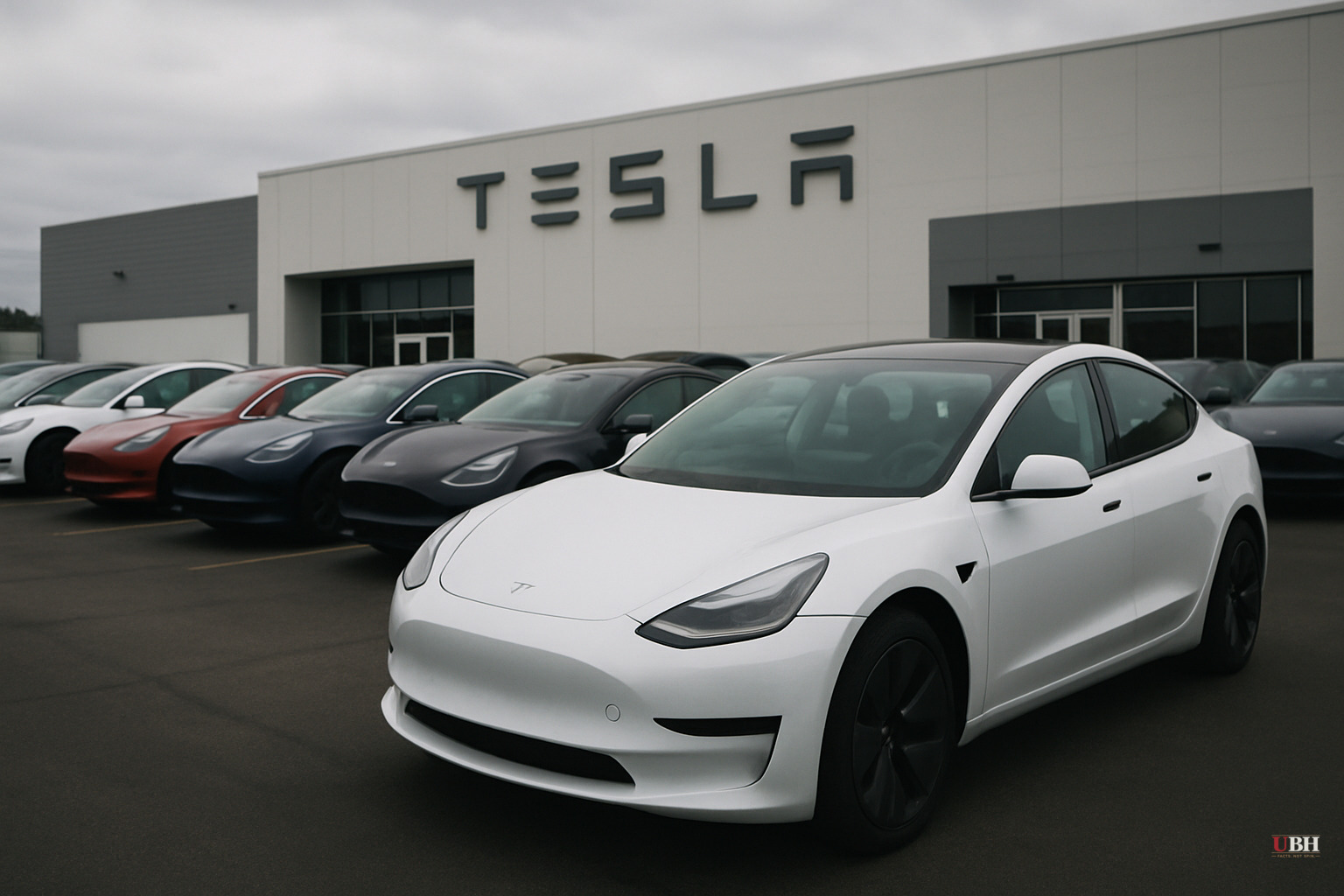
Tesla's Q2 2026 report, released Thursday, showed 480,126 total deliveries and 451,758 vehicles produced between April and June, according to CNBC. The Model 3 and Model Y together accounted for 467,762 of those deliveries, or roughly 97% of the total. The remaining 12,364 were "other vehicles" — Cybertruck, Tesla Semi, and lower-volume legacy models.
Wall Street's consensus, per StreetAccount's estimate cited by CNBC, was approximately 406,600 deliveries. Tesla's own company-compiled consensus published last week put the figure at 406,024. The actual result beat both by more than 18%.
The Q2 number is also Tesla's best-ever second quarter by raw delivery count, and its best quarter for overall sales since Q3 2025, when it shipped just shy of 500,000 vehicles, according to TechCrunch.
The Recovery Is Real, But the Hole Is Still Deep
Tesla is working against a two-year trend of declining overall annual sales. Q1 2026 came in at 358,023 deliveries. The Q2 jump to 480,126 is a 34% sequential increase and a 25% year-over-year increase from Q2 2025's approximately 384,000 deliveries, per CNBC.
Tesla credited lower-cost versions of the Model 3 and Model Y as key demand drivers. Geographic expansion also contributed. CNBC reported that soaring European gas prices tied to the Iran conflict pushed European consumers toward EVs in the first half of 2026, though that tailwind is fading: oil prices have retreated toward pre-war levels following a fragile U.S.-Iran truce.
TechCrunch noted the company has been working through cheaper variants of the Cybertruck as well.
The Stock Dropped Anyway
Tesla shares fell roughly 6% on Thursday despite the delivery beat, according to CNBC. That kind of reaction is not unheard-of. A stock can be priced for perfection, and even a genuine beat can trigger a "sell the news" response if other concerns dominate the outlook.
Those concerns are real. CNBC cited inflation, shifting U.S. trade policy, and rising chip and component costs as second-half risks. Dan Hearsch, managing director at AlixPartners, told CNBC that American car buyers are pulling back from fully electric vehicles and moving toward hybrids, partly because of the country's geography and charging infrastructure gaps compared to Europe.
Competition is intensifying on multiple fronts. Chinese automakers — BYD, Nio, and Xiaomi — are fielding cheaper, technology-rich alternatives. Hyundai and Volkswagen are pressing harder in the EV segment. Tesla no longer enjoys the category-defining isolation it held five years ago.
FSD Is Selling — and Also Under Investigation
CNBC reported that Tesla has expanded its Full Self-Driving (Supervised) driver-assistance system into some European markets, which contributed to the demand uptick. But FSD is simultaneously generating legal and regulatory exposure.
Earlier in June, a woman was killed in her home after a Tesla driver using FSD crashed into it. Tesla publicly blamed the driver. The National Transportation Safety Board has opened an investigation into that crash. The Verge also reported that Tesla quietly settled a separate lawsuit stemming from another fatal FSD-related crash. No regulatory action against the technology itself has been announced.
The robotaxi service that Elon Musk has long promised at scale is operating on a fleet of approximately 60 to 70 Model Y vehicles in a geofenced area in Austin, Houston, and Dallas — well short of the mass commercial deployment Musk originally described, according to The Verge.
The Fair Concern
Skeptics of the recovery narrative have a legitimate point: one strong quarter doesn't reverse a structural slide. Consumer sentiment toward Tesla, damaged by Musk's political activities and the end of the U.S. federal EV tax credit, hasn't been fully measured in this report. The European gas-price boost that inflated Q2 demand is already dissipating. If U.S. buyers continue favoring hybrids over pure EVs, Tesla's domestic base faces a ceiling that better delivery numbers in a single quarter don't address.
The Q2 data stands on its own: 480,126 deliveries, 25% above last year, 18% above consensus.
The unresolved question heading into Q3 is whether the Iran-truce-driven drop in European gas prices reverses the demand surge Tesla saw abroad in the first half of the year, and whether U.S. consumers shift back toward EVs or continue buying hybrids. Tesla's next earnings report is scheduled for Wednesday, July 22, where it will break out revenue and margins and show whether the delivery volume translated into profitable growth or was driven by discounting that squeezed margins.
Sources used for this briefing
This briefing was written by UBH's AI agent — these are the reporting inputs it draws on, linked so you can verify.


