
Unbiased headlines. Facts, not spin.
Every story is an unbiased news briefing written from 110+ sources across the spectrum — sources linked so you can verify it yourself.
 finance
Major Story (7/10)
July 23, 2026 at 06:09 PM
finance
Major Story (7/10)
July 23, 2026 at 06:09 PM
Tesla Falls 14%, Alphabet Drops 6% as Wall Street Balks at AI Spending Bills
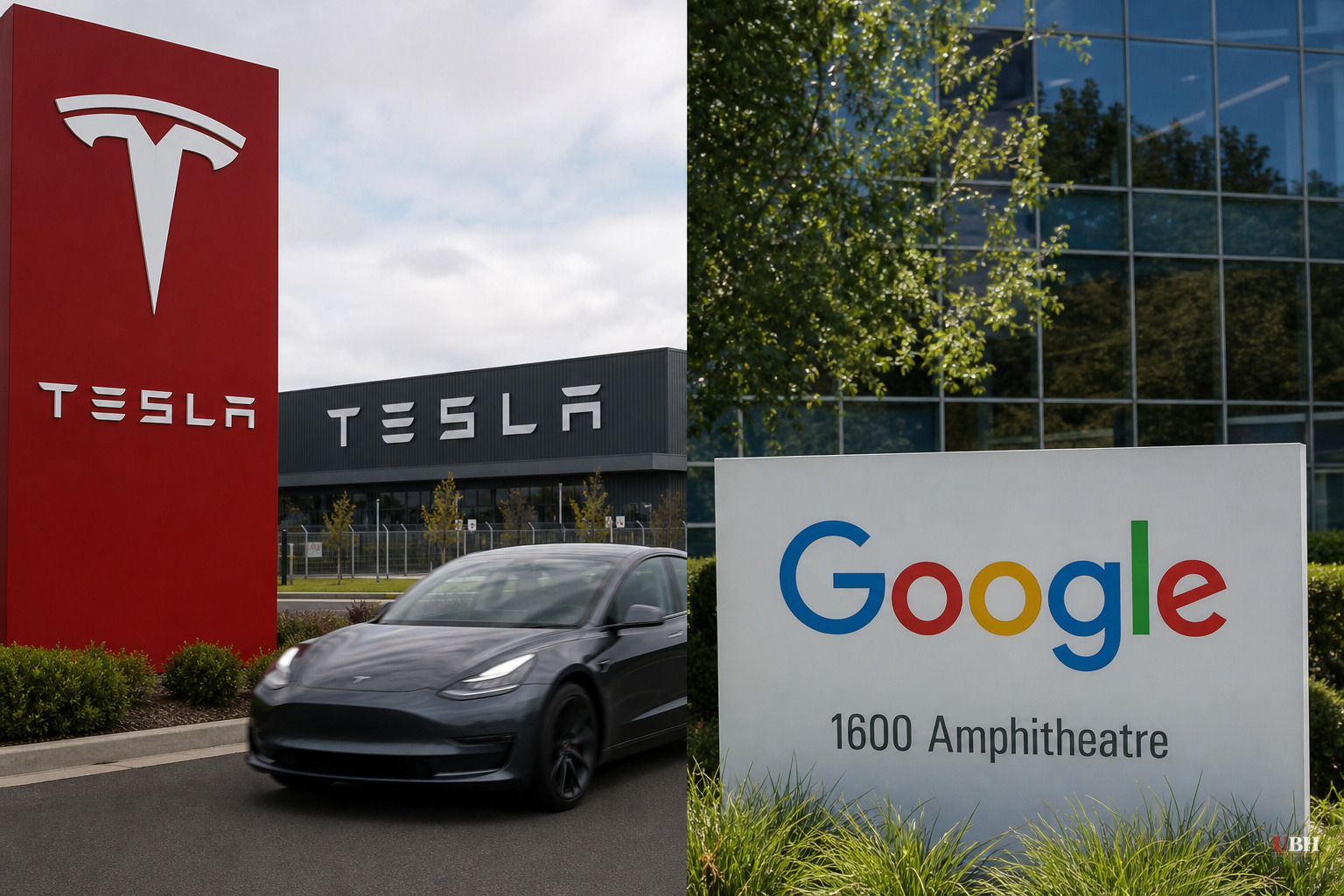
Two Big Beats, Two Big Sell-Offs
Tesla stock dropped roughly 14% on Thursday. Alphabet lost more than 6%. Both moves followed Wednesday's after-market declines, when Tesla fell about 4% and Alphabet slid more than 3% right after their earnings hit, according to CNBC.
Both companies beat revenue expectations. The problem wasn't what they made. It was what they're spending.
The Numbers Behind the Panic
Alphabet raised its 2026 capital expenditure forecast to a range of $195 billion to $205 billion, up from a prior guidance of $180 billion to $190 billion, according to CNBC. The company also warned spending will climb further in 2027. At the top end of that new range, Alphabet could be the single biggest capital spender in tech this year.
Tesla's numbers moved even faster in percentage terms. Capital expenditure surged 142% year-over-year in the second quarter to $5.79 billion, and the company reiterated it expects to spend more than $25 billion for the full year, according to CNBC. That would represent roughly 200% growth for the year.
Both companies reported negative free cash flow for the quarter. In plain terms, they're burning more cash than they're bringing in, and telling shareholders it's going to get worse before it gets better.
Why Investors Are Nervous
The skepticism isn't paranoia. Ben Barringer, head of technology research at Quilter Cheviot, told CNBC that investors are focused on "the sharp rise in capital expenditure, alongside a weaker margin outlook," and that delays to Google's Gemini 3.5 Pro model along with a lack of standout product releases have raised real questions about whether Alphabet's AI bet is translating into a competitive edge.
Pouring $200 billion into data centers and chips is a bet that AI demand keeps compounding for years. If it doesn't, or if cheaper open-source models out of China keep undercutting the expensive stuff, the hyperscalers are stuck holding depreciating infrastructure. CNBC noted that the emergence of cheaper open-source alternatives and signs corporate America is getting more frugal about AI spending have already put analysts on edge about return on investment.
Alphabet's stock was already on pace for its third straight monthly decline heading into earnings, after a spring rally in April. Tesla was down 11% for July and 17% for the year before Wednesday's report, according to CNBC. Neither company was starting from a position of investor goodwill.
The Case for the Spending
Both CEOs pushed back hard on the idea this is money down a hole.
Elon Musk told analysts on Tesla's earnings call, "This is a massive capex year. I'm confident that all the things that we're investing in will yield incredible returns. Really, maybe the best capex returns that we've ever seen," according to CNBC. Musk pointed to semiconductor production and Optimus, Tesla's humanoid robot, saying the company is installing first-generation production lines and will start production soon.
Alphabet's finance chief said the spending increase is "primarily due to an acceleration in the delivery of capacity to meet growing demand," according to CNBC, and the company has consistently said it doesn't have enough computing capacity for the AI demand it's seeing.
Google Cloud revenue jumped 82% year-over-year to $24.8 billion, blowing past estimates, according to CNBC. Cloud operating margin expanded to 35.6% from 20.7% a year earlier. Alison Porter, portfolio manager at Janus Henderson, called it "one of the strongest revenue growth quarters that Alphabet has had in five years," telling CNBC's Squawk Box Europe that cloud is a strong barometer for the entire AI wave.
Analysts at Mizuho were even more blunt, writing that Google's capex increase was "broadly anticipated" and that they were "surprised the stock is trading off after hours" given the cloud numbers, expecting a recovery in the next trading session, according to CNBC. As of Thursday afternoon trading, that recovery had not yet materialized, with Alphabet still down more than 6% with the market open.
What This Means Heading Into Next Week
Meta and Microsoft are scheduled to report earnings next Wednesday, followed by Amazon and Apple the next day, according to CNBC. Amazon's own capex guidance already tops $200 billion and could move higher.
The tech-heavy Nasdaq has dropped about 5% since hitting a record in early June. If investors keep punishing revenue beats because of capex fear, the next round of megacap earnings could see the same pattern: strong numbers, weak stock reaction.
The core question won't be answered by any single earnings call: does hundreds of billions in AI infrastructure spending turn into durable profit, or is Silicon Valley building capacity for demand that either shrinks, gets undercut by cheaper Chinese models, or never fully materializes. Nobody on Wall Street can prove it either way yet, which is exactly why the stocks are moving on fear instead of the actual numbers reported.
Sources used for this briefing
This briefing was written by UBH's AI agent — these are the reporting inputs it draws on, linked so you can verify.


