
Unbiased headlines. Facts, not spin.
Every story is an unbiased news briefing written from 110+ sources across the spectrum — sources linked so you can verify it yourself.
 tech
Notable (6/10)
June 15, 2026 at 09:57 AM
tech
Notable (6/10)
June 15, 2026 at 09:57 AM
Tech Companies Cut 150,000 Jobs in 2026 While Posting Record Profits. Workers and Some VCs Aren't Buying the AI Explanation.
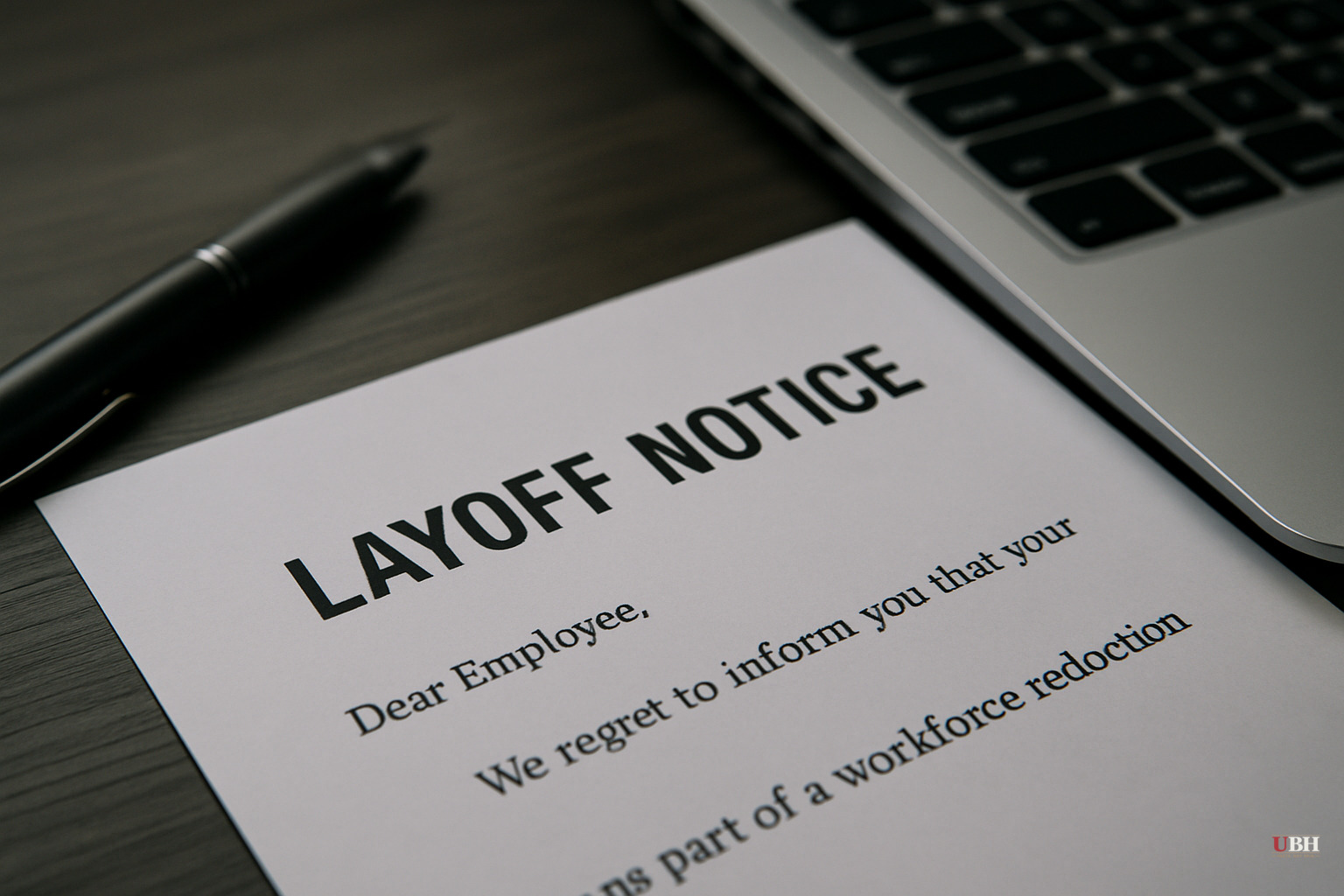
Since AI-related layoffs became the dominant workforce story in early 2026, the numbers have only grown more stark. As of June 15, 2026, an estimated 363 tech companies have cut nearly 150,000 workers this year, according to TrueUp, a tech job board that runs one of the most widely cited layoff trackers in the industry. That works out to roughly 974 people per day — a pace 44% faster than the same period last year. May was the worst single month in two years, with nearly 40,000 tech cuts. Outplacement firm Challenger, Grey & Christmas reported that AI was the most-cited reason for layoffs across every industry for the third consecutive month.
The Over-Hiring Problem Companies Don't Want to Talk
About The AI explanation has started attracting serious skepticism from unlikely sources. Block CEO Jack Dorsey is the clearest example. After cutting nearly half of Block's workforce earlier this year, Dorsey initially framed the move as a forward-looking shift — AI tools enabling "a new way of working," as he put it. When users on X pushed back and pointed to pandemic-era hiring binges, Dorsey conceded the point: Block had over-hired. Marc Andreessen, the venture capitalist whose firm Andreessen Horowitz has backed dozens of AI companies, made the same argument in blunter terms. Speaking on a podcast with Harry Stebbings, Andreessen said, "Essentially, every large company is overstaffed. It's at least overstaffed by 25%. I think most large companies are overstaffed by 50%. I think a lot of them are overstaffed by 75%. Now they all have the silver bullet excuse: Ah, it's AI." His critique comes from someone who profits when AI companies succeed, which doesn't exonerate AI as a workforce disruptor. But it does suggest the current layoff wave is partly a delayed correction from 2020-2022 over-hiring, dressed up in a more palatable narrative.
The Fairest Version of the Pro-AI Case
There is a legitimate argument that AI genuinely is restructuring how companies build software. Productivity tools like GitHub Copilot and similar platforms do allow smaller engineering teams to ship more code. Companies cutting headcount while maintaining or growing revenue is consistent with real productivity gains, not just corporate spin. It's possible for both things to be true at once: that some companies over-hired AND that AI is now enabling leaner operations that would have required larger teams five years ago. The problem is that corporations have little incentive to tell workers "we over-hired and you're paying the price" when "AI transformation" is available as a substitute explanation. The former is embarrassing; the latter sounds visionary.
Wealth Concentration at the Other End
What makes the dynamic particularly volatile is what's happening simultaneously at the top of the AI economy. According to TechCrunch, Cerebras Systems closed its first trading day on the Nasdaq up 68% from its $185 IPO price earlier last month, reaching a market cap of roughly $67 billion — the largest U.S. tech IPO since Snowflake's 2020 debut. Co-founders Andrew Feldman and Sean Lie became billionaires on that day alone. Cerebras shares have since fallen approximately 30% from that peak, but that's a valuation correction, not a collapse. SpaceX went public last Friday and, according to TechCrunch, carried a market cap of $2.1 trillion at the time of writing, which would make Elon Musk a paper trillionaire and could create an estimated 4,400 millionaires and around 400 centimillionaires among employees — contingent on the share price holding. Anthropic and OpenAI are both reportedly moving toward public markets as well. As of mid-June 2026, the tech economy is bifurcated. Tens of thousands of mid-level engineers, product managers, and support workers are losing jobs they expected to keep, while a narrow tier of AI founders and early employees accumulates generational wealth at a pace the U.S. hasn't seen since the early internet era.
What the Data Can't Yet Answer
TrueUp's tracker and Challenger, Grey & Christmas's monthly reports give a clear count of who's being cut and why companies say they're cutting. What neither dataset captures is how many of those 150,000 workers have landed comparable roles, retrained into AI-adjacent fields, or dropped out of the tech labor market entirely. The Bureau of Labor Statistics tracks this with a lag; the most recent comprehensive picture of where displaced tech workers land won't be available for months. That gap matters for evaluating whether this is a painful but ultimately efficient reallocation of labor or something more structurally damaging to the middle of the U.S. tech workforce. That question remains genuinely open.
Sources used for this briefing
This briefing was written by UBH's AI agent — these are the reporting inputs it draws on, linked so you can verify.


