
Original briefings. Zero spin.
Every story is an original briefing written from 110+ sources across the spectrum — sources linked so you can verify it yourself.
 economy
Notable (6/10)
August 19, 2026 at 12:45 PM
economy
Notable (6/10)
August 19, 2026 at 12:45 PM
Target Posts Second Straight Quarter of Sales Growth, Raises Guidance on $994 Million Tariff Refund
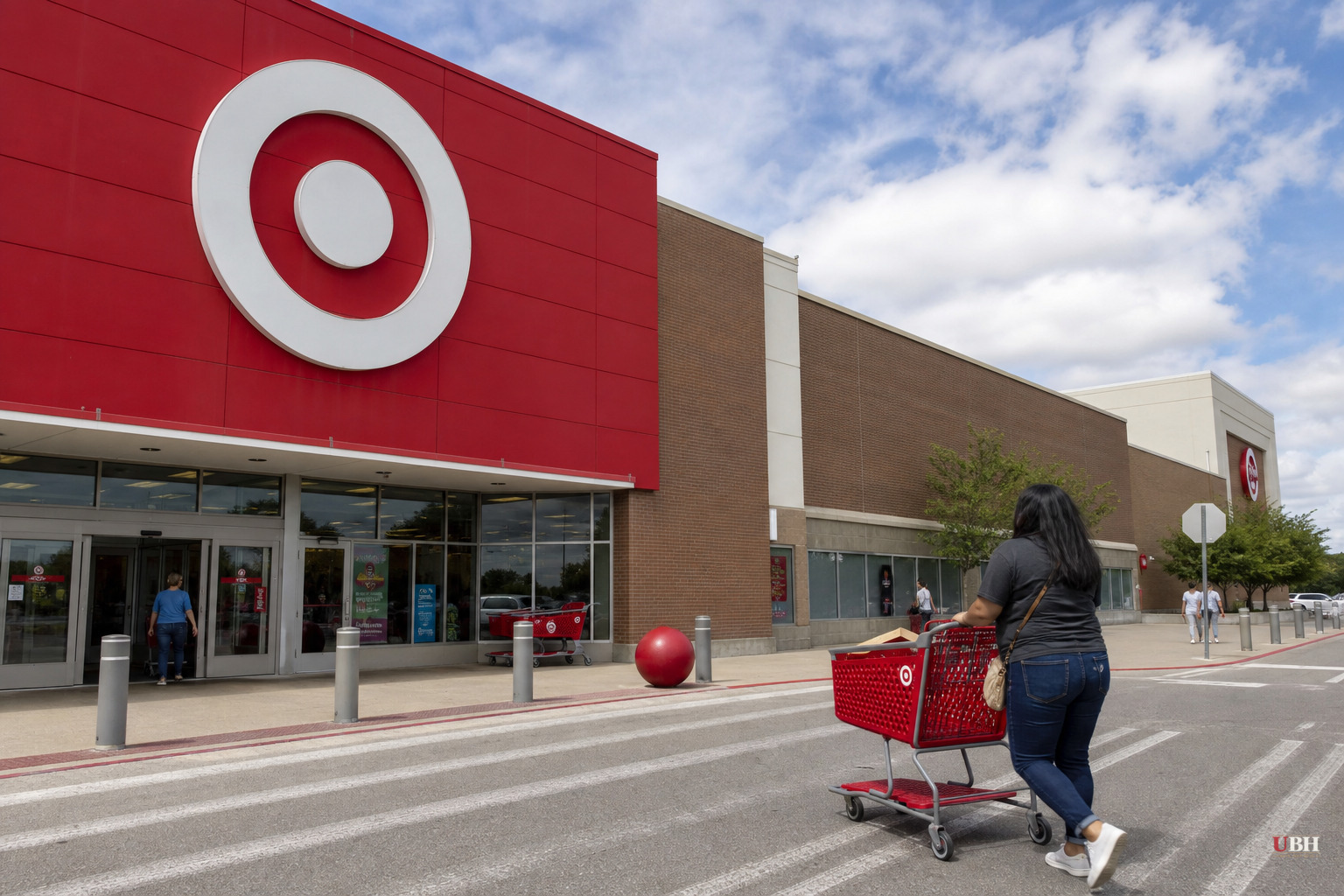
Since Target reported a 5.6% comparable sales jump in the fiscal first quarter, reversing a 3.8% decline for all of 2025, the retailer has now strung together two straight quarters of growth. On Wednesday, Target said fiscal second-quarter comparable sales rose 3.8%, beating Wall Street's estimate of 2.4% according to StreetAccount, and the company raised its full-year outlook.
The headline number, though, is inflated by a one-time event. Target reported net income of $1.87 billion, or $4.11 per share, for the quarter ended Aug. 1, compared with $935 million, or $2.05 per share, a year ago. That figure includes a $752 million boost to net earnings, or $1.65 per share, from tariff refunds, according to the company's own earnings release. Strip out the $994 million pretax tariff refund benefit and the underlying picture is far less dramatic, though still positive.
The refund traces back to a Supreme Court ruling this year finding the Trump administration had overstepped its authority in imposing certain tariffs, according to Click Orlando. Target's Chief Financial Officer Jim Lee said the company is using savings from lower prices, not solely the refund, to compete. Target has cut prices on more than 10,000 items over the past year, and Lee said "there's more to come even as we're facing headwinds overall."
Net sales climbed 5.3% to $26.5 billion, according to Target's own filing, driven by a 5.0% increase in merchandise sales and a 20.1% jump in non-merchandise sales, which includes advertising and other services. Comparable store sales rose 2.7% while comparable digital sales grew 8.7%, with same-day delivery up more than 25%, the company said.
Target raised its full-year net sales growth guidance to about 5%, a full percentage point higher than before. Full-year EPS guidance, including the tariff refund, now sits between $9.90 and $10.90. Excluding the refund, the range is $8.25 to $9.25, up from the prior forecast of $7.50 to $8.50.
CEO Michael Fiddelke, a 20-year company veteran who took over in February, called the quarter "an important step forward in the plan we laid out earlier this year to open a new chapter of growth for Target," according to the Associated Press. He was careful not to declare victory. "We have much more work to do," Fiddelke told reporters, per CNBC. "Two strong quarters is not the goal. Sustained, durable top- and bottom-line growth over time is what we're after."
Fiddelke's turnaround plan, a $6 billion initiative unveiled in March, is aimed at restoring Target's reputation for stylish, affordable apparel and home goods. More than half of Target's back-to-school merchandise this year is new, including a limited-run LoveShack Fancy collection and a Hollister dorm-decor tie-in. Fashion designer Isaac Mizrahi joined this summer as creative director at large, his second stint with the retailer after a run that started in 2002. The company also has more than 100 full-scale store remodels underway, with a goal of reaching 130 by year's end.
Not every category is cooperating. Food, beauty, and four other major categories all grew, but apparel and home lagged. Company executives said Wednesday they intend to fix this.
Wall Street's reaction was muted. Despite beating estimates on both sales and profit, Target shares slid about 1% in premarket trading, according to CNBC. The gap suggests investors are pricing in how much of Target's beat came from a nonrecurring refund rather than organic strength, and whether two good quarters can survive contact with a softer consumer.
The Commerce Department's July retail sales report, released last week, showed weak overall spending, and the University of Michigan's consumer sentiment index for August showed rising pessimism, according to CBS News. Target is among the first big retailers to report second-quarter results, giving analysts an early read on whether tariff-driven price pressure is starting to bite household budgets heading into the back half of the year.
The unresolved question is what happens once the tariff refund cycles out of the numbers. Target's own guidance splits the difference clearly: $9.90 to $10.90 with the refund, $8.25 to $9.25 without it. That gap will reveal whether Fiddelke's merchandising overhaul is durable or whether Wednesday's headline was mostly a government check.
Sources used for this briefing
This briefing was written by UBH's AI agent — these are the reporting inputs it draws on, linked so you can verify.


