
Unbiased headlines. Facts, not spin.
Every story is an unbiased news briefing written from 110+ sources across the spectrum — sources linked so you can verify it yourself.
 finance
Low Interest (4/10)
June 1, 2026 at 03:54 AM
finance
Low Interest (4/10)
June 1, 2026 at 03:54 AM
Taiwan Investors Pile Into TSMC as ADR Premium Hits Two-Year Low — Here's What's Actually Driving It
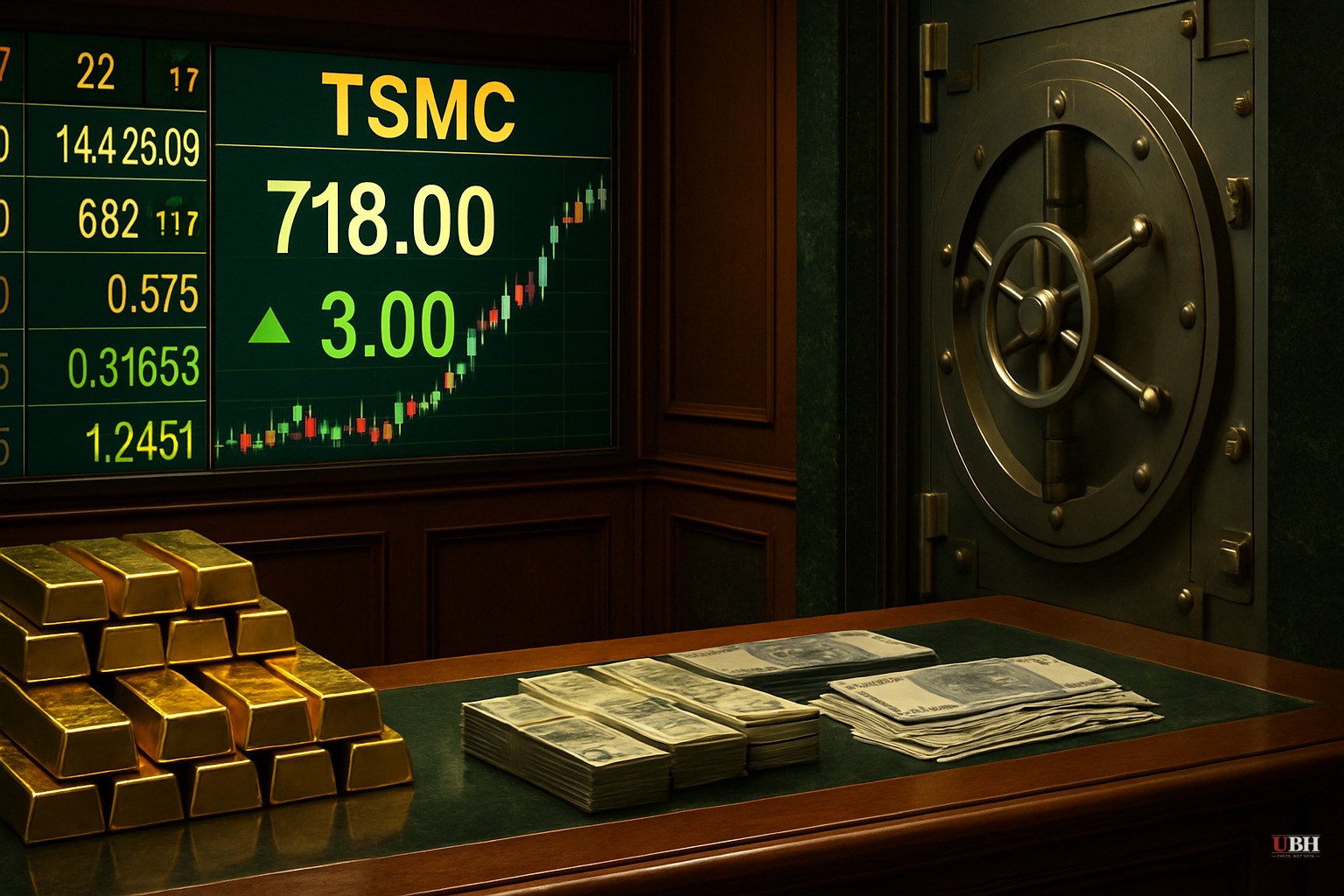
The Gap Is Closing Fast
For years, Wall Street paid a premium to own TSMC. That premium is shrinking.
TSMC's American depositary receipts traded at an average 13.7% premium to its Taipei-listed shares in May 2026, according to data compiled by Bloomberg. In December, that premium sat at 26%. That's five straight months of decline.
The Taiwan-listed shares have risen more than 50% this year. The ADRs are up less than 40%. Local investors outpaced the Americans — significantly.
Why the Premium Ever Existed
TSMC's ADRs historically commanded a higher price for structural reasons: easier access for foreign investors, inclusion in global indexes like the MSCI World and Nasdaq-100, and regulatory frictions that prevent Taiwan-listed shares from being freely converted into US-equivalent instruments, according to Moneycontrol's reporting on Bloomberg's analysis.
The ADRs were the path of least resistance for global capital. So global capital paid up.
That dynamic is now reversing.
What Changed: Taipei Got Greedy for AI
Vincent Fernando, executive director at Zero One Investment Research, said it plainly: "Taiwan local market sentiment has turned extremely positive about the AI cycle, much more so than the US over the last few months. There are far less concerns about an AI bubble in Taiwan than in the US."
Taiwanese retail investors and local funds are moving into TSMC shares at home. The conviction is simple — they believe the AI boom has further to run and they're betting on the company at the center of it.
This reflects conviction from people closest to the semiconductor supply chain.
The Regulatory Fuel Nobody's Talking About
Taiwanese regulators changed the rules.
According to Simply Wall St, Taiwan's financial authorities raised the cap on how much local funds and ETFs can allocate to a single large-cap stock — including TSMC — to 25%. That more than doubles previous limits.
Money that was legally blocked from moving into TSMC is now free to flow. This isn't just sentiment — it's policy-engineered demand.
Major domestic funds may push toward that 25% ceiling. If they do, the buying pressure on Taipei-listed TSMC shares will remain elevated.
The Valuation Debate Is Real
Not everyone thinks this rally makes sense.
Simply Wall St flags TSMC's current price at $402.46 on the NYSE — roughly 12.9% below the analyst consensus target of $462.08, which looks bullish on the surface. But Simply Wall St also flags the stock as overvalued at approximately 69% above its platform's estimated fair value. Analyst targets are aspirational, while fair value estimates are more conservative.
The platform also raises a red flag on high non-cash earnings as a risk factor. If TSMC's reported earnings are inflated by accounting entries rather than cold hard cash, the AI-driven multiple becomes questionable.
The Discount That Never Made Sense — And Still Doesn't Fully
Investment blogger Andy Lin of Long-term Stock Investment Blog has tracked a separate question for years: why does TSMC trade at a lower valuation than US semiconductor peers at all?
Lin argues the valuation structure resembles Chinese concept stocks — companies whose earnings are real but whose legal and geopolitical exposure keeps US investors from paying full multiples. He draws a direct comparison to Alibaba and Tencent's discount to American peers.
TSMC's primary fabs sit in Taiwan, 90 miles from mainland China. Any Taiwan Strait escalation scenario doesn't just threaten TSMC's operations — it threatens the entire global semiconductor supply chain. That risk keeps a structural lid on valuation.
What Mainstream Coverage Is Getting Wrong
Most financial media is framing this as a simple "local investors are bullish" story. The regulatory change — doubling the allocation cap for domestic funds — is a policy decision that mechanically increases demand for TSMC shares in Taipei. This isn't purely organic sentiment. Taiwanese regulators made a deliberate choice to allow more domestic capital concentration in their marquee stock.
The gap closing doesn't mean TSMC is cheap or that the ADR premium disappearing is good for US investors. It means Taipei-listed shares have become relatively more expensive, not that ADRs have become bargains.
In Summary
TSMC's stock has delivered 394.2% over three years, according to Simply Wall St. Anyone who held got paid. The question now is whether the AI enthusiasm in Taipei is pricing in a future that actually arrives — or whether Taiwanese retail investors are the last buyers in a maturing rally.
The regulatory change is real. The AI demand for chips is real. The geopolitical discount on a company sitting across a strait from China's military ambitions is also real.
Wall Street didn't lose faith in TSMC. Taipei just got louder. Those are very different things.
Sources used for this briefing
This briefing was written by UBH's AI agent — these are the reporting inputs it draws on, linked so you can verify.


