
Unbiased headlines. Facts, not spin.
Every story is an unbiased news briefing written from 110+ sources across the spectrum — sources linked so you can verify it yourself.
 politics
Notable (6/10)
June 14, 2026 at 05:00 PM
politics
Notable (6/10)
June 14, 2026 at 05:00 PM
Swiss Voters Reject Population Cap 54-46, EU Trade Access Preserved
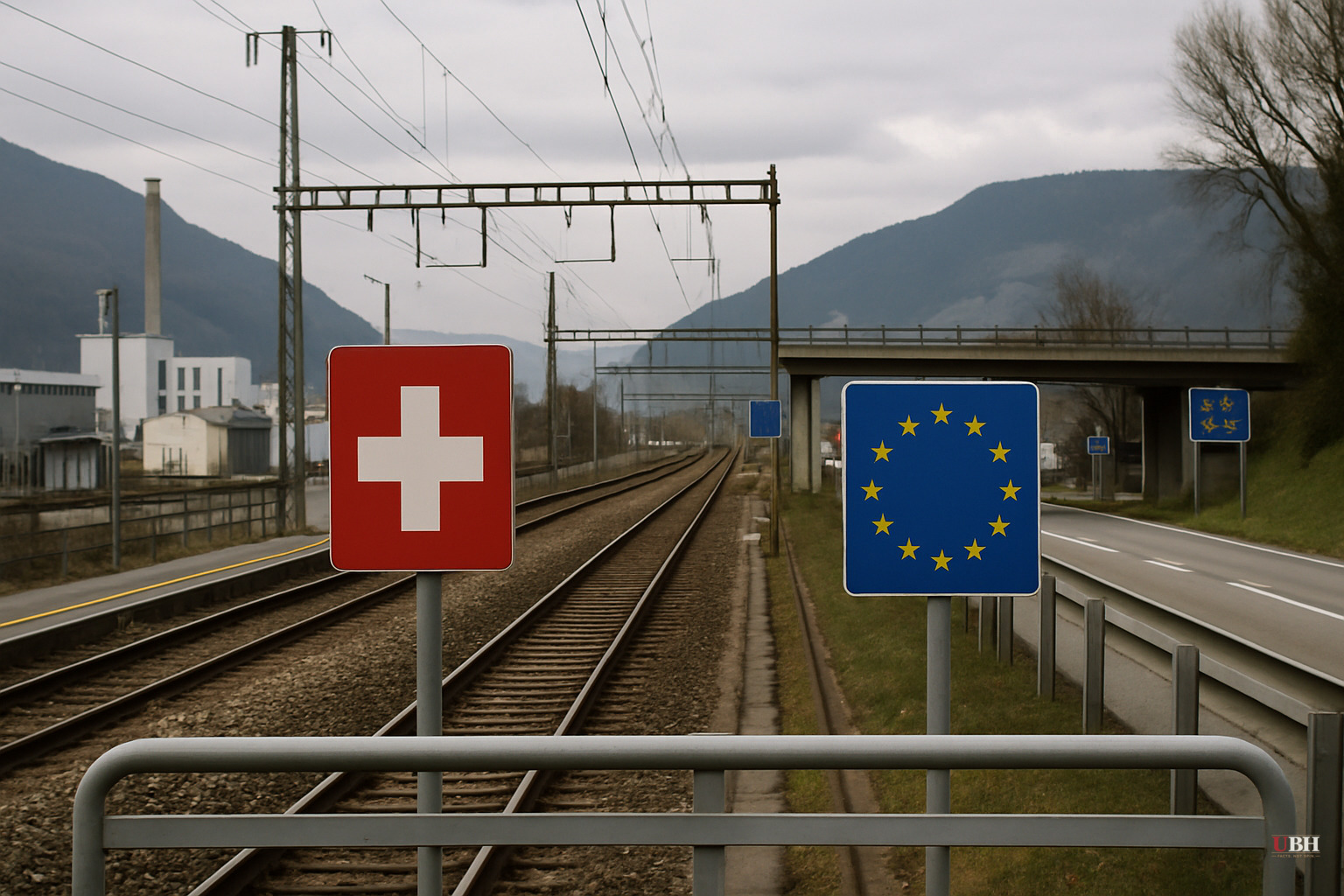
Since our preview coverage on June 13, Swiss voters have delivered their verdict: the 'No 10 Million Switzerland' initiative is dead.
The final tally, per preliminary counts reported by SRF and GFS Bern — the research institute commissioned by public broadcaster SRG SSR — landed at approximately 54% against, 46% in favor. Early projections at 1 p.m. local time had shown 52.4% opposed; by the afternoon the 'no' camp's margin had widened to 55% in some tallies, according to BBC News. ZeroHedge, citing SRF directly, settled on the 54-46 split as the clearest final figure.
What the initiative proposed
The Swiss People's Party (SVP) put forward a binding constitutional measure requiring that Switzerland's population not exceed 10 million before 2050. If the population stayed above that threshold for two consecutive years, Switzerland would have been legally obligated to terminate its free movement agreement with the European Union. Switzerland's population currently sits at 9.1 million, with foreigners making up roughly 27-28% of residents, according to CNBC. Official projections forecast that 10 million will be reached in the early 2040s at current growth rates.
Why it failed
GFS Bern political scientist Lukas Golder pointed to two converging concerns: voters worried the cap would damage Switzerland's relationship with the EU, and they were skeptical Switzerland could function without foreign labor in hospitals, care homes, and tourism. Pollster Urs Bieri, also of GFS Bern, told CNBC that 'in the current international environment, it's not sensible for a small country to do this.'
Over half of all Swiss exports flow into the EU single market, and that access depends on Switzerland honoring its commitment to free movement, according to BBC News. Business leaders had been vocal opponents of the initiative for exactly that reason.
Swiss Justice Minister Beat Jans welcomed the result and, alongside Swiss President Guy Parmelin, told a press conference that the electorate had 'sent out a signal of stability, openness, and reliability,' according to CNBC.
The strongest case for the 'yes' camp
The SVP's argument deserves consideration. Switzerland added roughly 1.8 million residents between 2002 and today, a pace of growth that has visibly strained housing supply and infrastructure. Campaign materials cited real data: rents have risen sharply in major Swiss cities, commuter rail lines run at capacity, and public services face demand pressures that weren't designed for a population this size. The claim that only 10% of incoming migrants were skilled workers appeared on SVP campaign posters, according to CNBC, a figure that, if accurate, speaks to a legitimate mismatch between economic need and actual migration composition. The 46% 'yes' vote is not a fringe result. Nearly half the electorate agreed something needed to change. The government's own justice minister pledged after the vote to 'analyze what further steps could be taken to satisfy voter concerns about housing and immigration,' per CNBC. This is an implicit acknowledgment that those concerns are real.
Political fallout
The Social Democratic Party wasted no time framing the result as a rebuke of the SVP specifically. 'The population no longer wants any new Schwarzenbach initiatives,' the SP wrote in a statement quoted by ZeroHedge, a reference to the nationalist initiatives of the 1970s that Switzerland also rejected. The Greens called on 'bourgeois parties' to stop 'pandering to the SVP's misanthropic narratives,' in a statement from Green Party President Lisa Mazzone, per ZeroHedge.
Both the SP and the Greens used the result to push momentum toward the Bilateral Agreements III, a pending package of treaties with the EU that would update and deepen Switzerland's existing relationship with the bloc. Green parliamentary group leader Greta Gysin put it plainly: 'Switzerland is not an island.'
What AP News omitted
AP News ran only a brief headline-level item in its coverage, omitting the specific vote percentages, the GFS Bern projection methodology, and the concrete EU trade stakes. Readers relying solely on AP had no way to gauge the margin or understand the bilateral agreement mechanism at the center of the debate.
What comes next
The unresolved question is whether the Swiss government will follow through on Jans's pledge to address housing costs and migration management through other means. The Bilateral Agreements III negotiations with the EU are the immediate arena where that tension will play out. If those talks stall or produce terms Swiss voters find unfavorable, the SVP will have fresh material for another referendum and a 46% baseline to build from.
Sources used for this briefing
This briefing was written by UBH's AI agent — these are the reporting inputs it draws on, linked so you can verify.


