
Unbiased headlines. Facts, not spin.
Every story is an unbiased news briefing written from 110+ sources across the spectrum — sources linked so you can verify it yourself.
 finance
Notable (6/10)
June 18, 2026 at 10:52 AM
finance
Notable (6/10)
June 18, 2026 at 10:52 AM
Swiss National Bank Holds Rate at Zero, Keeps Franc Intervention Threat Active After Iran War Disruption
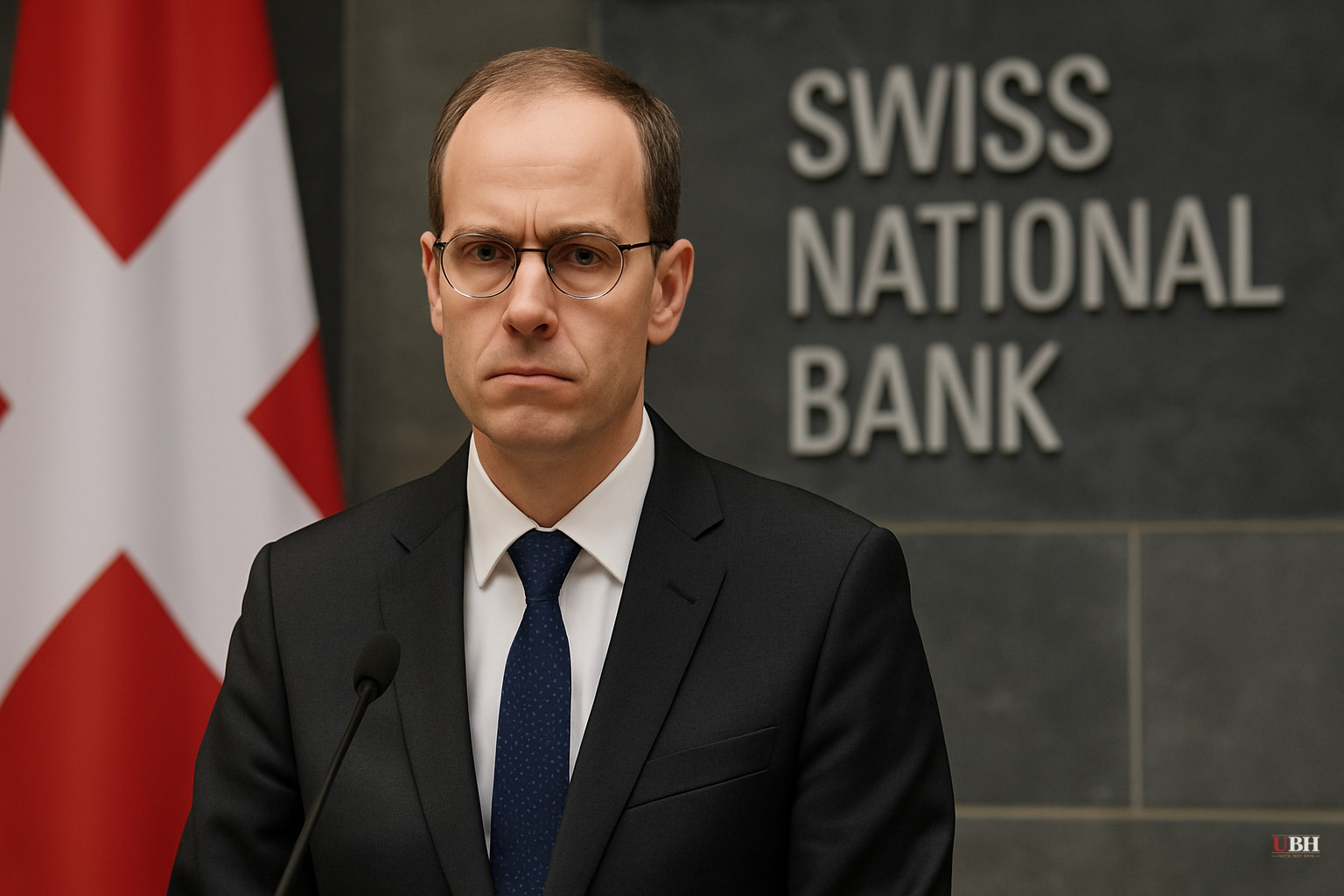
Rate Stays at Zero. The Franc Watch Continues.
The Swiss National Bank held its key policy rate at 0% on Thursday, June 18, extending what is now a full year at that floor level. The decision was widely expected, according to CNBC and the Financial Post.
The central bank's key message from Bern focused on the Swiss franc. SNB Chairman Martin Schlegel told reporters in Bern and separately told CNBC's Squawk Box Europe that the central bank's willingness to intervene in foreign exchange markets remains "increased." His precise language: "We thereby counter a rapid and excessive appreciation of the Swiss franc, which would jeopardize price stability in Switzerland."
What Triggered This Stance
The SNB's heightened FX posture traces back to February 28, when the Iran conflict broke out and investors piled into the Swiss franc as a safe-haven currency, pushing it higher. The SNB made clear in March that it stood ready to sell francs aggressively if appreciation threatened Switzerland's export competitiveness and price stability.
According to the Financial Post, the franc is now actually weaker against the euro than it was before the conflict began. It dropped a further 0.2% to 0.9215 per euro following Thursday's announcement. A peace deal signed this week, the Financial Post noted, could further deter safe-haven flows into the franc.
Despite that, Schlegel is keeping the intervention threat fully armed. The SNB's logic: geopolitical situations can reverse fast, and the cost of being caught flat-footed with an overvalued franc is higher than the cost of a standing warning.
Inflation: Low, But Moving
Swiss inflation rose from 0.1% in February to 0.6% in May, driven primarily by energy prices. According to FXStreet, petroleum products were up 17.7% year-on-year in May, a direct consequence of the Iran conflict's effect on global energy markets.
That headline number indicates broader price pressures may be building, but the underlying picture suggests otherwise. FXStreet noted that imported goods — roughly 22% of Switzerland's consumer price index — rose only 0.7% year-on-year in May, a modest increase after years of imported-price deflation. Domestic inflation was also 0.6% year-on-year. The SNB's own assessment called the contribution of most other goods and services to overall inflation "negligible."
The SNB now forecasts inflation at 0.6% in both 2026 and 2027, and 0.7% in 2028 — each revised up by 0.1 percentage point from March projections, per FXStreet. Still comfortably inside the SNB's 0–2% target band. FXStreet's analysts concluded that this inflation outlook points to an unchanged policy stance for at least the next two years, with rates staying at 0% through that window.
The Rate Differential Problem
Other major central banks, the European Central Bank included, are tilting toward rate hikes later this year, according to CNBC. As those differentials widen, holding Swiss francs becomes less attractive relative to euro- or dollar-denominated assets, which actually works in the SNB's favor by naturally weakening the franc without requiring direct intervention.
Schlegel acknowledged this directly: "As the interest rate differentials with other countries have widened, the Swiss franc has depreciated somewhat." The problem is that geopolitical flare-ups can override interest rate logic overnight. A single bad headline from the Middle East can send capital flooding back into francs regardless of yield spreads.
Arthur Jurus, an economist at Oddo BHF, told the Financial Post: "The SNB believes the fight against disinflation is far from over. The central bank's main concern remains the Swiss franc."
The Strongest Counterargument
There is a reasonable case that the SNB's intervention posture is now more theater than necessity. The franc is weaker than pre-conflict levels, a peace deal is reportedly within reach, and real effective franc appreciation has been contained because Swiss inflation is running below that of trading partners, meaning Swiss exporters are not actually losing ground in real terms. FXStreet made this point explicitly: in real effective terms, the franc has not become more expensive despite nominal appreciation over the past 12 months. Critics of the SNB's stance could argue the bank is burning political credibility on a threat it may never need to execute.
The counterpoint is that the SNB's credibility as an intervener is itself the deterrent. If markets believe the SNB will sell francs aggressively in a crisis, they are less likely to speculate on franc strength in the first place. Removing that threat — even after conditions improve — introduces risk the SNB clearly is not willing to accept.
What We Still Don't Know
Whether the SNB actually intervened in foreign exchange markets after issuing its first heightened-willingness statement in March remains unconfirmed. According to the Financial Post, that data will only become available when first-quarter figures are published on June 30. That release will show whether Thursday's intervention language is backed by a demonstrated track record or whether the SNB has been calling its shot without pulling the trigger.
Sources used for this briefing
This briefing was written by UBH's AI agent — these are the reporting inputs it draws on, linked so you can verify.


