
Original briefings. Zero spin.
Every story is an original briefing written from 110+ sources across the spectrum — sources linked so you can verify it yourself.
 finance
Major Story (7/10)
August 27, 2026 at 12:06 AM
finance
Major Story (7/10)
August 27, 2026 at 12:06 AM
Swiss Central Bank Tells UBS: Cover Foreign Units With $20 Billion More Capital
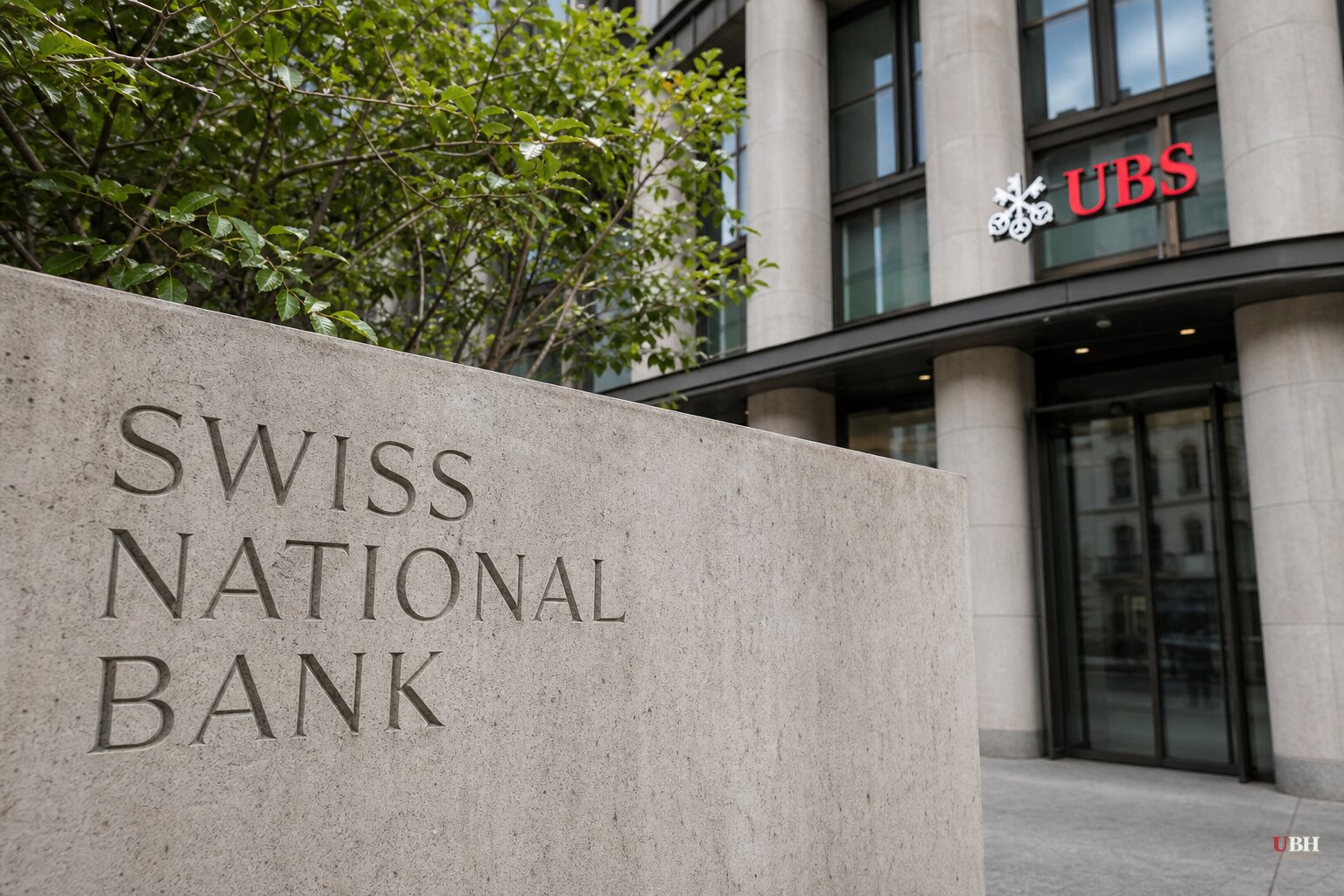
Three years after Credit Suisse collapsed and UBS was forced to absorb it in a state-brokered rescue, Swiss regulators are still arguing over how much of that mess UBS has to insure against next time.
On August 26, Swiss National Bank Vice Chairman Antoine Martin told an event at the University of Basel that the central bank fully backs the government's plan to make UBS hold significantly more capital against its foreign subsidiaries, according to Reuters reporting carried by AOL and Newsquawk. Martin didn't mince words about why.
"The crisis at Credit Suisse revealed several weaknesses in the current regulatory framework, especially in the area of capital requirement and collateral preparation," Martin said, per Reuters. He added that Switzerland's banking sector has grown so concentrated since the 2023 merger that "sound too big to fail regulations" are urgent.
The Number: $20 Billion
The government's proposal, formally put forward by the Federal Council on April 22, would require UBS to back its foreign subsidiaries with Common Equity Tier 1 capital, the highest-quality capital a bank can hold, at effectively 100%. Right now UBS covers those units at somewhere between 45% and 60% CET1, according to Crypto Briefing.
The SNB estimates that if the rule had been in force since January 1 of this year, UBS would already be sitting on a roughly $9 billion shortfall. Full compliance going forward would cost the bank around $20 billion in fresh capital, a figure repeated across Reuters, Crypto Briefing, and eutoday's reporting.
Martin put the scale of UBS in context: the bank now holds roughly a quarter of Switzerland's deposit and loan market, up from just 14% of loans and 16% of deposits in 2022, before it swallowed Credit Suisse, according to Reuters. That's the crux of the argument. Switzerland now has one bank whose balance sheet dwarfs the national economy, and regulators want to make sure a future blowup doesn't leave taxpayers holding the bag.
UBS Isn't Buying It
UBS has publicly called the plan excessive. The bank argues it would put UBS at a competitive disadvantage against global rivals and make Switzerland a less attractive place to do banking, according to eutoday. UBS has also warned that locking up that much capital would limit its ability to lend and invest.
Tying up $20 billion in capital carries real costs. It can mean less lending capacity, thinner returns on equity, and less room for share buybacks, a dynamic Newsquawk's analysis specifically flagged as the thing markets will price first, regardless of how the long-term regulatory fight shakes out.
Martin pushed back on the competitiveness argument directly. He pointed to well-capitalized American banks as proof that thick capital buffers don't necessarily cripple performance, according to Crypto Briefing. He went further at the Basel event, arguing that banks with strong capital actually come out ahead in a crisis because they can buy up distressed competitors, according to Global Banking and Finance Review.
"If we think that we're living in an unstable environment, I would prefer our banks to have robust capital buffers and take market share from foreign banks who are going to be in trouble next time there's a downturn," Martin said, without naming specific lenders.
Not a Claim UBS Is Unsafe Today
This isn't the SNB saying UBS is in danger right now. eutoday reported that the SNB concluded in July that UBS held sufficient capital when reserves and expected profits were counted. The fight is about the standard for the future, and how much loss shareholders and creditors should absorb before the state steps in again.
Where It Goes From Here
A parliamentary committee failed to reach agreement on the reform on August 11 and is scheduled to take it back up on August 31, per eutoday and AOL. One compromise on the table would let UBS satisfy up to half the new requirement using Additional Tier 1 bonds instead of pure CET1 equity.
That detail carries some historical baggage. AT1 bonds are designed to convert to equity or get wiped out when a bank's capital falls below a set threshold, and that's exactly what happened to roughly $17 billion worth of Credit Suisse AT1s during the 2023 rescue, an event that rattled the global AT1 market at the time, according to Crypto Briefing and eutoday.
Whether lawmakers let UBS lean on AT1s to soften the CET1 hit will determine how much this actually squeezes the bank's balance sheet versus how much it's a political compromise that looks tough on paper. Parliament's August 31 session is the next concrete checkpoint, and Newsquawk's analysis notes that Swiss capital fights like this one have historically ended up diluted after heavy lobbying before final enactment. Whether that pattern holds again is the open question.
Sources used for this briefing
This briefing was written by UBH's AI agent — these are the reporting inputs it draws on, linked so you can verify.


