
Original briefings. Zero spin.
Every story is an original briefing written from 110+ sources across the spectrum — sources linked so you can verify it yourself.
 finance
Major Story (7/10)
Event date: August 25, 2026
finance
Major Story (7/10)
Event date: August 25, 2026
Warsh Set to Give First Jackson Hole Speech Friday as 30-Year Yield Sits Near 2007 Highs
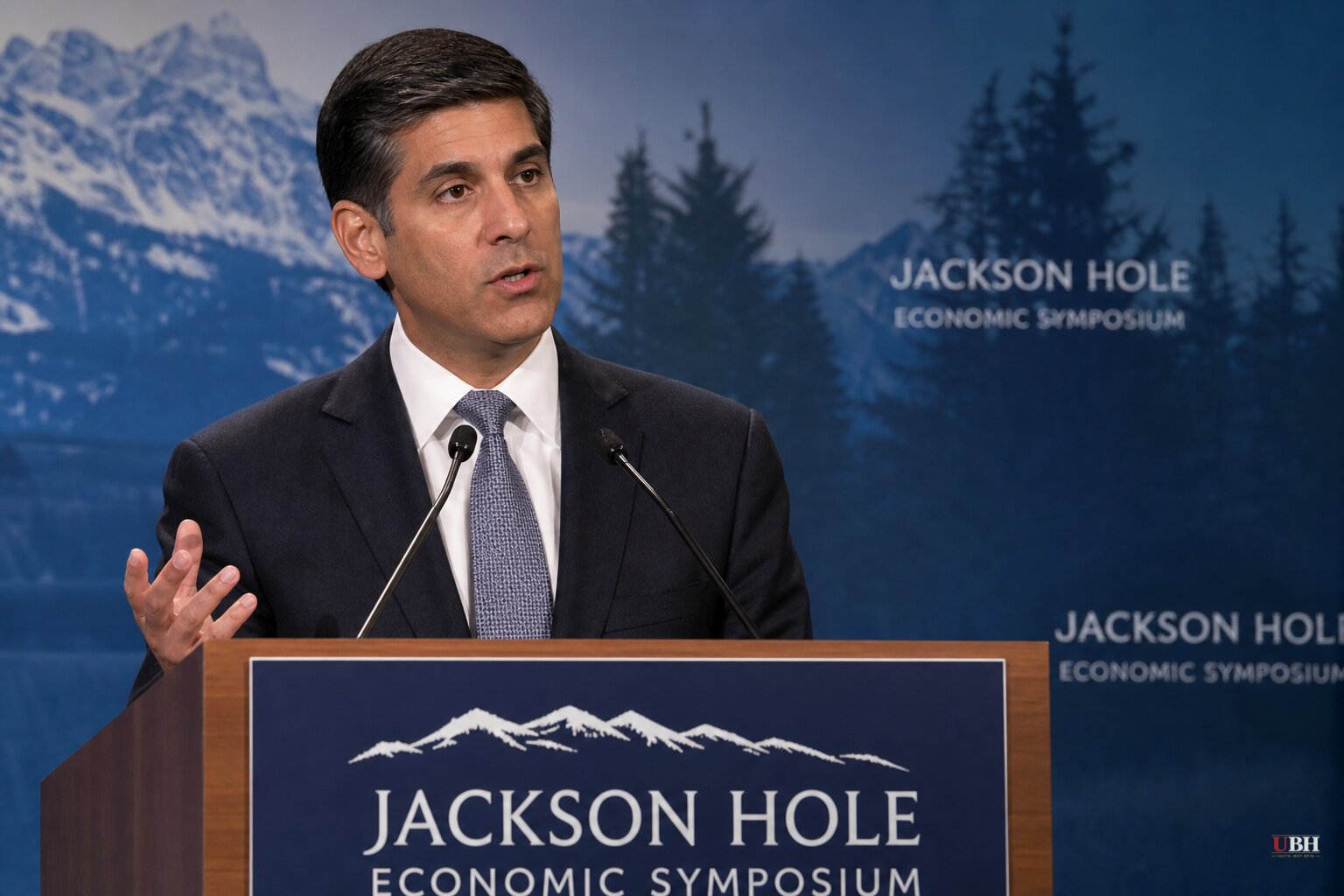
Since Fed Chair Kevin Warsh's confirmation on May 22, markets have been waiting for him to lay out his own framework in a set-piece speech. That moment arrives Friday, August 28 at 10:00 a.m. ET, when Warsh delivers his first keynote at the Kansas City Fed's Jackson Hole Economic Policy Symposium, running August 27-29 in Wyoming.
This year's theme, set by the Kansas City Fed, is "Financial Innovation: Implications for Payments and Policy" — a nod to stablecoins, instant payments, and cryptocurrency's growing role in the financial system. But almost nobody expects the headlines to come from panel discussions on payment rails. They'll come from what Warsh says, or doesn't say, about interest rates.
The Bond Market Backdrop
The stakes are higher than a typical Jackson Hole because of what's happened in the Treasury market. The 30-year Treasury yield closed at 5.31% on August 17, its highest level since 2007, according to REX Shares. Two days later, on August 19, the Treasury Department stepped directly into the bond market in an effort to bring long-term borrowing costs down. This move was tied to Treasury Secretary Scott Bessent's commitment to at least double Washington's Treasury bond purchases, as reported by the Guardian.
Louis Navellier, writing for the Epoch Times, notes the pressure isn't confined to the U.S. Global bond yields have risen in Britain, France, Germany and Japan too. He points to a concrete casualty: new housing starts fell 12.4% in July to a 1.24 million annual pace, which he links to rising rates. The iShares 20+ Year Treasury ETF (TLT) is down about 4% year-to-date on a price basis, after falling more than 6% below its start-of-year level at the August 17 low, a sign that fixed-income investors are already pricing in more pain.
Inflation Isn't Cooperating
The Fed's preferred inflation gauge, the PCE price index, was unchanged in July at 3.7% year-over-year, matching June, according to the Associated Press as carried by Breitbart. That's nearly double the Fed's 2% target. Core inflation, which strips out food and energy, also held flat at 3.3%, well above the 2.6% level it touched before President Trump's tariffs took effect in April 2025.
The AP report ties the inflation persistence partly to the Iran conflict, noting prices have worsened since the U.S. and Israel struck Iran in late February, when inflation stood at 2.9%. Gas prices fell in July but have rebounded since, according to the same report, which will likely push the next inflation reading higher rather than lower.
The economy's underlying growth also slowed. A second government estimate showed GDP expanding at just 1.5% annualized in the April-June quarter, down from 2.1% in the first quarter, per the AP. Consumer spending, adjusted for inflation, was flat in July — a sign that households are growing more cautious even as their nominal incomes rose 0.4%, the best showing since February.
What Warsh Is Expected to Say, and What He Isn't
Warsh has run two policy meetings since taking over, holding the federal funds rate steady at 3.50%-3.75% both times, according to REX Shares. Unlike his predecessor Jerome Powell, Warsh has been reluctant to "spoon-feed" markets with explicit rate guidance, the Guardian reports. He has signaled his speech may focus on "bigger questions" like productivity and demographics rather than the next rate move.
That approach has two sides. Titanfx's Nick Goold argues it fits this year's financial-innovation theme and reflects a chair who prefers letting data drive expectations rather than pre-committing markets to a path. But Dan Coatsworth of AJ Bell told the Guardian that investors will be looking for a "comfort blanket" from Warsh, and James Smith, an economist at ING Bank, warned that offering less commentary on rates "risks injecting yet more volatility into an already febrile bond market."
The Guardian also notes Warsh was accused by investors of sending mixed signals at his first press conference as chair in July, when he expressed commitment to fighting inflation without giving specifics on how. That history is part of why this speech carries extra weight: it's Warsh's first true opportunity to explain his own thinking in his own words, rather than through a post-meeting statement.
Navellier's framing in the Epoch Times is notably more bullish, predicting "upbeat news on inflation" and hoping Warsh will highlight the deflationary potential of AI productivity gains. Most other sources here, including the Guardian and Titanfx, describe a Fed chair walking into a symposium with markets nervous and inflation still running well above target.
The national debt has also crossed $40 trillion for the first time, the Guardian reports, adding a fiscal dimension to the bond market's unease that goes beyond monetary policy alone.
Markets currently expect the Fed to hold rates again at its September meeting, per the Guardian, though a small probability of a hike remains priced in. Whatever Warsh says Friday morning will be the first real test of whether that expectation holds through the fall.
Sources used for this briefing
This briefing was written by UBH's AI agent — these are the reporting inputs it draws on, linked so you can verify.


