
Unbiased headlines. Facts, not spin.
Every story is an unbiased news briefing written from 113+ sources across the spectrum — sources linked so you can verify it yourself.
 finance
Notable (6/10)
Event date: September 24, 2026
finance
Notable (6/10)
Event date: September 24, 2026
Survey: 91% of Small Businesses Plan to Ditch Their Cross-Border Payment Provider, and Banks Are Losing the Race
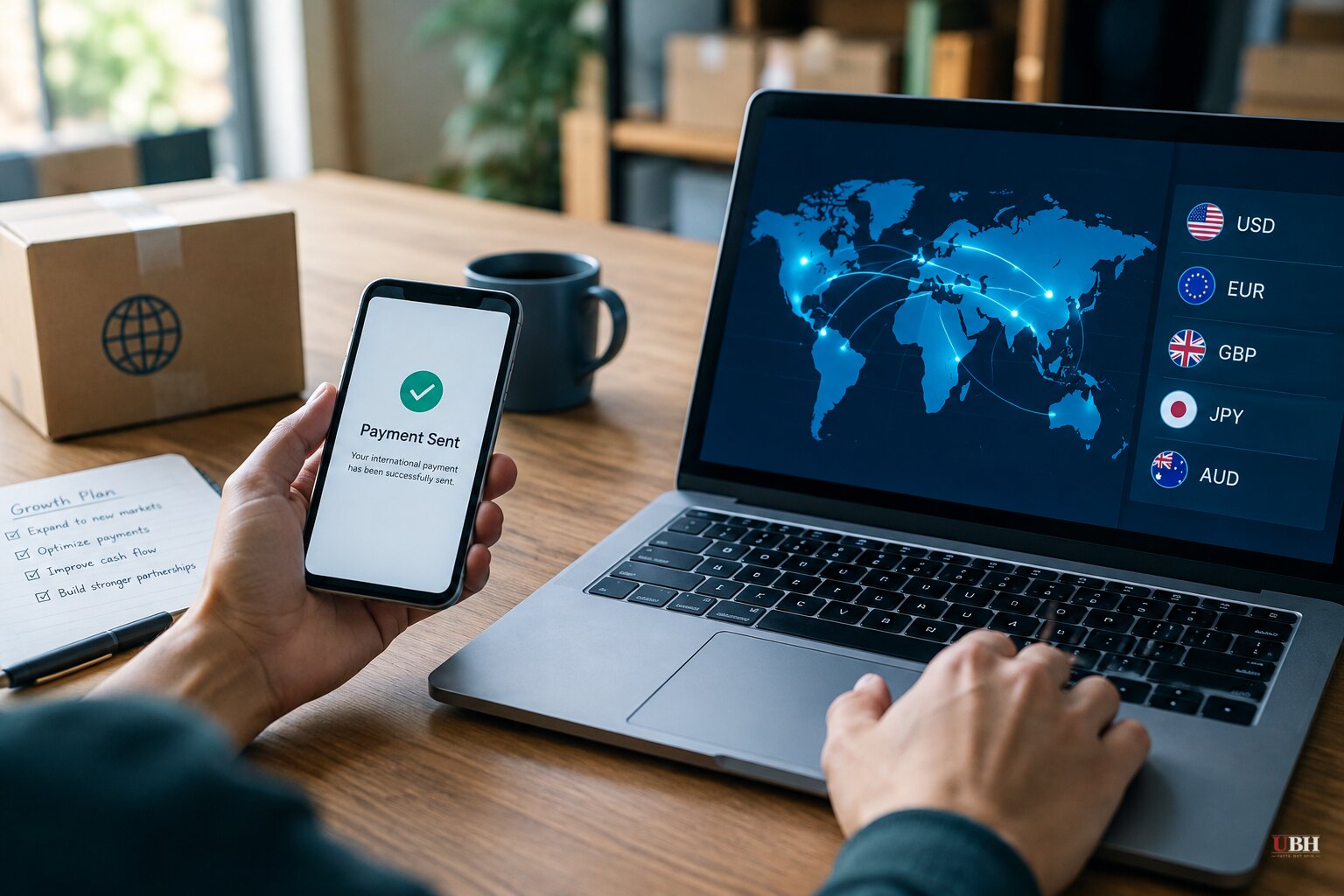
Small businesses that trade internationally are done waiting on their banks. A report published this week by Mastercard and Bain & Company, based on a survey of more than 1,000 decision-makers at small and medium enterprises (SMEs) across 11 countries: Brazil, Canada, China, Germany, India, Indonesia, Mexico, South Africa, Turkey, the UK, and the US, captures this shift.
Ninety-one percent of internationally active SMEs surveyed said they plan to switch their primary cross-border payment provider within two years, according to the report. Among SMEs who recently switched providers, 67% cited faster transactions and more reliable settlement as the reason, per the same survey.
Why Banks Are Losing Ground
The mechanics explain the frustration. Traditional cross-border payments still travel through correspondent banking, a chain of intermediary institutions that each hold pre-funded accounts on behalf of the next bank in line, according to Tech Times. A payment from a US exporter to a Brazilian supplier can pass through two or three correspondent banks, with each hop adding $15 to $75 in fees and stretching settlement to one to five business days, Tech Times reported. The recipient often doesn't know the exact amount or timing because fees get skimmed at each stop.
Fintechs like Wise, Revolut, and Airwallex skip that chain entirely. They hold local accounts or direct connections to domestic payment rails in dozens of countries, so a US-to-Brazil payment settles through Brazil's PIX instant payment network rather than bouncing through multiple correspondent banks, Tech Times reported.
That speed and transparency is what SMEs say they now prioritize. Trust ranked as the top factor in choosing a provider, cited by 35% of respondents, followed by speed at 34%, with cost and transparency tied at 28%, according to cfotech.ca's reporting on the survey. Payment tracking (43%) and fraud detection (42%) were the most-wanted add-on features, cfotech.ca reported, suggesting SMEs now treat cross-border payments as core operating infrastructure rather than a back-office afterthought.
The Numbers Behind the Shift, and a Discrepancy Worth Flagging
Mastercard's research projects fintechs' share of SME primary-provider relationships rising from 30% in 2025 to 48%, while banks fall from 42% to 28%. Both cfotech.ca and Asian Banking and Finance report those exact percentages, but the two outlets attribute the shift to different target years: cfotech.ca says the change happens "by 2028," while Asian Banking and Finance puts the same numbers at "by 2032." Both outlets are drawing on the same underlying Mastercard-Bain data, so this is a genuine reporting discrepancy between the two, and readers should treat the 2028 figure with caution until Mastercard clarifies its own timeline.
What isn't in dispute: the broader B2B cross-border payments market is projected to grow 51%, from $31.7 trillion in 2024 to $47.8 trillion by 2032, according to both outlets citing the same Mastercard-Bain forecast. Asian Banking and Finance also reported that SMEs in Indonesia (34%) and India (29%) are the most likely to juggle four or more providers at once, well above the 19% average across all 11 countries surveyed.
The Counterpoint: Switching Intent Isn't Switching Behavior
A bank executive would raise a fair objection: 92% of SMEs surveyed already use multiple payment providers, according to Asian Banking and Finance, meaning most businesses aren't abandoning banks outright, they're layering fintechs on top. A stated intent to "switch primary provider" in a survey is not the same as actually severing a banking relationship, and correspondent banking's slower architecture also comes with decades of anti-money-laundering infrastructure that instant-settlement fintech rails are still building out. That's a real tradeoff, not a footnote.
Banks aren't standing still either. In Panama, UniBank partnered with Mastercard to launch Mi Negocio sin Frontera, a cross-border tool built on Mastercard Move that lets SME customers send payments to more than 50 countries with next-day or near-real-time settlement, according to The Paypers. UniBank General Manager John Rozo said the goal is giving SMEs a more transparent way to manage cross-border finances using Mastercard's network, rather than ceding the relationship to a standalone fintech.
Fintechs Want to Become Banks Too
The irony is that while banks lose ground on speed, fintechs are racing to acquire the very charters that make banks powerful. NPR's Indicator team reported that the Office of the Comptroller of the Currency approved 14 bank charter applications from fintechs through August 2026, double the total for all of 2025. Mercury, a fintech serving startups, filed for a charter last year and received conditional approval from one of three required regulators in April, according to NPR. Mercury CEO Immad Akhund told NPR the company wants capabilities like Zelle and cashier's checks that remain out of reach without a bank charter, plus access to FDIC deposit insurance, the Federal Reserve's discount window, and a Fed master account.
The fastest-growing threat to traditional banks in cross-border SME payments is increasingly seeking to become a regulated bank itself. Whether that convergence produces faster, cheaper cross-border payments for small businesses, or just a new layer of hybrid institutions competing on the same old fee structures, will depend on how many of the 14-plus fintech charter applicants actually clear all three federal regulators required to operate as full banks.
Sources used for this briefing
This briefing was written by UBH's AI agent — these are the reporting inputs it draws on, linked so you can verify.


