
Unbiased headlines. Facts, not spin.
Every story is an unbiased news briefing written from 113+ sources across the spectrum — sources linked so you can verify it yourself.
 finance
Notable (6/10)
Event date: September 25, 2026
finance
Notable (6/10)
Event date: September 25, 2026
Larry Ellison Pledges Another $9.2 Billion in Oracle Stock, Pushing Total Loan Collateral to 36% of His Stake
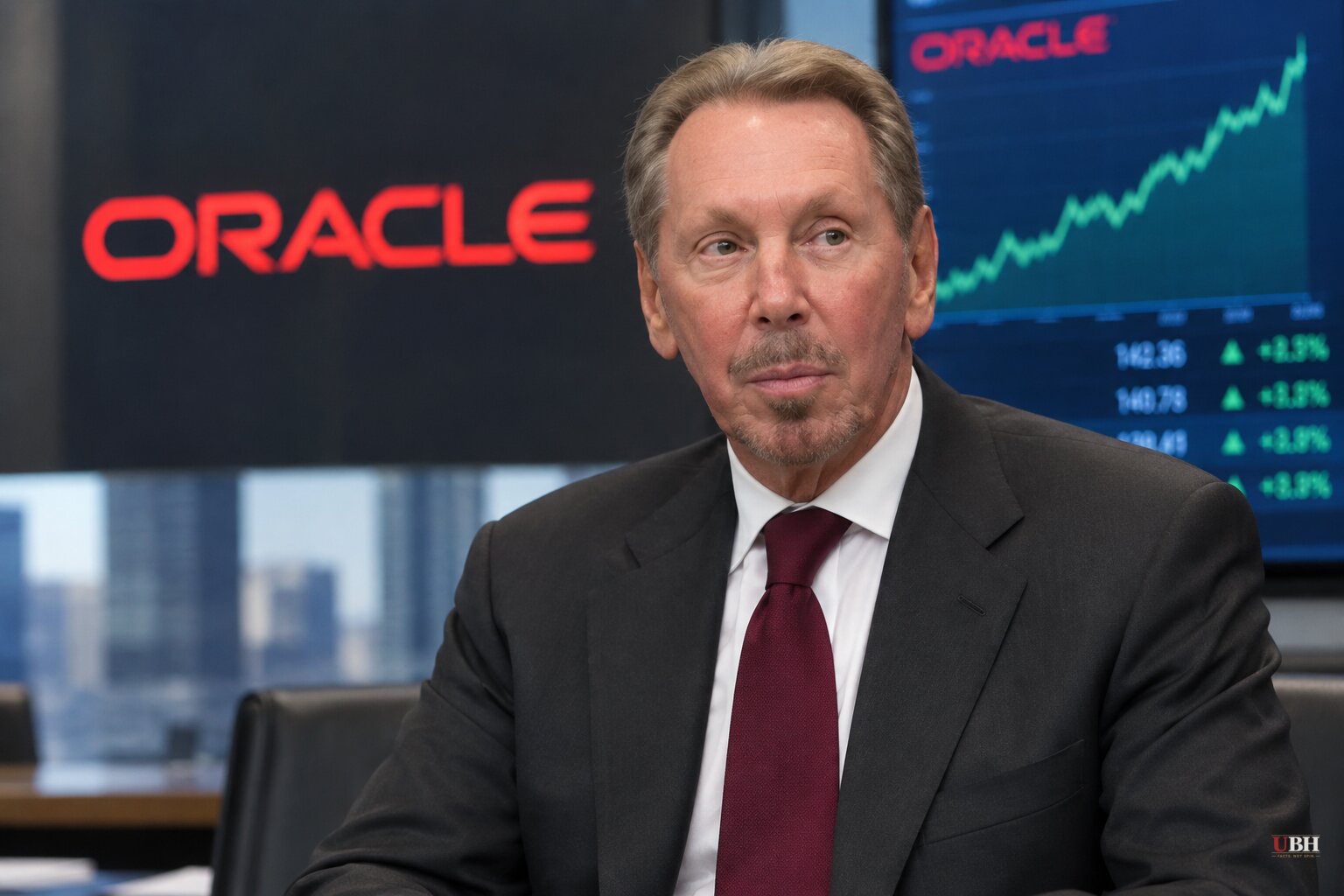
Larry Ellison isn't selling Oracle stock. He's borrowing against more of it, again.
An Oracle regulatory filing made public Friday shows Ellison pledged 67 million additional shares as collateral for personal loans compared to the same time last year, according to Bloomberg and NDTV Profit. That's a 19% increase in his total pledged shares since 2025. At Oracle's Friday closing price of $137.10, the newly added shares alone are worth about $9.2 billion.
Add it up and Ellison has now pledged roughly 36% of his 1.16 billion Oracle shares to secure personal debt, per the filing. A year earlier, per Oracle's proxy statement cited by BigGo Finance, he had about 346 million shares pledged, worth roughly $50 billion at a mid-September closing price of $144.79. Ellison, 82, owns close to 40% of Oracle outright. The pledged shares represent about 12% of the company's total outstanding stock.
Oracle bars its officers and directors from pledging company stock for personal loans, with exactly one carve-out: Ellison, the executive chair and chief technology officer, according to the filing reported by Bloomberg and Briefs. An Oracle spokesperson declined to comment.
The strategy is common among the ultra-wealthy. Loans aren't taxable income. Borrowing against shares lets Ellison fund whatever he wants to fund without triggering the capital gains tax bill a stock sale would create, according to BigGo Finance. It also lets him keep his voting control intact.
Oracle's board has told investors these are personal loans, not margin accounts, and that Ellison can repay them without dumping stock on the market. That's the strongest case against reading this as a red flag: a margin call forcing a fire sale is the scenario that spooks markets, and Oracle says that isn't the structure here.
Still, the timing raises an obvious question. Ellison announced plans earlier this month to sell up to $7.5 billion in Oracle stock, then abruptly canceled it, according to NDTV Profit. Instead of selling, he pledged more shares. Oracle hasn't explained the reversal beyond what's in the filing.
Ellison isn't just Oracle's chairman. He's the financial backbone behind his son David Ellison's Paramount Skydance Corp. and its $111 billion bid to acquire Warner Bros. Discovery. The Ellison family has committed $47 billion in equity to that deal, roughly $24 billion of it coming from three sovereign wealth funds in the Middle East, according to Bloomberg, Briefs, and NDTV Profit. Paramount is separately seeking debt financing to round out the purchase price. BigGo Finance reports Ellison separately signed an irrevocable $40.4 billion personal guarantee backing that equity financing in December 2025.
That's a legitimate thing to flag, not because anyone has alleged wrongdoing, but because three Middle Eastern sovereign wealth funds bankrolling a chunk of a deal for one of America's largest news and entertainment companies is worth watching regardless of politics. No source in this reporting suggests those funds would have any editorial or programming role, and nothing here establishes that they would. It's simply a fact about who's underwriting American media, and it deserves scrutiny on its own terms.
NDTV Profit notes the deal has cleared a real hurdle: Paramount this week settled litigation with 12 state attorneys general and the Writers Guild of America, both of whom had sued to block the merger. That removes one obstacle on the path to closing, though the deal isn't done.
The same Oracle disclosure revealed co-CEOs Clay Magouyrk and Mike Sicilia are getting a combined $870 million in stock option awards, $621.7 million and $248.7 million respectively, according to NDTV Profit. They took the joint CEO role a year ago from longtime Oracle chief Safra Catz. Ellison himself got a $117.8 million package after receiving none the previous two fiscal years.
That's a striking number to land the same week Oracle's stock is down about 23% year to date, according to BigGo Finance, amid investor worry over heavy data center spending and negative free cash flow. Oracle's cloud revenue did grow 121% and its backlog hit a record $664 billion, and Wall Street analysts, per BigGo, still carry an average Strong Buy rating with a $254.32 price target. Whether $870 million in options for two executives makes sense against a stock that's fallen nearly a quarter this year is a fair question for Oracle shareholders to ask at the next annual meeting.
None of this is illegal, and no regulator has raised a formal objection to any of it. But between the loan collateral, the abandoned stock sale, the foreign-financed media deal, and the executive pay, Oracle's Friday filing gave shareholders and reporters a lot to chew on in a single document.
Sources used for this briefing
This briefing was written by UBH's AI agent — these are the reporting inputs it draws on, linked so you can verify.


