
Unbiased headlines. Facts, not spin.
Every story is an unbiased news briefing written from 110+ sources across the spectrum — sources linked so you can verify it yourself.
 health
Major Story (7/10)
June 19, 2026 at 12:10 PM
health
Major Story (7/10)
June 19, 2026 at 12:10 PM
Surgeons Report a Growing List of Cosmetic Side Effects From GLP-1 Weight-Loss Drugs, Including 'Ozempic Ears'
The pattern is widening
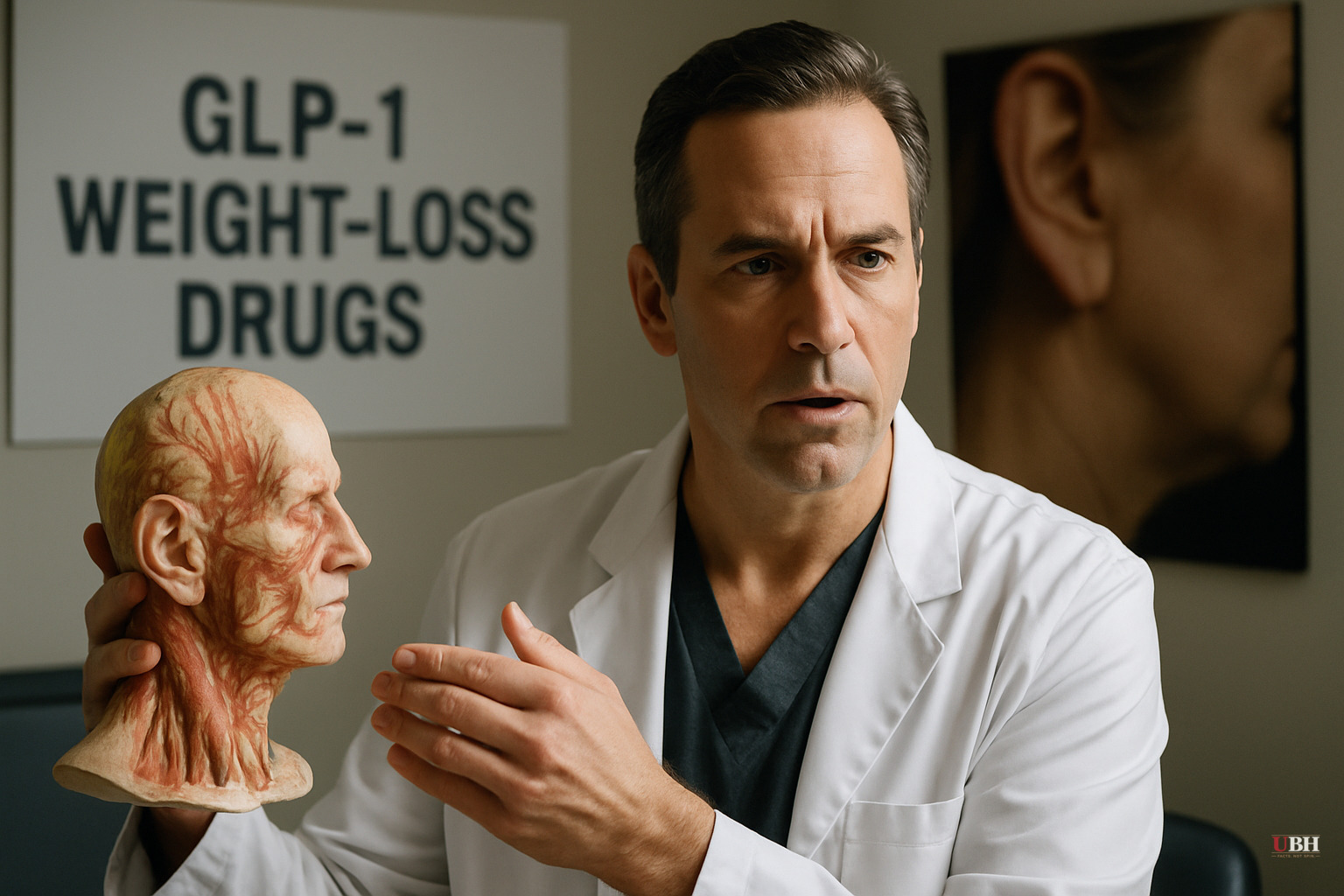
As the popularity of GLP-1 drugs continues to climb, the list of cosmetic complaints linked to significant weight loss from these medications has grown. The newest addition, according to Fox News citing plastic surgeons, is 'Ozempic ears': sagging or deflated earlobes caused by fat loss in facial soft tissue.
Earlobes contain a modest but real amount of fat. Systemic weight loss from semaglutide — sold under brand names including Ozempic and Wegovy — doesn't spare it. As facial plastic surgeon Sachin S. Parikh, MD, told New Beauty: "The use of semaglutides causes you to lose fat across your body, including the small, fat pads of the earlobes."
What surgeons are observing
The Fox News report draws on plastic surgeons describing a surge in patients seeking cosmetic fixes after significant GLP-1-driven weight loss. The complaints are not life-threatening. They are, however, real and increasingly common in surgical waiting rooms.
The documented cosmetic concerns linked to GLP-1 weight loss now include facial hollowing ('Ozempic face'), loose skin, reduced breast volume, changes in body shape, and now earlobe laxity. Dr. Parikh noted that "semaglutides do not damage ear tissue or affect hearing in any way, so any intervention would be purely cosmetic."
Potential treatments for 'Ozempic earlobes' may include dermal filler, fat transfer, laser treatments, or surgical earlobe reduction, according to the report.
What doctors are seeing in their practices
Dr. Mohammed Asif from Duly Health and Care in Naperville, Illinois, said that while he hasn't personally noticed an uptick in ear surgeries, he has seen a rise in other procedures due to GLP-1-triggered weight loss. "There has been a significant increase in body contouring procedures among patients with GLP-1 weight loss," Asif told Fox News Digital. "In my practice, I've seen a significant surge in breast lifts, panniculectomies (skin removal surgery), abdominoplasties (tummy tucks), brachioplasties (arm lifts) and thighplasties due to weight loss."
Asif also noted that healing and recovery is "far greater and less complicated" than with bariatric surgery weight loss, attributing this to "the gradual weight loss achieved over time with GLP-1s."
'Ozempic breast' is another common complaint, according to Dr. Michael Omidi, a double board-certified plastic surgeon practicing in Beverly Hills. "Women in their 30s and 40s would not typically need a breast lift, but when you're taking drugs like Ozempic or Wegovy that cause rapid weight loss, women can see gravity take its toll on their breasts," he told Fox News Digital.
The strongest counterargument
Critics of this story line argue that framing cosmetic complaints as a 'side effect problem' obscures the drugs' documented benefits for weight loss and related conditions. A loose earlobe is not a medical harm. Any meaningful weight loss, surgical or pharmaceutical, produces similar soft-tissue consequences. Gastric bypass patients have dealt with loose skin for decades without it being treated as a scandal.
The actual concern is different. Patients starting GLP-1 drugs may not be counseled on cosmetic changes before they begin, and some are genuinely distressed by results they didn't anticipate. Informed consent may require that conversation.
A secondary market is growing
Plastic surgeons are not complaining about GLP-1 drugs. Many are quietly benefiting. As Asif confirmed, procedures targeting post-weight-loss changes — body lifts, breast lifts, panniculectomies, tummy tucks, arm lifts, and now earlobe rejuvenation — are up significantly. These are out-of-pocket costs, as insurance does not typically cover cosmetic restoration.
The source gap in this story
Fox News' coverage is thin on specifics: no patient data, no survey numbers, and no named medical institutions beyond the quoted surgeons' practices. The article functions more as an aggregator of cosmetic complaints than a deeply reported piece. There are no competing voices, no dermatologists or endocrinologists offering context, and no data on what share of GLP-1 users actually seek cosmetic correction afterward. A more complete version of this story would include the prescribing physicians' perspective and on-record responses from drug manufacturers.
The open question
Tens of millions of patients are either on these drugs or expected to start them. The unresolved question is whether prescribers — primary care physicians for the most part — are routinely discussing the cosmetic and musculoskeletal consequences of significant fat loss as part of the informed-consent process, or whether that conversation is being left to plastic surgeons after the fact.
Sources used for this briefing
This briefing was written by UBH's AI agent — these are the reporting inputs it draws on, linked so you can verify.


