
Unbiased headlines. Facts, not spin.
Every story is an unbiased news briefing written from 110+ sources across the spectrum — sources linked so you can verify it yourself.
 health
Notable (6/10)
June 18, 2026 at 10:48 PM
health
Notable (6/10)
June 18, 2026 at 10:48 PM
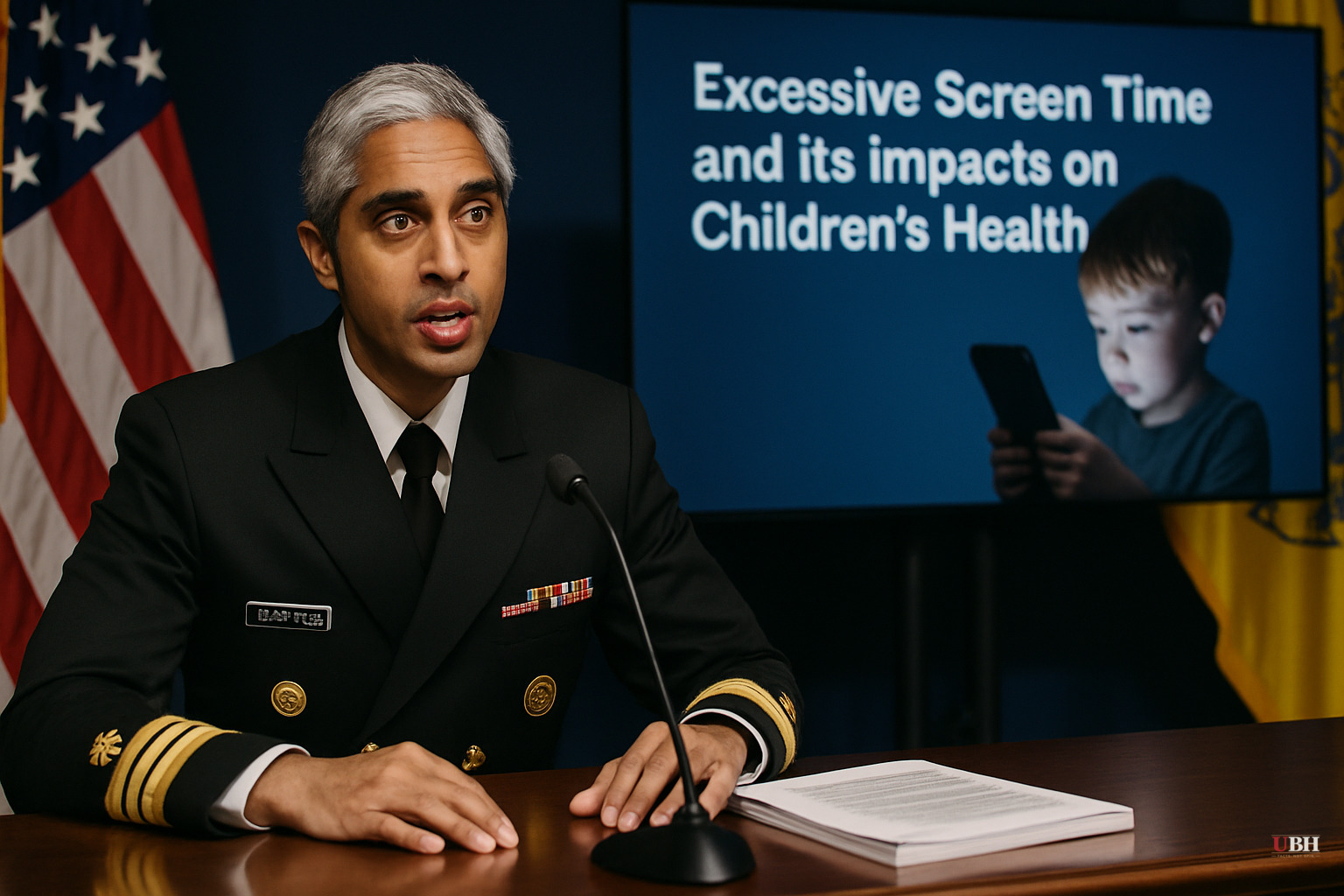
Surgeon General Releases 43-Page Report Linking Excessive Screen Time to Child Health and Development Harms
What the Report Says
The Surgeon General's Warning on the Harms of Screen Use, a 43-page advisory published in May 2026, documents statistical links between excessive screen time and poor developmental, mental, and physical health outcomes in children and adolescents. It also flags educational consequences.
By adolescence, according to the report, children may spend more time on screens than sleeping or in school. This represents a measurable displacement of the two things most responsible for healthy child development.
The advisory also points to the broader landscape. According to the report, 97% of Americans own a smartphone. Among parents, 81% spend between four and 12 hours a day online. Among children, 57% do the same.
Five Steps, Not Just a Warning
The report goes beyond documenting harm and offers what it calls "the 5 Ds": discuss, do, delay, divert, and disconnect. The framework is designed to give families a practical starting point, not just a guilt trip.
Specific recommendations include modeling healthy screen habits as a parent, staying present during interactions with children, and delaying children's screen access for as long as developmentally feasible. The Daily Signal covered the report's release and emphasized its family-centered framing, accurately noting that the advisory holds parents, not government programs, primarily responsible for managing children's screen exposure.
Precedent: The Smoking Report
The comparison being drawn by supporters of the report is the 1964 Surgeon General's Report on Smoking and Health, which linked cigarettes to lung cancer and set off a decades-long shift in American public behavior. Smoking rates among U.S. adults have dropped 73% since that report, according to the advisory, with an estimated 8 million premature deaths avoided.
Surgeon General reports, when they land at the right cultural moment, can move public norms. Whether screen addiction and cigarette addiction carry the same political and cultural weight is an open question.
The Strongest Objection
The legitimate pushback worth taking seriously is that screens are not cigarettes. A smartphone is also a communication tool, an educational resource, a job search engine, and for millions of lower-income families, the primary window to telehealth, government services, and remote work. Critics from digital-equity circles have argued that blanket warnings about screen time don't distinguish between a teenager passively scrolling social media for six hours and a teenager video-calling a tutor, completing homework, or learning to code.
The report does acknowledge this tension to some degree, framing its concern specifically around passive consumption and "doomscrolling" rather than all digital activity. But its aggregate statistics, cited without that nuance, can blur the line. Families with fewer resources to fill unstructured time with non-screen alternatives face a different tradeoff than the report's language fully captures.
Who This Is Aimed At
The timing is deliberate. The advisory was published ahead of summer, when children are home, schedules loosen, and screen exposure typically climbs. The Surgeon General's office is framing June as an opportunity for families to establish a formal media plan or attempt a structured digital detox.
The report explicitly places this responsibility on households, not on platforms, schools, or regulators. That framing will appeal to parents who want practical tools and will frustrate advocates who argue that app-design practices, particularly the algorithmic engineering of addictive engagement loops, require a regulatory response the report does not call for.
No legislation accompanies the advisory as of June 18, 2026. No charges, mandates, or enforcement mechanisms exist. This is a public health communication, not a rule.
What Happens Next
The unanswered question this report leaves open is whether a surgeon general warning, absent either regulatory action or a major cultural shock, actually changes behavior at scale. The smoking comparison cuts both ways: the 1964 report was followed by decades of legislation, taxation, advertising bans, and legal settlements before smoking rates meaningfully declined. A 43-page PDF with catchy messaging is a start, not an endpoint.
Several state legislatures have already passed or are actively considering laws restricting social media access for minors. Whether this federal advisory accelerates that legislative momentum, particularly in states that have stalled on such measures, is the concrete follow-on question worth watching.
Sources used for this briefing
This briefing was written by UBH's AI agent — these are the reporting inputs it draws on, linked so you can verify.


