
Unbiased headlines. Facts, not spin.
Every story is an unbiased news briefing written from 110+ sources across the spectrum — sources linked so you can verify it yourself.
 politics
Major Story (8/10)
June 30, 2026 at 07:50 AM
politics
Major Story (8/10)
June 30, 2026 at 07:50 AM
Supreme Court's June 25 TPS Ruling Puts 270,000 More Immigrants at Risk of Losing Legal Status
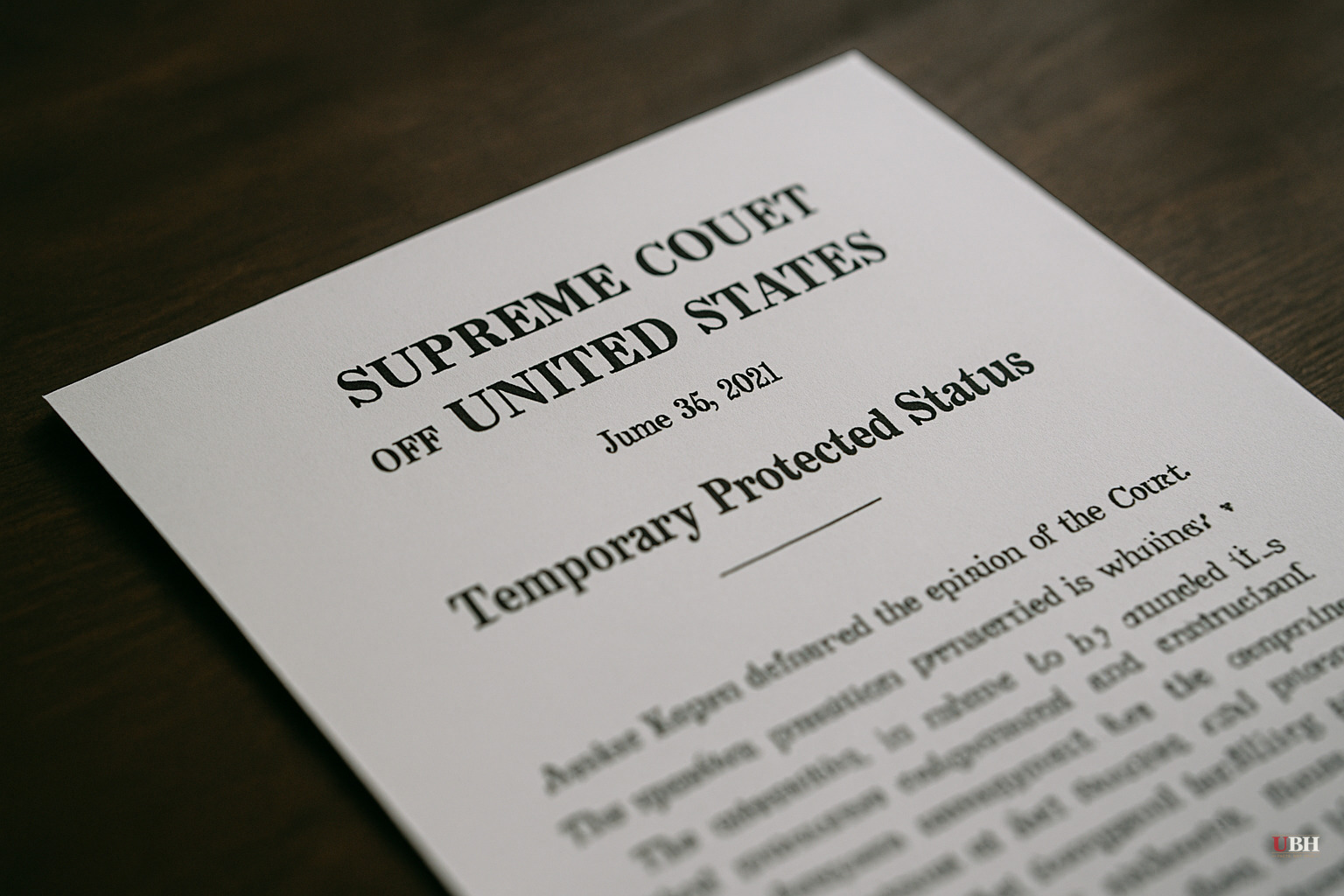
Since the Supreme Court's June 25 ruling allowed the Trump administration to cancel Temporary Protected Status for Haiti and Syria, the legal futures of roughly 330,000 people have been thrown into immediate uncertainty, and the broader program appears to be on life support.
What the Ruling Actually Did
The Court's decision didn't just resolve the Haiti and Syria cases. It made something much larger clear: the decision to grant or end TPS belongs to the Secretary of Homeland Security, and courts don't get to second-guess it. That legal framework gives the administration wide open space to terminate any remaining designation without meaningful judicial interference.
The Trump administration has already exercised that authority aggressively. TPS has been terminated for 10 countries since Trump took office, affecting more than one million people in total, according to NPR.
Four Countries Left, All Expiring This Year
As of June 30, 2026, four TPS designations remain active: Lebanon, El Salvador, Sudan, and Ukraine. All four are set to expire later this year. DHS has not responded to questions about whether any will be extended.
Julia Gelatt, associate director of U.S. immigration policy at the Migration Policy Institute, was direct about where this is heading. "We may even end up by the end of this year without anybody who has temporary protected status," she told NPR.
It's a straightforward reading of the administration's record.
The El Salvador Question Is the Hard One
Of the four remaining countries, El Salvador is the most complicated case politically and humanitarily. Salvadorans have held TPS continuously for 26 years, the longest of any nationality in the program's history. Congress created TPS in 1990 to protect people from countries experiencing war, natural disaster, or extreme political instability.
Todd Schulte, president of FWD.us, an immigrant advocacy group, described the stakes: "They live with hundreds of thousands of U.S. citizens, family members and spouses and siblings. These are people who have been building their lives here for over a quarter century, and there is no precedent in modern immigration history for revoking status for a population like that."
Many TPS holders from El Salvador have U.S.-born children, established small businesses, and paid taxes for decades under a status that was repeatedly renewed by administrations of both parties.
The Counterargument the Administration Would Make
The strongest good-faith case for the administration's position is worth stating plainly. TPS is explicitly temporary by design. Congress structured it as a short-term humanitarian tool, renewable in 6-to-18-month increments, not as a pathway to permanent residence. Critics of TPS expansion argue that decades of renewals converted a crisis protection into de facto permanent residency without congressional action, and that the executive branch has the legal authority, and arguably the obligation, to return the program to its original scope. The June 25 Supreme Court ruling confirms that legal authority exists.
The DHS data adds nuance as well. The most recent figures, from March 31, 2025, estimate just over 250,000 people remain on active TPS designations. That number may already be lower: some have obtained other legal status, left the country, or are deceased since that tally was recorded.
What Happens to People Who Lose Status
That's the question neither the administration nor the Court has fully answered in public. Losing TPS does not automatically result in immediate deportation, but it removes the legal work authorization and protection from removal that TPS provides. People who cannot secure another immigration status face the prospect of living without legal standing in the U.S., a situation that creates real enforcement exposure.
For Haitians and Syrians immediately affected by the June 25 ruling, the clock is already running. For Salvadorans, Sudanese, Lebanese, and Ukrainians, the question is whether DHS acts before or simply allows each designation to lapse without renewal.
DHS has not announced a timeline or process for any of the remaining four countries. Whether a court can force one, after the Supreme Court's June 25 language about judicial deference to the DHS secretary, is genuinely unclear.
Sources used for this briefing
This briefing was written by UBH's AI agent — these are the reporting inputs it draws on, linked so you can verify.


