
Unbiased headlines. Facts, not spin.
Every story is an unbiased news briefing written from 110+ sources across the spectrum — sources linked so you can verify it yourself.
 finance
Notable (5/10)
July 18, 2026 at 12:26 AM
finance
Notable (5/10)
July 18, 2026 at 12:26 AM
Supreme Court Won't Review SEC's Rescinded Gag Rule, Leaving Door Open for Its Return
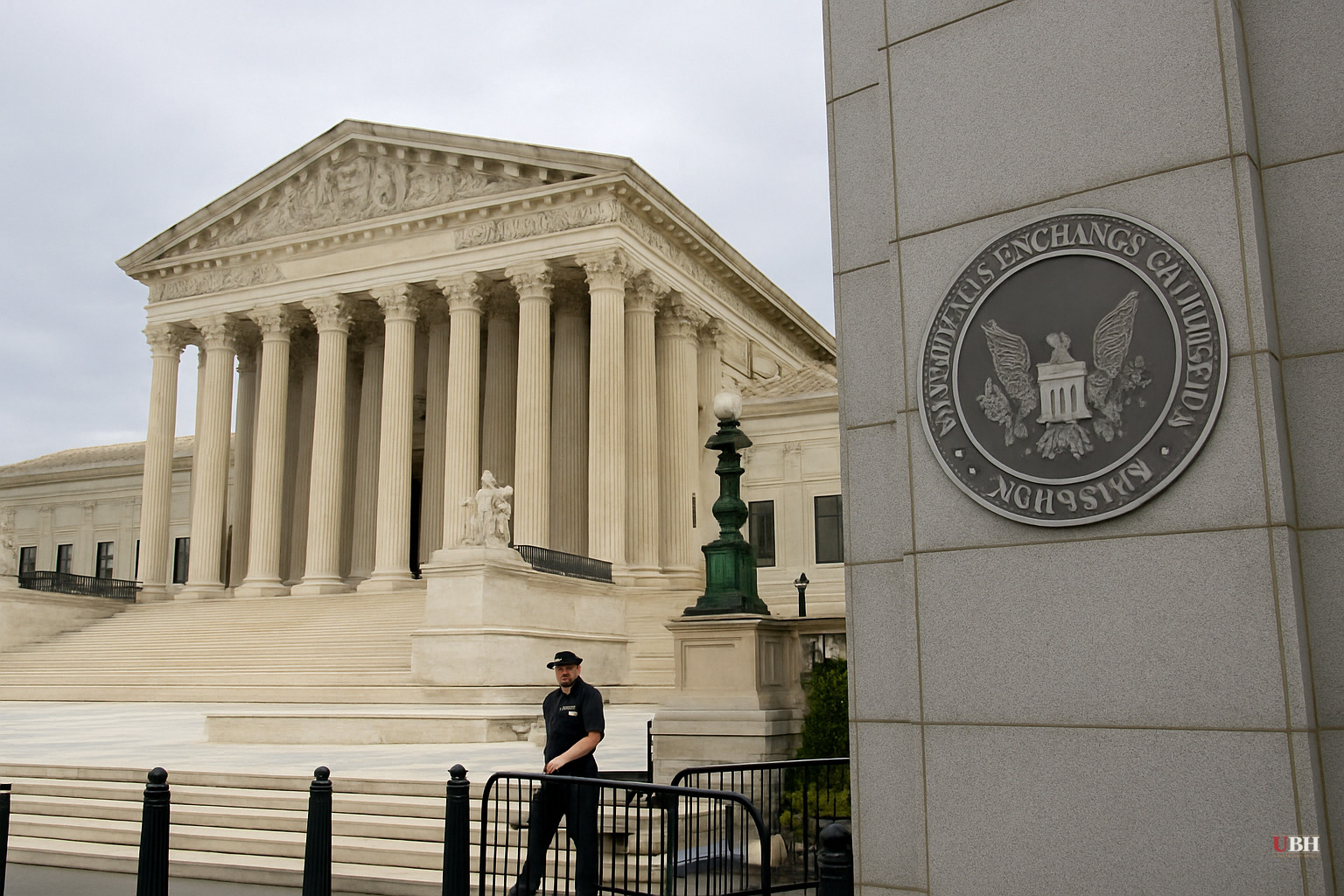
The Supreme Court on Monday refused to hear a constitutional challenge to a Securities and Exchange Commission policy the agency itself already killed. The justices declined without comment, according to Insurance Journal, ending Thomas Powell's years-long fight over the SEC's so-called "gag rule."
That rule is gone. It was rescinded on May 18, 2026. The fight over whether it was ever legal in the first place just died with it.
What the Gag Rule Actually Did
Since 1972, the SEC required anyone settling an enforcement case to agree they would "neither admit nor deny" the agency's allegations, according to Reed Smith. Sounds neutral. It wasn't.
The catch: defendants couldn't ever publicly deny the charges afterward either. Say the wrong thing to a reporter, a shareholder, your own employees, and the SEC could theoretically reopen the case and undo your settlement. Cleary Gottlieb notes the SEC itself admitted it has no record of ever actually enforcing that threat. Didn't matter. The chilling effect was the point.
Thomas Powell knew this firsthand. The SEC accused him in 2021 of misrepresentations tied to more than a dozen unregistered oil and gas securities offerings, according to Insurance Journal. He settled, paid a $75,000 penalty, and agreed to the standard no-admit, no-deny language. That meant he could never publicly say he didn't do it, even if he believed that to his core.
His lawyers at the New Civil Liberties Alliance called it "rank censorship," per Insurance Journal. Elon Musk and Mark Cuban both criticized the rule publicly over the years, per Insurance Journal, and Musk's own history with the SEC over his 2018 tweets made him a vocal, personally invested critic.
The SEC Blinked First
Facing Powell's case working its way toward the Supreme Court, with a certiorari petition filed in March 2026 and the SEC's response due May 20, the agency rescinded the rule on May 18, just two days before it had to answer in court, according to Reed Smith.
SEC Chairman Paul Atkins didn't dress it up. "For more than 50 years, the Commission has conditioned settlement on a defendant's promise not to publicly deny the Commission's allegations," Atkins said, according to Reed Smith. "Speech critical of the government is an important part of the American tradition. This recission ends the policy prohibiting such criticism by settling defendants."
Commissioner Hester Peirce backed the move too, according to Cleary Gottlieb, arguing that letting people criticize the agency is good for transparent markets. An agency that can silence the people it punishes has less incentive to get things right in the first place.
The Commodity Futures Trading Commission followed the SEC's lead the next month, rescinding its own similar policy that had stood since 1998, according to Insurance Journal.
Why the Supreme Court's Pass Matters More Than It Looks
Here's the problem critics identified immediately. The SEC argued Powell's case was now moot since the rule he was fighting no longer exists, according to Insurance Journal. The Supreme Court apparently agreed enough to decline the case entirely.
But Powell's attorneys made a point that deserves a straight answer. "Agency rules that can be rescinded overnight can be reinstated overnight," they wrote, according to Insurance Journal. "The government provides no meaningful assurance that a future SEC will not revive the Gag Rule."
This is a structural fact. The gag rule was never a statute passed by Congress. It was, as Reed Smith describes it, an informal policy statement adopted in 1972 without any notice-and-comment rulemaking. What one SEC chairman can undo with a memo, the next one can reinstate the same way. No law changed. No court ruled it unconstitutional. Only the political will of the current commission changed.
The Ninth Circuit actually upheld the gag rule in August 2025 in this same Powell case, reasoning that defendants could voluntarily waive their First Amendment rights as part of a settlement, according to Reed Smith, even while acknowledging the rule raised "legitimate First Amendment concerns." That ruling never got reversed. It's still on the books in that circuit, a legal precedent sitting there even though the rule it upheld no longer exists.
What Happens Now
For anyone currently settling with the SEC, the practical reality changed in May. Cleary Gottlieb notes the SEC says it will not enforce old no-deny provisions already signed, and defendants going forward can still choose a no-admit, no-deny settlement voluntarily. They just aren't forced into permanent silence as a condition.
Cleary Gottlieb's attorneys, who've handled these cases from both sides, caution that most people under SEC investigation still want to settle quietly and move on, not launch a public denial campaign. The rescission mostly widens options rather than changing everyday practice for most defendants.
No court has ruled the gag rule unconstitutional. No statute bars its return. The only thing standing between defendants and a revived version of the policy is whoever sits in the SEC chairman's office next.
Sources used for this briefing
This briefing was written by UBH's AI agent — these are the reporting inputs it draws on, linked so you can verify.


