
Unbiased headlines. Facts, not spin.
Every story is an unbiased news briefing written from 110+ sources across the spectrum — sources linked so you can verify it yourself.
 politics
Major Story (7/10)
August 5, 2026 at 12:02 AM
politics
Major Story (7/10)
August 5, 2026 at 12:02 AM
Supreme Court Won't Block $656 Million Terror Judgment Against Palestinian Authority
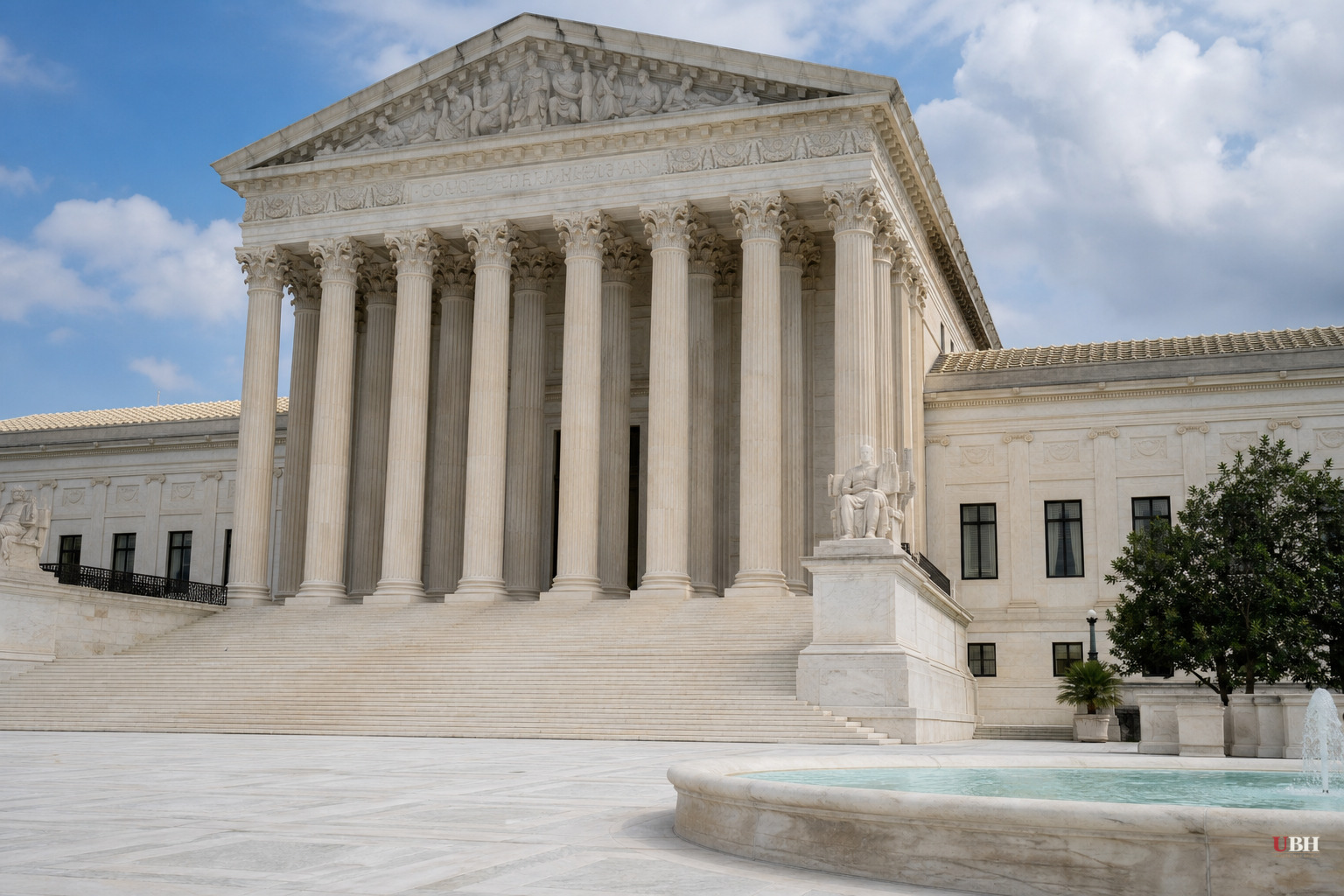
Justice Sonia Sotomayor on Monday rejected an emergency application from the Palestinian Authority and the Palestine Liberation Organization to freeze a $656 million judgment owed to American victims of terror attacks in Jerusalem during the early 2000s, according to The Associated Press. The order clears the way for collection efforts to begin.
This fight has dragged on for 22 years. The underlying attacks killed 33 people and wounded hundreds during the Second Intifada, and the families sued under the U.S. Anti-Terrorism Act, according to Middle East Eye.
A jury awarded the families damages in 2015. The 2nd U.S. Circuit Court of Appeals then tossed the verdict in 2016, ruling U.S. courts lacked jurisdiction because the violence wasn't specifically aimed at Americans. The Supreme Court originally declined to hear an appeal in 2018.
Congress didn't let it die there. Lawmakers passed the Promoting Security and Justice for Victims of Terrorism Act, later folded into an updated Anti-Terrorism Act, specifically designed to let these families drag the PA and PLO into U.S. court whether the Palestinian groups liked it or not.
The Supreme Court upheld that law 9-0 in 2025, according to Israel National News. That set up the 2nd Circuit to reinstate the full $656 million judgment on March 30 of this year. The appeals panel wrote plainly: "We conclude that the original judgment for the plaintiffs should be reinstated. That conclusion is consistent with the plain import of the Supreme Court's decision."
Kent Yalowitz, the plaintiffs' attorney, told the AP after the March ruling that "our client families are very relieved that the court has reinstated the judgment without requiring a new trial. They have been waiting for a very long time for justice to be done."
The PA's Argument
The Palestinian Authority and PLO aren't disputing this quietly. They argue in court filings that paying out $656 million immediately would gut civil services across PA-administered areas of the West Bank, according to the AP.
Raed Jarrar, advocacy director at Democracy for the Arab World Now, made the case bluntly to Middle East Eye. He said the PA was "forced into accepting US jurisdiction" through legislation Congress wrote specifically to reach the Palestinian Authority, calling it "really unprecedented."
Jarrar argued the money would come out of the pockets of ordinary Palestinian civil servants, not the officials responsible for any incitement or involvement in the original attacks. "The judgment will affect ordinary Palestinians who are already operating on a 70 percent salary because the PA is a dysfunctional and for-profit institution that is unable to even pay the full salaries of its employees," he told the outlet. He called it "the closest we can get to an act of collective punishment."
If the PA is already paying its own employees partial salaries, and Israel is separately withholding Palestinian tax revenue, a court-ordered $656 million hit could land hardest on doctors, engineers and clerks who had nothing to do with the attacks that triggered the lawsuit in the first place.
But that argument doesn't erase what a U.S. jury and now multiple appellate rulings have found: that Palestinian agents were tied to attacks that killed 33 people, including Americans, and that the compensation law Congress passed applies whether or not it's convenient for the PA's budget. The families suing say they've been fighting since the early 2000s for exactly this outcome.
What Happens Now
Sotomayor's order means collection can move forward while the PA's broader appeal against the reinstated verdict continues in lower courts. No new trial is required, per the 2nd Circuit's March ruling.
The Daily Signal frames this as a straightforward win against "leftist elites" and NGO-driven obstruction, tying it to unrelated commentary about federal bureaucracy. That framing isn't supported by anything in the case record. This is a jurisdictional and statutory fight that Congress deliberately engineered by rewriting anti-terrorism law, not a story about domestic political factions.
Middle East Eye's coverage leans into the PA's "collective punishment" framing without noting that the underlying verdict rests on a jury's factual findings about Palestinian agents' involvement in the attacks, findings that have survived multiple rounds of appellate review.
How collection actually works against a foreign governing authority with limited assets reachable under U.S. law remains unclear, as does whether the PA's broader appeal has any realistic chance of blocking payment before assets are seized or garnished. That fight continues in the lower courts.
Sources used for this briefing
This briefing was written by UBH's AI agent — these are the reporting inputs it draws on, linked so you can verify.


