
Unbiased headlines. Facts, not spin.
Every story is an unbiased news briefing written from 110+ sources across the spectrum — sources linked so you can verify it yourself.
 politics
Major Story (7/10)
August 12, 2026 at 08:25 AM
politics
Major Story (7/10)
August 12, 2026 at 08:25 AM
Supreme Court Will Hear Catholic Preschool's Case Against Colorado Over LGBTQ Admissions Rule
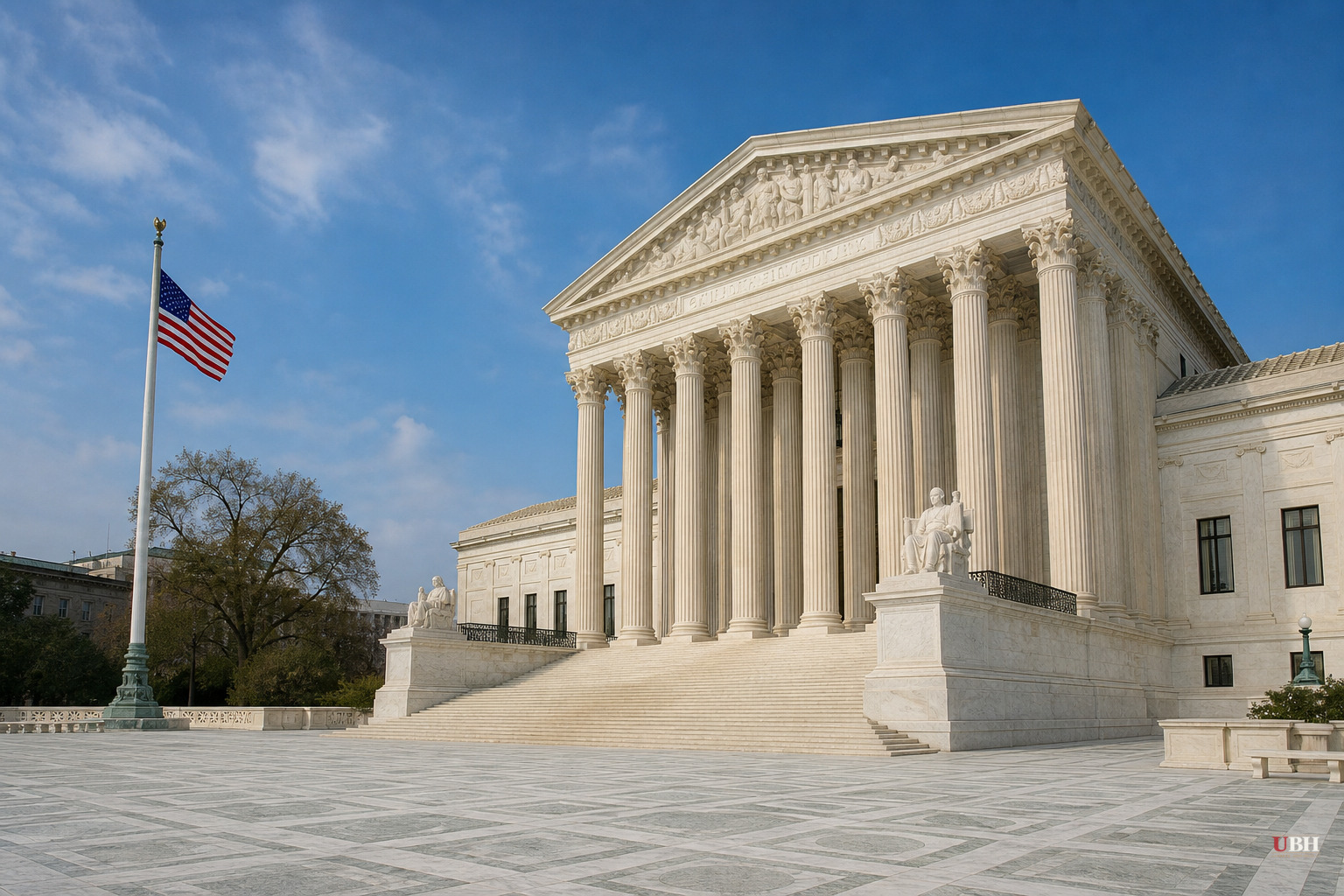
The Supreme Court released its November argument calendar this week, and one case merits close attention: St. Mary Catholic Parish v. Roy, set for oral arguments on November 3, 2026.
At issue is whether Colorado violated the First Amendment when it excluded a Catholic preschool from the state's universal preschool program because the school wouldn't agree to admit children based on the state's gender identity and sexual orientation rules.
St. Mary's Catholic Parish preschool in Littleton, Colorado, wanted into the state's universal pre-K program, which offers public funding to preschools statewide. Colorado's rules require participating schools to admit children who identify as LGBTQ and children of LGBTQ-identifying parents, without exception for religious objection.
The parish said no. It argues its Catholic teaching on gender and family conflicts with that requirement, and that being locked out of a public benefit program over religious belief amounts to unconstitutional discrimination.
The Legal Fight So Far
A federal district court and the 10th U.S. Circuit Court of Appeals both sided with Colorado. They leaned on Employment Division v. Smith, the 1990 Supreme Court decision that let Oregon deny unemployment benefits to a man fired for using peyote in a religious ceremony. The logic in Smith: a neutral law that applies to everyone equally doesn't violate the Free Exercise Clause just because it burdens someone's religion.
The 10th Circuit found Colorado's preschool rule was neutral and generally applicable, so under Smith, it survives.
Congress didn't love the Smith precedent. In 1993, lawmakers passed the Religious Freedom Restoration Act, requiring courts to apply strict scrutiny, the toughest constitutional test, to laws that burden religious exercise. But RFRA applies to federal law, not state law, which is part of why this fight is playing out under First Amendment doctrine rather than RFRA directly.
The plaintiffs, which include the Catholic Archdiocese of Denver, two parishes, and two Catholic parents, are leaning on more recent precedent. They cite Hosanna-Tabor Evangelical Lutheran Church and School v. EEOC (2012), where the Supreme Court unanimously protected churches' right to hire and fire ministers without government interference. They also point to Mahmoud v. Taylor, a 2025 case where the Court allowed parents to opt their kids out of public school reading assignments with explicit gender and sexual content, over religious objection.
The defendant is Lisa Roy, executive director of Colorado's Department of Early Childhood.
A Split Among the Circuits
According to the Daily Signal, two federal appeals courts and two state supreme courts have already ruled the opposite way from the 10th Circuit on materially similar questions. When multiple appellate courts split on the same constitutional question, that's the classic trigger for Supreme Court review. It's not a fringe legal theory being tested here. It's a live disagreement among courts that needs a national answer.
Colorado's Case
Colorado isn't arguing it can strip St. Mary's of religious liberty broadly. The state's brief frames this narrowly: the parish wants public money while reserving the right to turn away kids based on their identity or their parents' identity, according to court filings referenced by the Daily Signal. Colorado's position is that if a private religious school wants to operate entirely on its own terms and dime, that's protected. But once it takes taxpayer funding through a state program, the state can attach nondiscrimination strings.
Government routinely conditions funding on compliance with civil rights rules, and courts have generally allowed that for programs like federal contracts, Medicaid, and public school funding. The question the justices will have to sort out is whether religious institutions get treated differently when the "discrimination" being regulated is itself rooted in religious doctrine about sex and gender, not race.
What's Actually at Stake
A ruling for St. Mary's could reshape how states structure faith-based participation in universal pre-K, voucher programs, and other public benefit schemes nationwide, particularly in blue states that have added gender identity and sexual orientation protections to public funding rules. A ruling for Colorado would reinforce that states can use funding conditions to enforce nondiscrimination policies even against religious objectors, so long as the rule applies to everyone equally.
The Supreme Court's current makeup, with a 6-3 conservative majority that has ruled favorably for religious plaintiffs in cases like Hosanna-Tabor, Mahmoud, and 303 Creative v. Elenis, gives St. Mary's a real shot. But the funding-conditions angle here is different from those cases, and the justices will have to decide whether taking public money changes the calculus.
Oral arguments are scheduled for November 3, 2026. A decision likely won't come until sometime in 2027, given the Court's typical timeline for cases argued in the fall term.
Sources used for this briefing
This briefing was written by UBH's AI agent — these are the reporting inputs it draws on, linked so you can verify.


