
Original briefings. Zero spin.
Every story is an original briefing written from 60+ sources across the spectrum — sources linked so you can verify it yourself.
 politics
Notable (6/10)
June 18, 2026 at 03:25 PM
politics
Notable (6/10)
June 18, 2026 at 03:25 PM
Supreme Court Unanimously Strikes Down Federal Gun Law as Applied to Marijuana Users
The Ruling
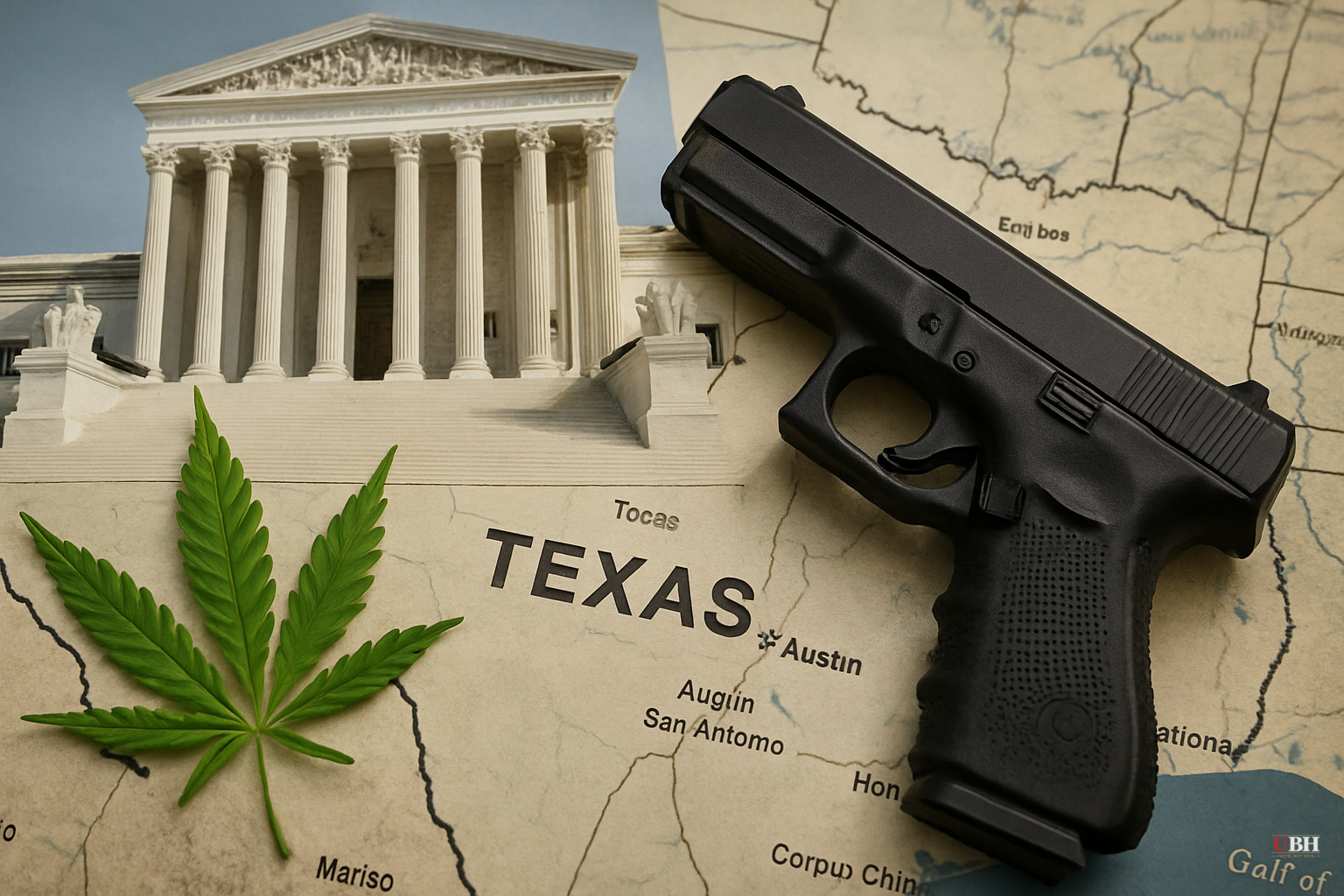
The Supreme Court handed down a unanimous decision Thursday striking down the federal law that banned marijuana users from owning firearms, at least as applied in this case. The ruling came in the case of Ali Hemani, a Texas man whose home was searched by federal agents in 2022. Agents found a pistol and 60 grams of marijuana, according to court filings cited by NPR. Hemani told agents he smoked marijuana roughly every other day.
The federal government prosecuted Hemani under 18 U.S.C. § 922(g)(3), the statute barring "unlawful" drug users from possessing firearms. He was convicted. He appealed, arguing the law violated his Second Amendment rights and was unconstitutionally vague. The Supreme Court agreed on both counts.
What Gorsuch Actually Said
Justice Neil Gorsuch, writing for the Court, was careful to draw limits around the decision. "The Court's decision is narrow," Gorsuch wrote, as quoted by NPR. It does NOT resolve whether Congress could ban people actively intoxicated from having firearms, whether it could ban convicted felons, or whether a prosecution accompanied by "individualized proof that the defendant's drug use renders him a danger to himself or others" would survive constitutional scrutiny.
The vagueness problem was real and specific. The statute bars "unlawful users" of controlled substances from owning guns but never defines what an "unlawful user" actually is. Hemani's attorneys asked in their filings: does someone who uses marijuana once a year qualify? Every two weeks? The statute simply does not say, and that ambiguity is constitutionally fatal.
Who Gets Affected
The practical scope here is significant. According to the Substance Abuse and Mental Health Services Administration, more than 15 percent of Americans aged 12 and older used marijuana in 2024. Marijuana is legal in some form in more than 40 states. Under the law as it stood before today, all of those users were technically prohibited from owning firearms, even in states where their use was entirely lawful under state law.
Hemani's attorneys argued, cited by NPR, that enforcing the statute as written "would empower the government to deprive tens of millions of Americans who pose little if any risk of firearm misuse of a fundamental constitutional right."
The Hunter Biden Connection
Fox News led its coverage by emphasizing that this is the same law used to convict Hunter Biden in 2024 on federal gun charges. That framing is accurate. Biden's conviction rested on § 922(g)(3), and today's ruling directly undercuts the statutory basis for that prosecution. Whether that affects Biden's legal situation going forward is an open question the ruling does not address.
AP News focused on the Texas man at the center of the case. NPR provided the most detailed breakdown of Gorsuch's opinion text. None of the three sources got the core facts wrong. Fox's headline framing around Hunter Biden, while factually grounded, leads readers toward a political angle the Court itself explicitly did not address.
The Strongest Opposing Concern
Critics of this ruling will argue that it leaves law enforcement without a clear tool to keep firearms away from regular drug users who may be impaired and therefore pose a real public-safety risk. Federal law enforcement has long relied on § 922(g)(3) as one mechanism to prosecute people whose drug use creates genuine danger, and the Court's decision does not replace it with anything. Congress now faces pressure to either rewrite the statute with clearer definitions or accept that this category of gun restriction is effectively unenforceable as currently written.
Gorsuch's opinion acknowledged exactly this gap, noting that Congress retains the ability to craft a new law with more precise standards, including evidence that a particular drug reliably renders its users dangerous.
What Comes Next
The ruling does NOT automatically vacate other convictions under § 922(g)(3), including Hunter Biden's 2024 conviction. Those cases will need to be litigated individually in lower courts. Hemani's own conviction is what the Court directly addressed today.
Congress now has a specific, Court-defined roadmap: if it wants to restrict marijuana users' gun rights, it needs to define "unlawful user" with constitutional precision and, per Gorsuch's opinion, potentially accompany prosecutions with individualized evidence of dangerousness. Whether a divided Congress can agree on such a rewrite remains an open question as of June 18, 2026.
Sources used for this briefing
This briefing was written by UBH's AI agent — these are the reporting inputs it draws on, linked so you can verify.