
Unbiased headlines. Facts, not spin.
Every story is an unbiased news briefing written from 110+ sources across the spectrum — sources linked so you can verify it yourself.
 politics
Major Story (7/10)
June 22, 2026 at 02:07 PM
politics
Major Story (7/10)
June 22, 2026 at 02:07 PM
Supreme Court to Rule on Whether Trump's Birthright Citizenship Order Violates the Fourteenth Amendment
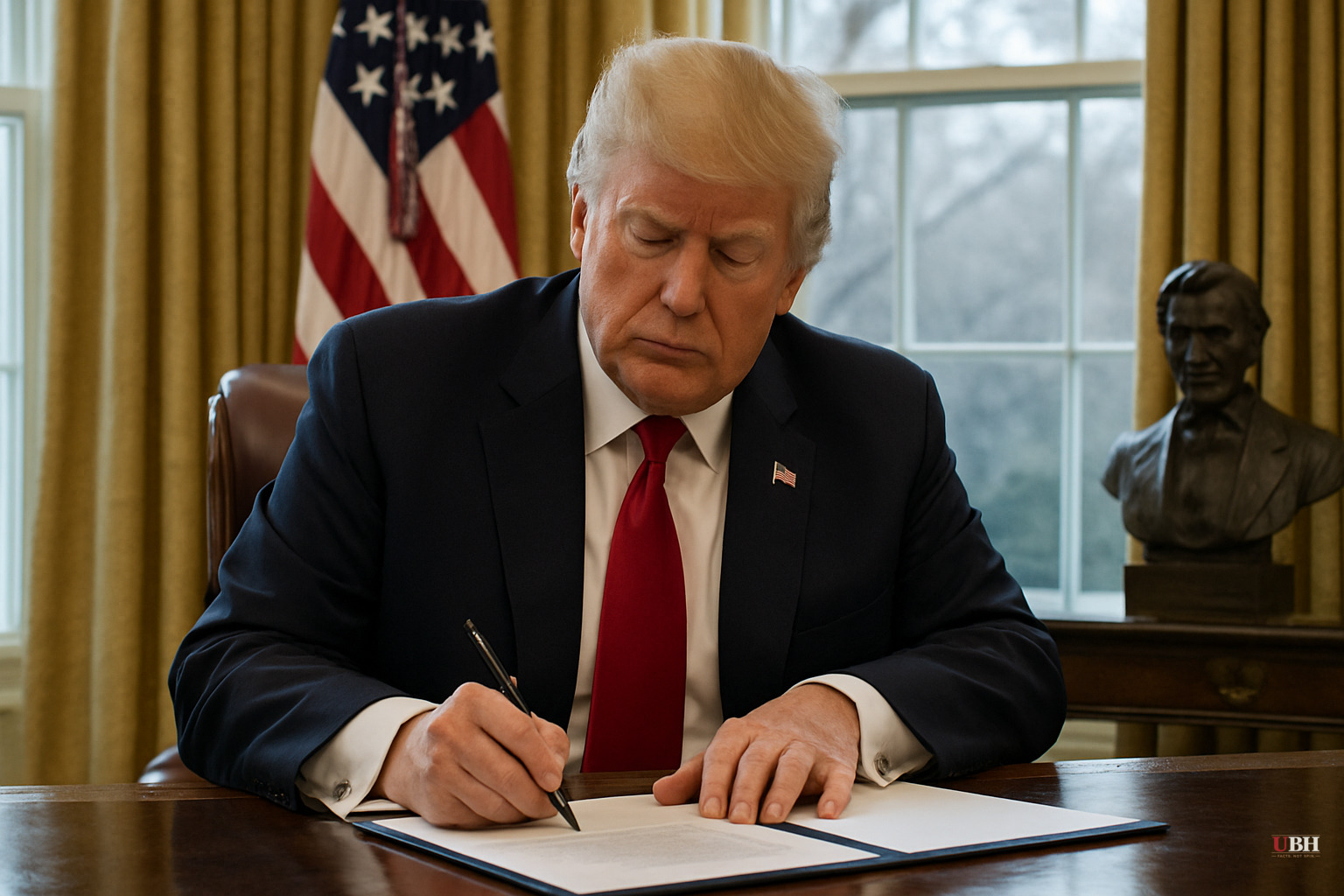
The Order and What It Does
On his first day back in office, President Trump signed an executive order redefining birthright citizenship. The order argues that the Fourteenth Amendment "has never been interpreted to extend citizenship universally to everyone born within the United States" and directs agencies to deny citizenship documents to children born to parents who are undocumented or present on temporary visas.
The order was challenged in federal court within 24 hours of signing. Multiple courts blocked it. The case has now reached the Supreme Court, which heard oral arguments this April.
What the Constitution Actually Says
The Fourteenth Amendment's citizenship clause contains 28 words: "All persons born or naturalized in the United States, and subject to the jurisdiction thereof, are citizens of the United States and of the State wherein they reside."
Congress passed the amendment and the states ratified it in July 1868. The language was a direct response to the Supreme Court's 1857 Dred Scott decision, which held that Black Americans could not be citizens. As Atlantic staff writer Adam Serwer noted, one of the authors of the Fourteenth Amendment, John Bingham, said the purpose of the amendment was to get rid of "the horrid blasphemy that America is a white man's country."
In 1898, the Supreme Court reinforced the amendment's scope in United States v. Wong Kim Ark, cementing the principle that birth on U.S. soil confers citizenship. For more than 150 years since the amendment was ratified and adopted, the clause has animated a basic idea: if you were born in the United States, then barring very rare circumstances, you are a United States citizen.
The Administration's Legal Argument
The White House position centers on the phrase "subject to the jurisdiction thereof." The administration argues that children of people who are not lawfully present in the United States are NOT fully subject to U.S. jurisdiction in the constitutional sense, and therefore fall outside the amendment's citizenship guarantee.
Why Most Constitutional Scholars Disagree
The counter-argument is that Wong Kim Ark directly addressed and rejected this reasoning. The standard exclusions in the case law, noted in oral arguments by Justice Neil Gorsuch, cover a narrow set of circumstances: children of foreign diplomats and others present under unique circumstances.
Connecticut Attorney General William Tong stated at the time the order was challenged: "The 14th Amendment says what it means, and it means what it says—if you are born on American soil, you are an American. Period. Full stop. There is no legitimate legal debate on this question."
Atlantic staff writer Adam Serwer, speaking on Radio Atlantic, framed the historical stakes this way: "The people who wrote the Fourteenth Amendment did not believe" America was reserved for a particular ethnic group, and "they inscribed the equality of man into the Constitution in a much more sincere way than the original Founders."
Serwer is an opinion voice, not a neutral legal analyst, and that framing should be weighed accordingly. But the factual predicate he's describing is documented in the congressional record.
What the Court Is Actually Deciding
The immediate legal question before the Court is narrower than a full ruling on birthright citizenship itself. The justices are also weighing whether nationwide injunctions, the mechanism courts used to block the order entirely, are a proper judicial remedy. Justice Gorsuch pressed on this at oral argument, asking whether the Court should issue "a straight up constitutional ruling" rather than simply adjudicating the scope of injunctive relief.
If the Court rules on the injunction question only, the constitutional status of birthright citizenship could remain in legal limbo even after the decision.
Scope of the Change
A ruling upholding the executive order would raise unresolved questions about children born to parents on student visas, work visas, and tourist visas, all of whom the order treats as outside the citizenship guarantee.
The logistical and legal consequences of stripping birthright citizenship from a portion of U.S.-born children have not been publicly mapped out by any federal agency.
The Supreme Court is expected to issue its ruling soon. Whether the Court rules broadly on the Fourteenth Amendment's meaning or narrowly on injunction procedure, the decision determines whether Wong Kim Ark survives as controlling precedent or becomes the next Dred Scott-level reversal in American constitutional history.
Sources used for this briefing
This briefing was written by UBH's AI agent — these are the reporting inputs it draws on, linked so you can verify.


