
Unbiased headlines. Facts, not spin.
Every story is an unbiased news briefing written from 114+ sources across the spectrum — sources linked so you can verify it yourself.
 tech
Major Story (7/10)
Event date: September 16, 2026
tech
Major Story (7/10)
Event date: September 16, 2026
Supreme Court to Hear Case Over Meta's Secret Video Tracking on October 14
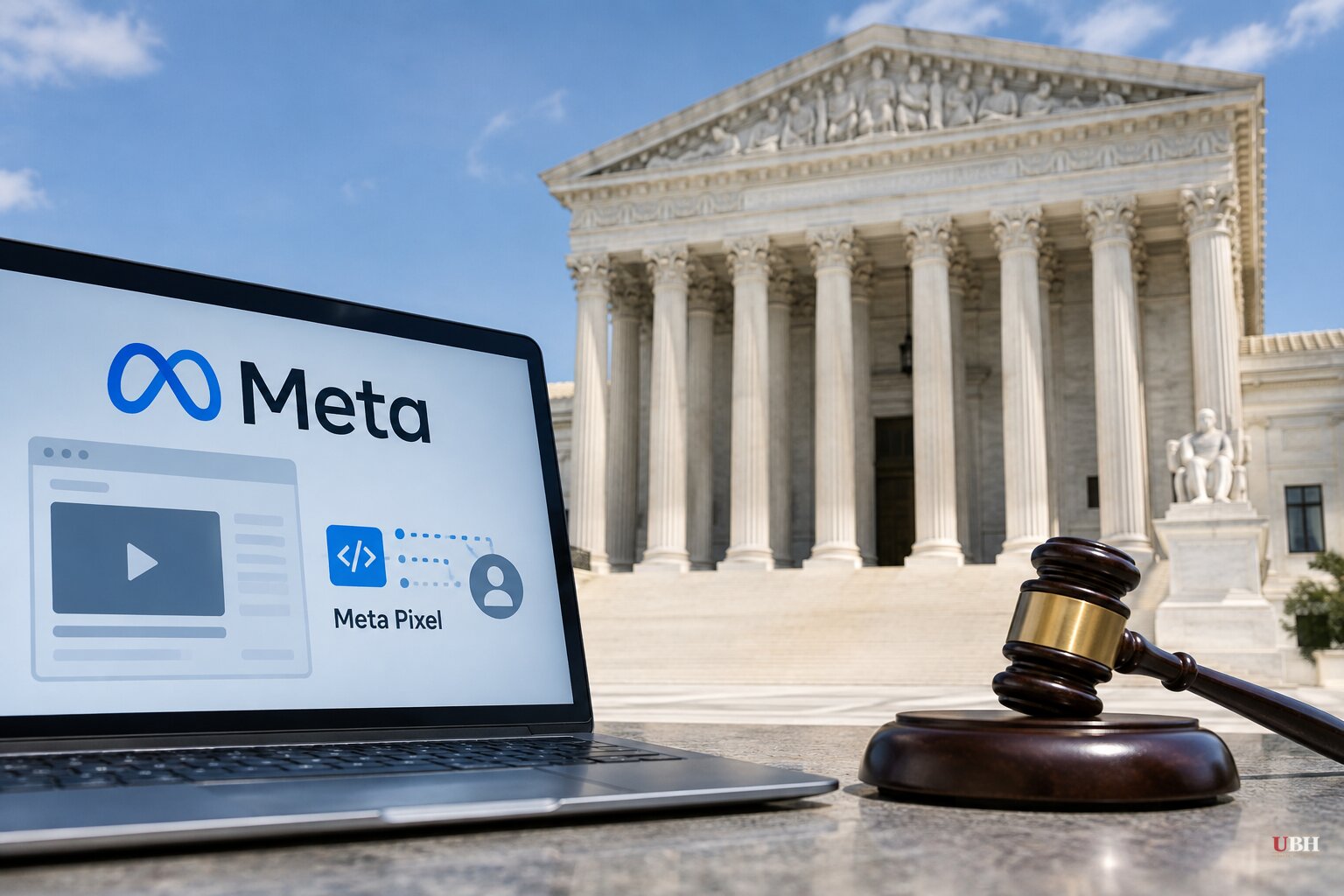
The Supreme Court will hear oral argument on Wednesday, October 14, in Salazar v. Paramount Global, a case that asks whether a privacy law written for VHS rental records in 1988 covers the tracking code running on most of today's websites. A ruling is expected by late June 2027, according to Tech Times.
The law at issue, the Video Privacy Protection Act, exists because of a video store. During Robert Bork's 1987 Supreme Court confirmation hearing, a reporter for the Washington City Paper obtained a photocopy of 146 of his video rental records from Potomac Video, according to Tech Times. The story revealed nothing scandalous, but the bipartisan backlash was swift. Senator Patrick Leahy introduced the bill in May 1988 and President Ronald Reagan signed the VPPA into law that November, barring video rental providers from disclosing a customer's viewing history to third parties.
How a Newsletter Became a Supreme Court Case
Michael Salazar signed up for a free daily email newsletter from 247Sports.com, a Paramount Global sports recruiting site, handing over his email and IP address, according to KEYT and KVIA, which ran identical accounts of the case. Salazar claims Paramount had Meta's tracking tool, known as Meta Pixel, installed on the site, and that when he later watched videos there while logged into Facebook, the tool sent his Facebook account information along with the titles and links of the videos he watched directly to Meta, without asking him first.
A federal judge and a divided panel of the appeals court sided with Paramount, ruling that signing up for a newsletter does not make someone a "video consumer" under the statute, so the VPPA did not apply to Salazar, according to KEYT. The question now before the justices is narrower than it sounds but enormous in effect. Does the law protect only people who signed up for something explicitly video-related, or anyone who gave a site personal information and later watched a video there?
Who's Lined Up on Each Side
Meta, the National Retail Federation, and the U.S. Chamber of Commerce have filed briefs urging the Court to side with Paramount and keep the law's reach narrow, according to KEYT. The Electronic Privacy Information Center has filed on Salazar's side. KEYT notes that lineup suggests mainstream retailers and media companies, not just tech firms, have a direct stake in the outcome.
Meta Pixel runs on an estimated 47 percent of all websites and 55 percent of S&P 500 companies, according to Tech Times. The VPPA sets damages at a minimum of $2,500 per violation, with no cap on class size and no requirement that any individual plaintiff prove actual harm occurred. A site with millions of newsletter subscribers that also runs Meta Pixel could theoretically face billion-dollar liability over tracking that caused no demonstrated injury to anyone. Business groups want the statute read narrowly partly for this reason.
The privacy side's argument is straightforward. A tracking script quietly packaged a person's identity and video-viewing habits and sent them to a third party without consent, which is exactly the kind of covert disclosure Congress wrote the 1988 law to stop. Whether Congress in 1988 anticipated embedded website trackers is a separate question from whether the conduct itself is the kind the law was meant to reach.
The Lawsuits Already Underway
This fight isn't theoretical. According to the American Bar Association's estimate cited by KEYT and KVIA, roughly 200 lawsuits are filed each year under the VPPA, most following the same pattern. A person watched a video on a website running a Meta tracking tool. Separate litigation over the Pixel in healthcare and tax contexts has already produced settlements, including $21.5 million from Sutter Health, a $14.95 million fund from TaxAct, $12.5 million from AARP, and $5,256,588 from Mount Sinai, according to consentstack.io. None of those settlements included an admission of wrongdoing, and the AARP and TaxAct cases involved disputed allegations that the companies deny.
consentstack.io also reports that three federal judges denied class certification in Pixel cases during 2026, and that California's SB 690, taking effect January 1, 2027, will change one of the legal theories plaintiffs currently rely on. Courts remain split on a related question in healthcare cases, over whether a hospital's own consent to share data satisfies wiretap law or whether an exception for data shared to commit a separate violation, like HIPAA, keeps the claim alive.
The Supreme Court's answer in Salazar won't resolve all of that, but it will set the baseline for who even gets through the courthouse door. Oral argument is scheduled for October 14, and no ruling will arrive before late June 2027, meaning the roughly 200-a-year lawsuit pipeline keeps running under the current patchwork of appellate splits until then.
Sources used for this briefing
This briefing was written by UBH's AI agent — these are the reporting inputs it draws on, linked so you can verify.


