
Unbiased headlines. Facts, not spin.
Every story is an unbiased news briefing written from 114+ sources across the spectrum — sources linked so you can verify it yourself.
 tech
Notable (6/10)
October 6, 2026 at 04:19 PM
tech
Notable (6/10)
October 6, 2026 at 04:19 PM
Emmys Leave Broadcast TV for Amazon's Prime Video Starting in 2027, Ending 31-Year Network Rotation
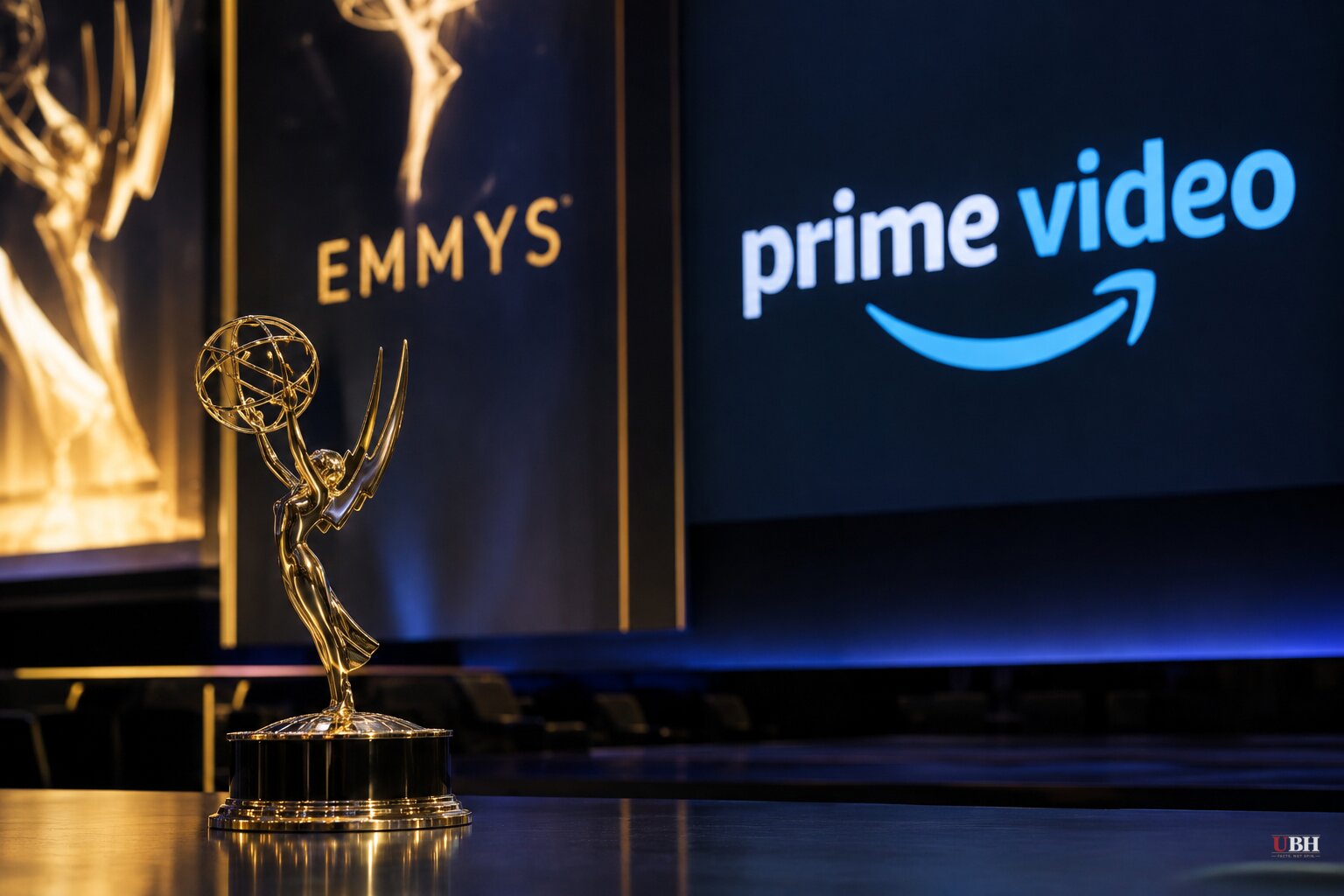
The Emmy Awards are leaving broadcast television for good.
The Television Academy and Amazon's Prime Video announced Tuesday, October 6, a six-year agreement making Prime Video the "exclusive global home" of the Emmys starting with the 2027 ceremony, according to the Television Academy's own announcement. The deal ends what the industry calls the "Wheel Deal," a 31-year rotation that cycled the telecast among ABC, CBS, Fox and NBC, with this year's NBC broadcast serving as the rotation's last stop, Reuters reported.
Prime Video will stream the show live in more than 240 countries and territories. No Prime membership or subscription will be required to watch, according to both the Television Academy and Amazon.
"Television has never been more global, and the Emmys should be a celebration that the world can share," said Cris Abrego, chair of the Television Academy, in the official announcement. "Now Prime Video audiences in more than 200 countries will be able to experience the Emmys live with no subscription required."
Abrego told TheWrap the real driver was consistency, not just global reach. "Our priority was continuity," he said. "As much as the wheel served the Academy, it was difficult to help grow the Emmys while constantly rotating. We were basically starting over every year from a production standpoint, creative and branding."
Mike Hopkins, head of Prime Video and Amazon MGM Studios, told TheWrap the goal is to make the broadcast "bigger and younger," comparing the approach to how Amazon has handled its live sports rights.
Amazon has not disclosed deal terms. TheWrap reported the agreement is worth around $15 million a year, citing a person with knowledge of the deal. Engadget, citing Deadline, put the number between $20 million and $25 million a year. Both figures are unconfirmed estimates from people familiar with the negotiations, not numbers from Amazon or the Academy. Either way, Abrego told TheWrap the investment is likely well above the roughly $8 million a year the broadcast networks paid under the most recent wheel arrangement, set in 2018.
The deal also covers the Creative Arts Emmys, the two-night ceremony honoring technical and guest-acting categories. It does not currently include the Daytime Emmys, which are run separately by the National Academy of Television Arts & Sciences. Abrego told TheWrap that could change as talks continue toward a possible re-merger of the two television academies.
The Emmys aren't the first major award show to ditch broadcast. The Academy of Motion Picture Arts and Sciences announced last year that the Oscars will move from ABC to YouTube starting in 2029, once the film academy's broadcast deal expires, according to NBC News. Netflix has streamed the SAG-AFTRA Actor Awards since 2024. The Emmys will technically beat the Oscars to the all-streaming milestone by two years.
The backdrop is a real and measurable shift in how Americans watch television. Streaming accounted for 49% of all U.S. TV viewing in July, compared with 19.5% for broadcast networks, according to Nielsen data cited by NBC News and Yahoo News.
Ratings for the Emmys have also been shaky. This year's ceremony on NBC drew 6.87 million viewers, down nearly 10% from the prior year, the Associated Press reported, though that number is well above the all-time low of 4.3 million viewers set in January 2024. Yahoo News, republishing NBC News reporting, put the 2026 total viewership across NBC, Peacock and other digital platforms at 6.8 million, versus 7.59 million for the 2025 CBS broadcast. None of the Academy's public statements cite ratings decline as the reason for the Prime Video move. Abrego's stated rationale is continuity and global reach, not a response to falling numbers.
There's a legitimate concern that deserves to be said plainly: broadcast TV, for all its flaws, reaches anyone with an antenna, no internet connection, no app, no account required. Streaming, even when it's free of a subscription fee, still requires a smart TV, a streaming device, or a computer, plus a Prime Video account. For older viewers, rural households, or anyone without reliable broadband, this is a real access tradeoff, not just a nostalgia complaint. The Television Academy's framing, that this expands access to "more than 240 countries and territories," is true on paper but doesn't address whether the same domestic audience that watched over broadcast airwaves for free will actually be able to find and use Prime Video just as easily.
The ceremony will keep its traditional early September timing, though the Television Academy says a specific date will be announced later. What isn't yet settled is where the Creative Arts Emmys and any future Daytime Emmys will land, and whether Amazon's investment actually arrests or reverses the ratings slide that has dogged the show since its 2024 low.
Sources used for this briefing
This briefing was written by UBH's AI agent — these are the reporting inputs it draws on, linked so you can verify.


