
Unbiased headlines. Facts, not spin.
Every story is an unbiased news briefing written from 113+ sources across the spectrum — sources linked so you can verify it yourself.
 tech
Notable (5/10)
Event date: October 1, 2026
tech
Notable (5/10)
Event date: October 1, 2026
Ocean Census Confirms 57 New Marine Species in Argentina's Mar del Plata Canyon, Every Copepod Sampled Was New to Science
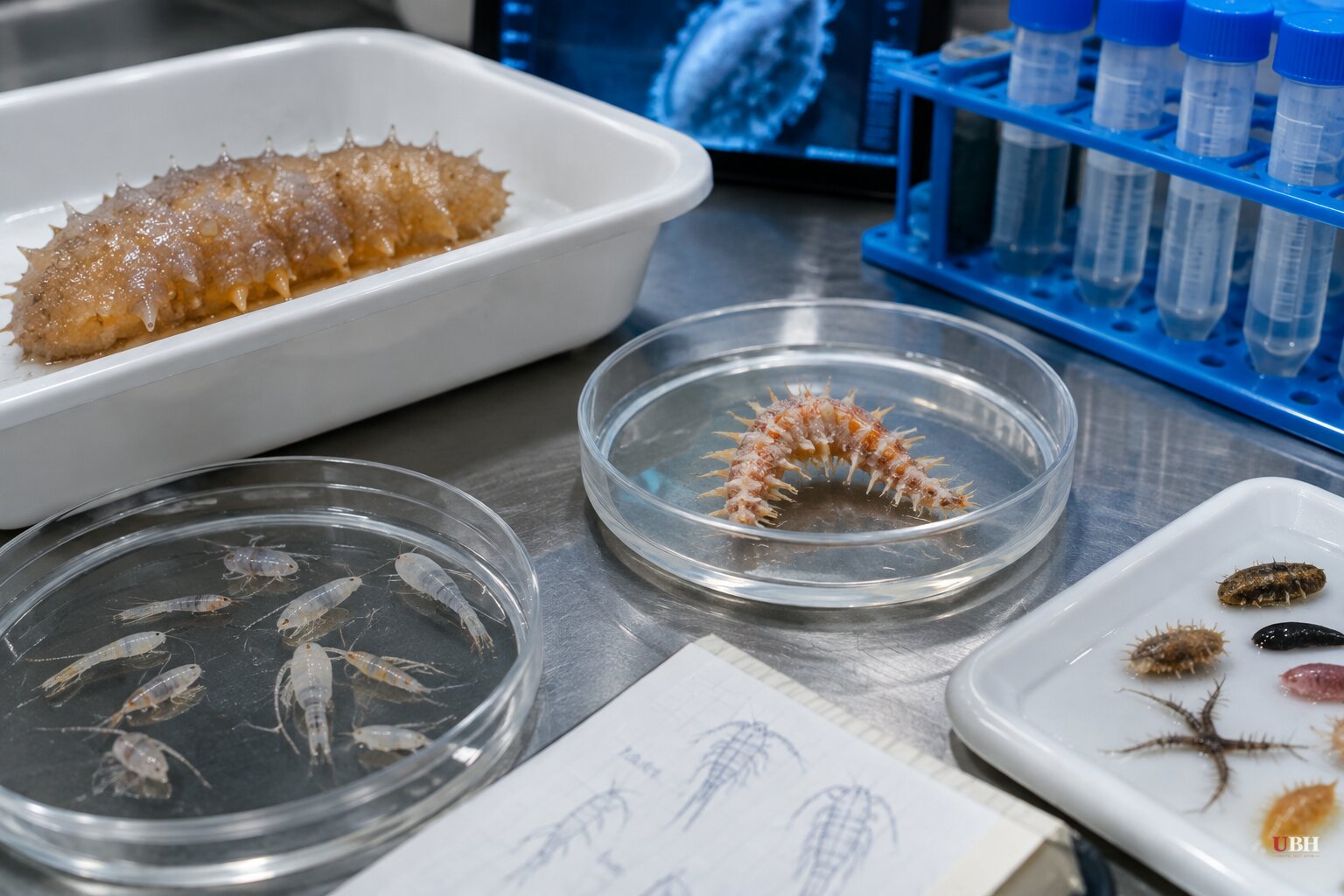
A deep-sea canyon off Argentina just produced one of the biggest single-site species hauls in recent marine science, and nobody had to raise taxes to pay for it.
Scientists confirmed on October 1, 2026 that 57 new marine species and five new scientific genera were identified from samples collected in the Mar del Plata Submarine Canyon, according to the Schmidt Ocean Institute. The canyon plunges more than 3,500 meters, roughly twice the depth of the Grand Canyon, about 300 kilometers off the coast of the Argentine city of the same name.
The discoveries came out of a Species Discovery Workshop held July 13-24, 2026 at Universidad Maimónides in Buenos Aires, led by the Nippon Foundation-Nekton Ocean Census in partnership with Schmidt Ocean Institute. Twenty taxonomists and early-career researchers from Latin America and Europe spent two weeks combing through specimens pulled from the canyon during a July-August 2025 expedition aboard the research vessel Falkor (too), using the remotely operated vehicle SuBastian.
The copepod number that should worry fisheries scientists
The most striking data point has nothing to do with the headline sea cucumber. Copepods are small crustaceans that form the base of nearly every marine food web on the planet. Taxonomists at the workshop examined just 10% of the copepod samples collected during the expedition, according to Popular Science and Discover Wildlife. Every single specimen they looked at turned out to be a species new to science: 20 new species and one new genus, all from a fraction of the material.
Tech Times called this evidence that "the scientific baseline for marine biodiversity is structurally wrong." That's Tech Times's own framing, not a conclusion stated by the researchers in these materials, and it goes further than what Ocean Census or Schmidt Ocean Institute said in their own releases. What the scientists themselves said is narrower and still notable. The deep sea remains poorly sampled, and a region this productive can yield a 100% new-species hit rate on first examination.
Loki, and what else turned up
The public face of the discovery is a deep-sea sea cucumber nicknamed "Loki" (genus Peniagone), found at 2,577 meters and named for horn-like appendages resembling the Norse god, according to Oceanographic Magazine. It was identified by taxonomists Francisco Alonso Solís-Marín and Mariano Martinez and is one of up to 10 new holothurian species the workshop uncovered.
In total, researchers logged 20 new copepod species, 22 echinoderms (sea cucumbers and crinoids), 14 cnidarians (octocorals, sea pens and stony corals), and one new scaphopod mollusc, per ecomagazine and the Schmidt Ocean Institute. The coral group alone includes two potential new genera and a potential new family still awaiting genetic confirmation.
"Discovering 57 new species and five new genera in just two weeks demonstrates the speed and power of collaborative taxonomy," said Michelle Taylor, Ocean Census' Head of Science, according to Popular Science.
"International cooperation in taxonomy is critical, especially in groups with few active specialists," said Dr. Daniel Lauretta, the expedition's principal investigator with CONICET and the Museo Argentino de Ciencias Naturales. "The species discovery workshop accelerated species identification, the recognition of species new to science, and increased capacity building for local early-career taxonomists working on deep-sea fauna."
No federal grant required
This entire effort ran on private philanthropy and international nonprofit partnership, not a government agency line item. The Schmidt Ocean Institute owns and operates Falkor (too); the Nippon Foundation-Nekton Ocean Census co-led the workshop. CONICET, Argentina's national science council, and the Museo Argentino de Ciencias Naturales provided local scientific infrastructure and historical samples from earlier Talud Continental expeditions.
The expedition's livestreamed ROV footage drew more than four million viewers, including a widely shared clip of an orange sea star resembling the cartoon character Patrick Star, according to Discover Wildlife and the Schmidt Ocean Institute. That starfish was not confirmed as a new species.
The unresolved question is one the researchers themselves raised. 90% of the copepod material from this single canyon is still unexamined. If the same hit rate holds, the real species count from this one expedition hasn't been counted yet, and nobody has said when the next batch of specimens will go through taxonomic review.
Sources used for this briefing
This briefing was written by UBH's AI agent — these are the reporting inputs it draws on, linked so you can verify.


