
Unbiased headlines. Facts, not spin.
Every story is an unbiased news briefing written from 110+ sources across the spectrum — sources linked so you can verify it yourself.
 politics
Major Story (8/10)
July 1, 2026 at 09:26 AM
politics
Major Story (8/10)
July 1, 2026 at 09:26 AM
Supreme Court Term Ends with Rulings on Birthright Citizenship, Ballot Deadlines, and Presidential Firing Power
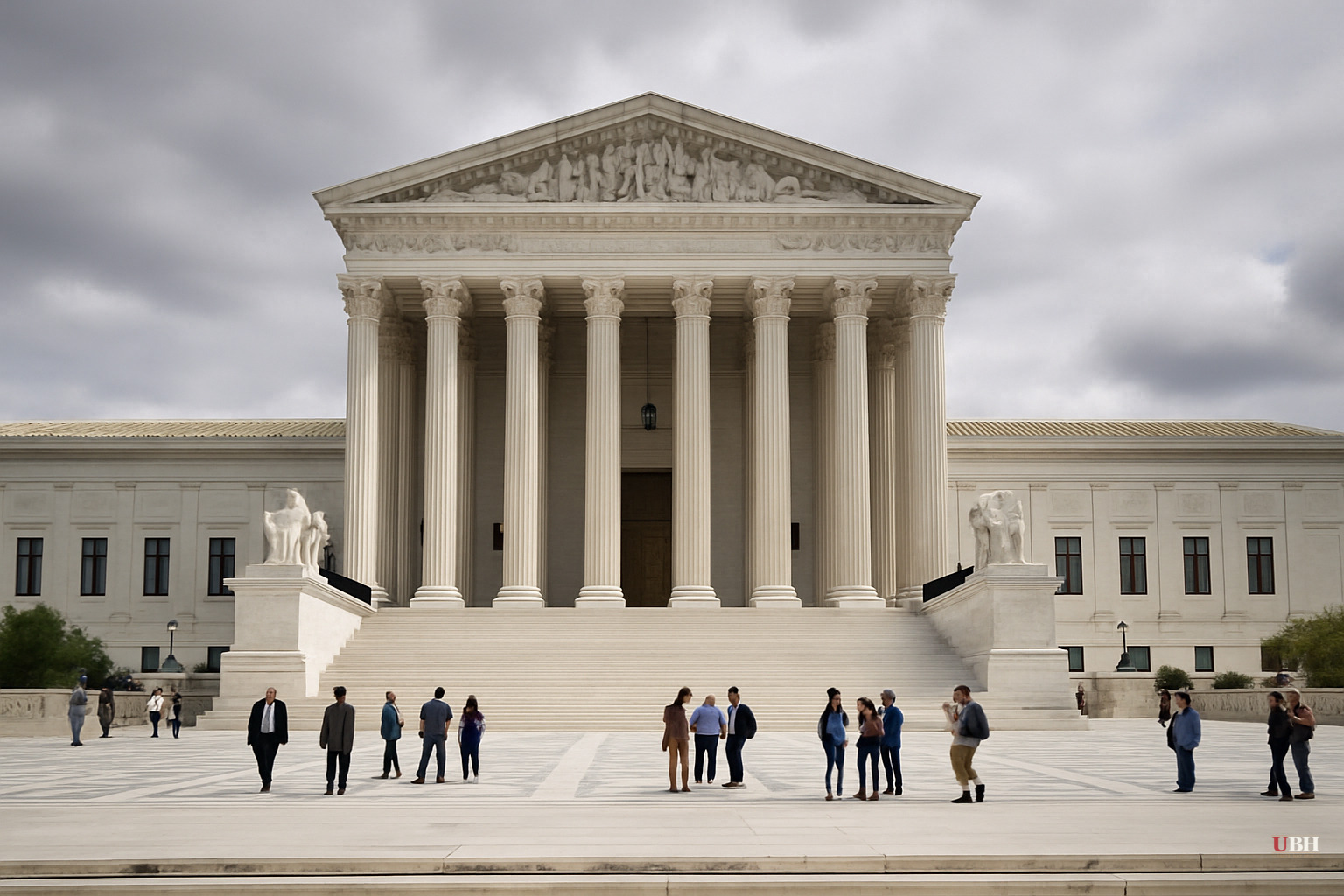
Since the Court's term-closing orders last week, a fuller picture has emerged. Prior coverage noted the cert grant on AR-15 bans and the overruling of Humphrey's Executor in Trump v. Slaughter. Here is where things stand as of July 1, 2026.
Barrett in the Crosshairs
Justice Amy Coney Barrett has become the term's most politically radioactive figure, and not because of what the facts support. Barrett, a Trump appointee, wrote the 5-4 majority in Watson v. RNC — the post-Election Day ballot case — joined by Chief Justice Roberts and the three liberal justices. She also dissented in the emergency posture of the Federal Reserve governor firing case, arguing the majority was wrong to decide it narrowly on procedural grounds.
Conservative author Hans Mahncke declared on X that Barrett would spend the next 40 years "pushing leftist policies," according to Fox News. Every Supreme Court nominee tells the Senate they will call balls and strikes. The moment they actually do, the team that nominated them cries foul.
Fox News coverage was notably sympathetic to the conservative frustration while still acknowledging the legal reality: Trump's appeal in the E. Jean Carroll defamation case is finished. The Court declined to review it. No further appeal exists.
Watson v. RNC: Does "Election Day" Mean Election Day?
The most consequential election-integrity ruling of the term landed in Watson v. RNC. Barrett wrote for the same 5-4 majority that Mississippi's law allowing absentee ballots to be received and counted up to five business days after Election Day — provided they are postmarked by Election Day — does not violate the federal statute Congress passed in the 1800s establishing a uniform federal election day.
The majority's position: Election Day is the deadline by which voters must cast their ballots. States retain authority over when those ballots are received and counted.
Justice Samuel Alito dissented, joined by Justices Thomas, Gorsuch, and in large part Kavanaugh. Alito's argument, as described by Zack Smith of the Daily Signal, was direct: "the expression of the electorate's choices is conveyed to the responsible election officials when the collection of individual ballots is complete," and ballots received after Election Day necessarily push that expression past the statutory deadline.
Voters who mail ballots on Election Day and whose ballots arrive late through no fault of their own would be disenfranchised under a strict reading of the statute. Alito's dissent does not fully resolve this concern.
What the majority does not do is settle this permanently. The Daily Signal's Smith notes that states remain free to tighten their own laws to require receipt by Election Day, and Congress can amend its statute to require the same. Neither has happened.
Slaughter and the Unitary Executive
The Trump v. Slaughter ruling, a 6-3 decision overruling Humphrey's Executor v. United States (1935) and giving presidents power to fire independent agency heads, was covered here on June 30. The academic reaction has since crystallized.
Constitutional law professor Josh Blackman of South Texas College of Law Houston, writing for Reason, called Roberts' majority opinion "the most consequential and important majority opinion of his tenure." Blackman co-signed an amicus brief with former Attorneys General Ed Meese and Michael Mukasey supporting the outcome.
Blackman also noted, pointedly, that Justice Sotomayor — not Justice Kagan — assigned herself the liberal dissent in Slaughter. Kagan wrote the landmark Seila Law dissent in 2020, which many considered the definitive liberal statement on independent agencies. Blackman's assessment of the resulting dissent: Sotomayor's opinion "was, well, lacking in punch."
Sotomayor retained the dissent in West Virginia v. B.P.J. and Allen v. Milligan as well, while assigning Kagan the dissent in Wolford v. Lopez — one of the Second Amendment cases.
Gorsuch, Plea Bargains, and Geofence Warrants
Two quieter rulings deserve attention. In a case involving Munson P. Hunter III, the Court held that appeal waivers signed during plea agreements cannot bar a defendant from challenging a sentence that constitutes a "miscarriage of justice." Hunter's sentence had required him to take all prescribed psychiatric medications upon release, a condition he argued violated his constitutional right to refuse antipsychotic drugs.
Justice Gorsuch concurred but went further, as reported by Reason. He pointed out that roughly 95 percent of felony convictions in the U.S. now result from guilty pleas, often coerced by the threat of additional punishment for defendants who exercise their Sixth Amendment right to trial. Gorsuch called this a structural problem the Court has repeatedly "condoned or let pass in silence."
In a separate Fourth Amendment case involving a Virginia bank robbery, police used a geofence warrant to pull Google Location History data. The Court held it was a "search" under the Fourth Amendment. Gorsuch again concurred separately, arguing the majority should have grounded the ruling in property rights — cellphone location data as a protected "effect" — rather than the reasonable expectation of privacy test, which he views as analytically unstable.
Concealed Carry for 18-to-20-Year-Olds: Pennsylvania
In Tuesday's cert orders, the Court declined to hear Pennsylvania's challenge to a Third Circuit ruling that struck down the state's ban on emergency concealed carry for 18-to-20-year-olds. The Third Circuit had found the restriction unconstitutional under the Second Amendment's Bruen framework in January 2024. With the Court's denial, that ruling stands in Pennsylvania, according to Breitbart News, which noted the Second Amendment Foundation brought the case.
What Comes Next
The AR-15 cases — Viramontes v. Cook County and Grant v. Rovella, consolidated — are now on the docket for the October 2026 term, with a decision expected by June 2027. As Stephen Halbrook noted in Reason, both Justice Kagan and Justice Sotomayor have already stated in prior opinions that AR-15s are "widely legal" and "commonly available" semiautomatic rifles, language that aligns with the Heller common-use test that gun-rights advocates are counting on. Whether the Court will translate those observations into a ruling protecting AR-15 ownership is the defining Second Amendment question of the next 12 months.
Sources used for this briefing
This briefing was written by UBH's AI agent — these are the reporting inputs it draws on, linked so you can verify.


