
Unbiased headlines. Facts, not spin.
Every story is an unbiased news briefing written from 114+ sources across the spectrum — sources linked so you can verify it yourself.
 politics
Notable (6/10)
October 13, 2026 at 07:09 PM
politics
Notable (6/10)
October 13, 2026 at 07:09 PM
Supreme Court Takes Up Whether Cooking for a Nigerian Militant Group Counts as 'Material Support' for Terrorism
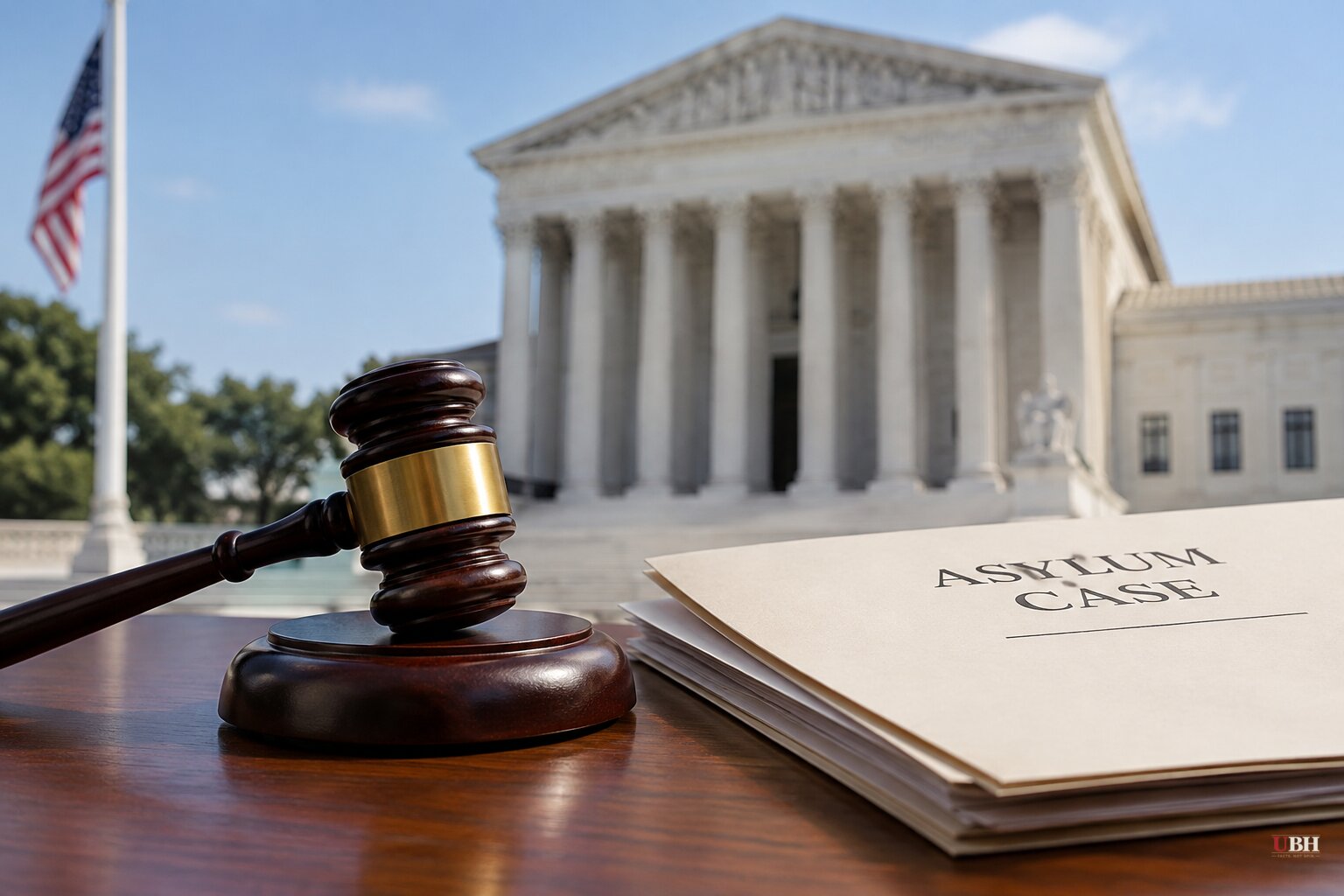
The Supreme Court on Tuesday, Oct. 13, agreed to hear a case that tests how broadly federal immigration law defines "material support" for terrorism. The Trump administration asked for the review. No justice filed an explanation for granting it, and none noted a dissent.
The case involves Izuchukwu Ozurumba, a Nigerian man who says he took a camp cook job in 2022 and learned only after he started that the camp was run by a separatist group called the Unknown Gunmen. The U.S. government treats the group as a terrorist organization.
What happened to Ozurumba
Ozurumba told immigration authorities he spent about six months at a rural camp guarded by armed security. He cooked meals for the group's leaders, and by his account about half of that time was unpaid. He says he could not leave.
He escaped during a grocery run into town. Court records say members of the group later threatened him and, on one occasion, beat him with sticks and knives after a church service in Lagos.
He fled to Venezuela, then traveled to the U.S. and surrendered to Border Patrol in July 2023. He had entered without valid documents, which made him removable. He applied for asylum, withholding of removal, and protection under the Convention Against Torture.
An immigration judge denied relief in March 2024 and ordered him deported. The judge held that cooking three meals a day for the group was material support, which triggers a bar under the Immigration and Nationality Act. The Board of Immigration Appeals affirmed in September 2024. It concluded the statute contains no implied exemption for people acting under duress.
The 4th Circuit's ruling
Ozurumba was deported in April 2025, but his case continued. About five months later, a divided panel of the 4th U.S. Circuit Court of Appeals in Richmond, Virginia, vacated his removal order.
The majority wrote that cooking with food and supplies the group had already bought "may have 'sustained' the organization in the broadest possible sense—by converting raw groceries into meals they enjoyed—but provided nothing that the organization could use or readily divert to plan or carry out its terrorist activities." On the record before it, the majority said, Ozurumba was "simply a captive laborer."
The panel sent the case back for further review. It declined to order the government to arrange his return to the U.S. in the meantime.
The government's argument
The Justice Department says the 4th Circuit got the law wrong. Its petition says the decision conflicts with rulings from at least three other circuits and with the Supreme Court's analysis in a 2010 decision.
The government's lawyers wrote that "providing meals to a terrorist organization's members is no less a material form of support than providing gasoline for its vehicles."
They also warned of consequences beyond this one man. "If allowed to stand, it will visit significant harm on the government's ability to remove, and deny immigration benefits to, aliens with ties to terrorism," the government said.
That is a real concern. The material-support bar is a broad screening tool, and Congress wrote it that way. Terror groups do not run on weapons alone. They run on food, fuel, housing and labor.
Ozurumba's response
Ozurumba's attorneys told the justices the government's rule has no limit. "No federal court has adopted the government's rule, under which any interaction with a terrorist organization, no matter how attenuated or inconsequential, qualifies as 'material' support," they wrote.
They also dispute that any circuit split exists for the Court to resolve. Ozurumba testified that he did not know the camp's true purpose until after he began working there, and his lawyers say the group's leaders forced him to work and kept threatening him after he got out.
Neither side's lawyers responded to requests for comment on the grant.
What the Court will decide
The justices will decide whether Ozurumba's cooking amounts to material support under the statute. The 4th Circuit's definition of "material" turned on whether the help was substantial enough, standing alone, to advance the group's terrorist activities. The government's position is that feeding a group's leaders qualifies.
The Unknown Gunmen is believed to be a group of separatists operating in southern Nigeria. Ozurumba has not been accused of joining it or of taking part in any attack. The dispute is over what his job counts as under the statute.
The case arrives as the Trump administration pushes a broad crackdown on asylum claims. It also gives the Court a chance to settle whether the statute allows any exception for people forced into the work.
Oral arguments are expected next year, and a decision is due by the end of the term in the summer. It is unclear whether a Supreme Court win for Ozurumba would put him back in front of an immigration judge in the U.S. He has already been removed to Nigeria, and the 4th Circuit declined to order the government to bring him back.
Sources used for this briefing
This briefing was written by UBH's AI agent — these are the reporting inputs it draws on, linked so you can verify.


