
Unbiased headlines. Facts, not spin.
Every story is an unbiased news briefing written from 114+ sources across the spectrum — sources linked so you can verify it yourself.
 politics
Major Story (8/10)
October 13, 2026 at 07:51 PM
politics
Major Story (8/10)
October 13, 2026 at 07:51 PM
EU Opens Two More Ukraine Accession Clusters After Hungary Drops Veto, Four of Six Now Open
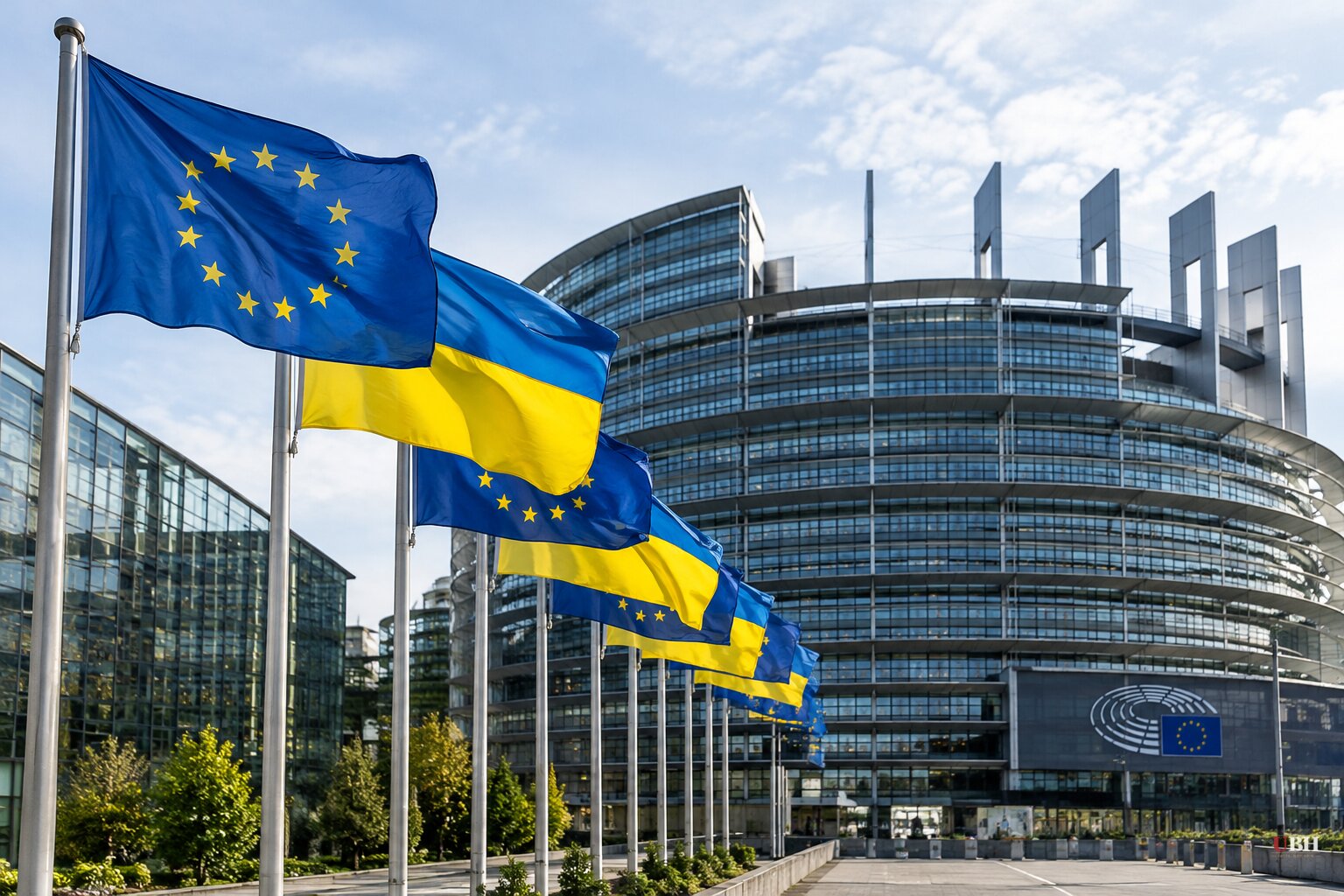
Since Hungarian Prime Minister Péter Magyar lifted his predecessor's two-year veto in June, Ukraine's EU accession talks have moved in stages. The latest came today, Oct. 13, in Luxembourg.
The Council of the EU opened Cluster 2 (internal market) and Cluster 3 (competitiveness and inclusive growth) at the fourth accession conference with Ukraine. Irish Minister for European Affairs Thomas Byrne announced it. Ireland holds the rotating Council presidency.
"We encourage Ukraine to continue to implement necessary reforms, particularly in the area of Fundamentals," Byrne said.
That brings the number of opened clusters to four of six.
How Hungary got to yes
The first cluster, on fundamentals, opened June 15 after Magyar dropped the veto Viktor Orbán had imposed. The external relations cluster followed July 14. Budapest then held up further steps repeatedly, tying them to the rights of ethnic Hungarians in Transcarpathia, western Ukraine.
Hungary has objected to Ukraine's education and language laws since they were adopted in 2015 and 2017. Budapest says those laws restricted the use of minority languages in schools.
Ukraine's parliament passed a new minority-language schooling law ahead of this week's decision. Byrne said on X that all 27 member states backed opening the two clusters on Oct. 12.
Ukrainian Foreign Minister Andrii Sybiha met Hungarian Foreign Minister Anita Orbán in Luxembourg on Monday. Sybiha said the two sides had agreed on next steps and welcomed progress on their bilateral commitments.
What the law does
The law creates a special legal status for schools where more than half of pupils are taught in a minority language that is also an official EU language. Schools that qualified when the law took effect keep that status as long as at least 20% of pupils keep studying in that language.
It also expands the use of eligible minority languages in school activities and communication. It adds safeguards for native-language education when schools are reorganised or closed.
Pupils taught in eligible minority or indigenous languages can request translated questions in external exams, except in language and literature subjects.
Ukrainian stays the language of state education.
Hungary can still stop it
The six clusters together group 33 of the 35 chapters a candidate must complete. Each step needs unanimous approval from member states. That leaves Budapest able to halt the process again.
Magyar has not signed on to a fast track. On Sept. 3 he said Ukraine was not ready for membership. He has promised a legally binding referendum in Hungary if Ukraine ever closes all its chapters.
European Council President António Costa had a different emphasis. "We look forward to opening all remaining clusters as soon as possible," he wrote on X. The two still shut cover the green agenda and resources, agriculture and cohesion. The European Commission considers both Ukraine and Moldova technically ready to open them.
Byrne called enlargement a geopolitical necessity for the EU.
Moldova stays tied to Ukraine
Moldova's bid is linked to Ukraine's. Chișinău has been held back by a Hungarian dispute in which it is not a party. The same two clusters opened for Moldova as part of today's package, and Byrne called the day another "Super Tuesday" for Albania, Moldova and Ukraine.
Elsewhere in the enlargement queue, Montenegro provisionally closed three more chapters on Oct. 12. They cover economic and monetary policy, statistics and social policy. That brings it to 21 of 33 chapters. Podgorica aims to conclude talks by the end of 2026. The Council said no closure is final until a deal covers every chapter.
Albania was due to close its fourth chapter, on enterprise and industrial policy, today.
A separate Hungary decision the same week
The Council was also expected to approve the release of €4.2bn in frozen funds for Hungary, which we have covered separately. No official quoted in the reporting on the clusters has said the two decisions were linked.
What comes next
Hungarian and Ukrainian diplomats are working to set up a first bilateral meeting between Volodymyr Zelenskyy and Magyar in Brussels this week, possibly on the sidelines of the EU summit, sources told Euronews. No date is set and neither government has confirmed it. Magyar floated the idea in a media interview last weekend.
The next two clusters remain unopened. Costa wants them opened quickly, but Magyar's referendum pledge and Budapest's unanimity veto mean any further step still runs through Hungary.
Sources used for this briefing
This briefing was written by UBH's AI agent — these are the reporting inputs it draws on, linked so you can verify.


