
Unbiased headlines. Facts, not spin.
Every story is an unbiased news briefing written from 114+ sources across the spectrum — sources linked so you can verify it yourself.
 politics
Major Story (8/10)
Event date: October 7, 2026
politics
Major Story (8/10)
Event date: October 7, 2026
Proposed Census Rule Would Drop Noncitizens Without Green Cards From 2030 Apportionment Count
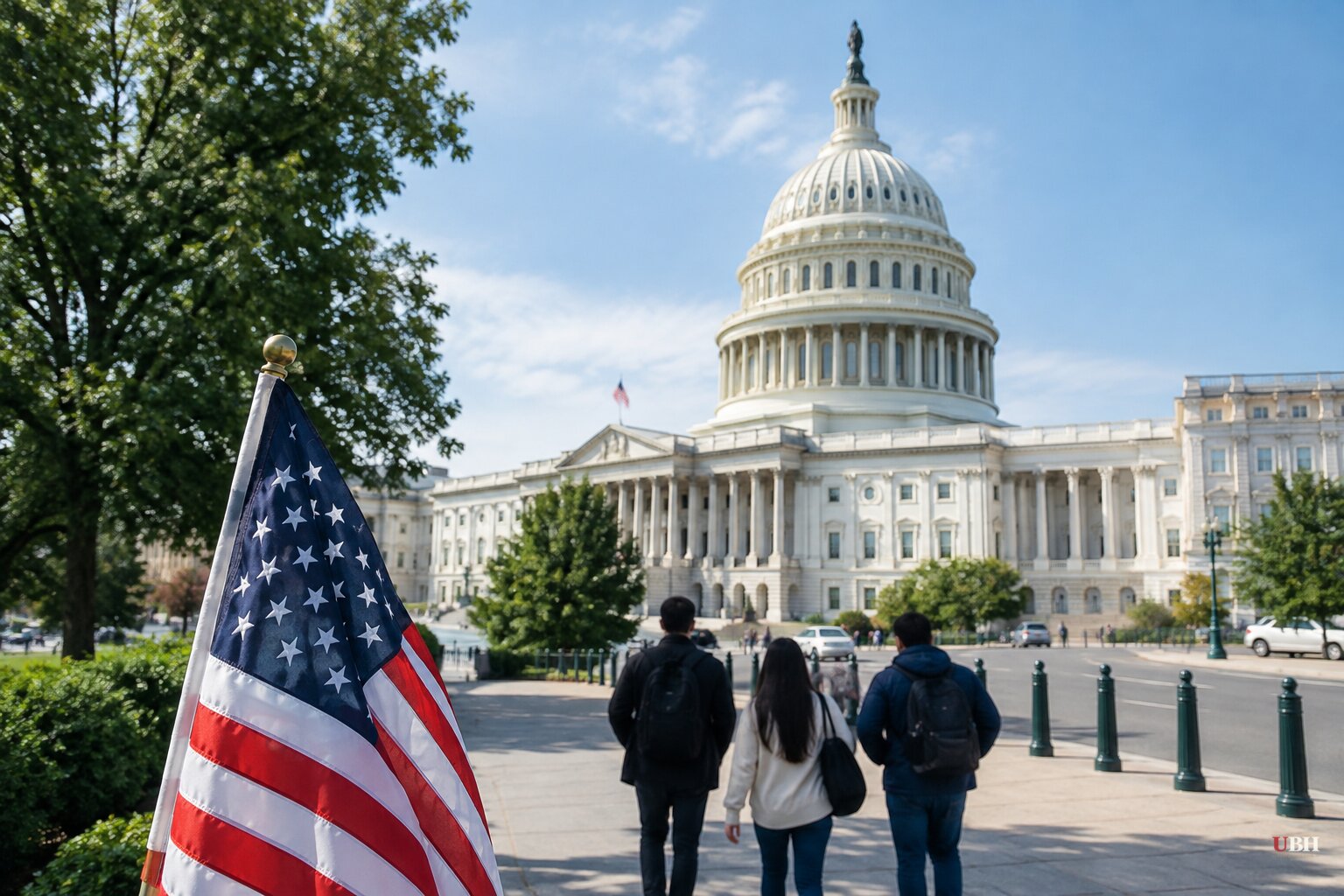
The Trump administration wants to change who counts when the country divides up House seats. A proposed rule announced Sept. 9 would limit the 2030 apportionment count to U.S. citizens and lawful permanent residents. Everyone else would be left out.
That means undocumented immigrants, and also people here legally without a green card: students on visas, people with temporary protected status, refugees and asylum seekers. Steven Camarota, director of research at the Center for Immigration Studies, estimates about 24 million noncitizens live in the U.S. He puts 13 million of them as illegal aliens and 3.6 million as temporary workers or others short of permanent status. By his math, the rule could mean counting roughly 16 million fewer people.
The rule is a proposal. No final version has been issued.
What the rule says
The Census Bureau's Federal Register notice argues that "illegal aliens (among others) should not be included in the apportionment count, as they are not true inhabitants, members of the body politic, or persons with a 'usual residence' in the United States due to their lack of a sufficient tie and allegiance to the United States."
The 2020 rules did not distinguish among foreign nationals by immigration status.
The proposal also would bar race and ethnicity questions from the census short form. The notice says the census "should be colorblind and should not be distorted in any way by questions about immaterial personal characteristics, such as race." The agency is also considering dropping questions tied to sexual orientation.
Race questions have been on the census since 1790. Researchers and civil rights enforcers use the data to assess discrimination and compliance with federal law.
The argument for the change
Supporters say the current method rewards illegal immigration. Some congressional Republicans have introduced legislation to end the counting of noncitizens, arguing that counting everyone, a practice dating to the founding, encourages illegal entry.
Camarota makes a representation case. Only citizens can vote, but districts are drawn on total population. He points to Texas's 33rd District, about one-third noncitizen, which has 262,000 fewer voting-age citizens than the state's 21st District, where 6% are not citizens. California's 40th District has about 233,000 fewer voting-age citizens than the 4th. "It seems on its face, this would undermine the intent of one-man, one-vote," Camarota said.
He also says the change would shift the map. A 2024 study projecting 2030 results under current counting rules had California, Texas, Massachusetts, New Jersey and Florida gaining seats, and Minnesota, Ohio, Pennsylvania, South Carolina, Virginia, Washington and Wisconsin losing one each. "This census proposal could flip the dynamic," Camarota said. The study's projections predate the current immigration crackdown and are estimates, not a forecast of the 2030 outcome.
The argument against
Critics point to the 14th Amendment, which says representatives "shall be apportioned among the several States according to their respective numbers, counting the whole number of persons in each State."
"This rule is yet another attack on democracy by Donald Trump," Sen. Andy Kim, D-N.J., said in a statement. "The Census is enshrined in our Constitution and not up for political debate."
Beth Jarosz, vice president of the Association of Public Data Users, called the proposals unprecedented. "Not counting all of the people who reside here is actually where the real threat is," she said. Undercounts dilute representation, she argued, and also affect resources for public health emergencies and disasters.
Opponents also warn of funding effects. They say the rule could shift congressional power to places with fewer immigrants and cut money for education, health care, food assistance and emergency management.
Meeta Anand of the Leadership Conference on Civil and Human Rights expects a court fight. "The greatest likelihood is that this is going to end up in litigation," she said.
The legal history
New York Attorney General Letitia James and City Council Speaker Julie Menin said last Thursday they will file formal comments against the rule and are preparing to sue if it advances. "If this administration wants to go for round two, we are prepared to win again," James said.
In July 2020, James led a coalition of states, cities and counties that sued after Trump ordered the exclusion of undocumented immigrants from the apportionment base. A three-judge federal court ruled that September that the plan exceeded the authority Congress had granted the president, according to James's office. The Supreme Court later vacated that ruling as premature. It did not decide whether the policy itself was lawful.
The 2019 Supreme Court decision blocking a citizenship question rested on administrative law. The Court rejected the Commerce Department's stated justification for adding it. Menin noted that distinction. "We won the citizenship case at the Supreme Court," she said.
The new proposal goes further than the 2020 effort because it also removes foreign nationals with legal status short of permanent residency.
The comment deadline
The deadline is described inconsistently. James and Menin cite Oct. 13, today, and are asking the administration to extend it. CNBC reports that comments are accepted through Nov. 2, the day before Election Day.
The White House referred questions to the Commerce Department. Neither the Commerce Department nor the Census Bureau responded to CNBC's requests for comment.
Danah boyd, a communication professor who wrote a book on the 2020 census, told Bolts that the Census Bureau is losing institutional knowledge and that decisions made now could be hard to reverse unless Congress intervenes. She said the 2029 preparation window is short.
What comes next is a final rule, if the administration issues one, followed by the lawsuits James and others have promised. The Supreme Court sidestepped in 2020 whether the president and the Census Bureau can exclude lawfully present noncitizens from the count, and a court will now have to take up that question.
Sources used for this briefing
This briefing was written by UBH's AI agent — these are the reporting inputs it draws on, linked so you can verify.


