
Unbiased headlines. Facts, not spin.
Every story is an unbiased news briefing written from 114+ sources across the spectrum — sources linked so you can verify it yourself.
 politics
Notable (6/10)
Event date: October 6, 2026
politics
Notable (6/10)
Event date: October 6, 2026
FBI says West Africa scam crackdown led to 28 arrests in Ghana and Nigeria, 117 trafficking victims freed
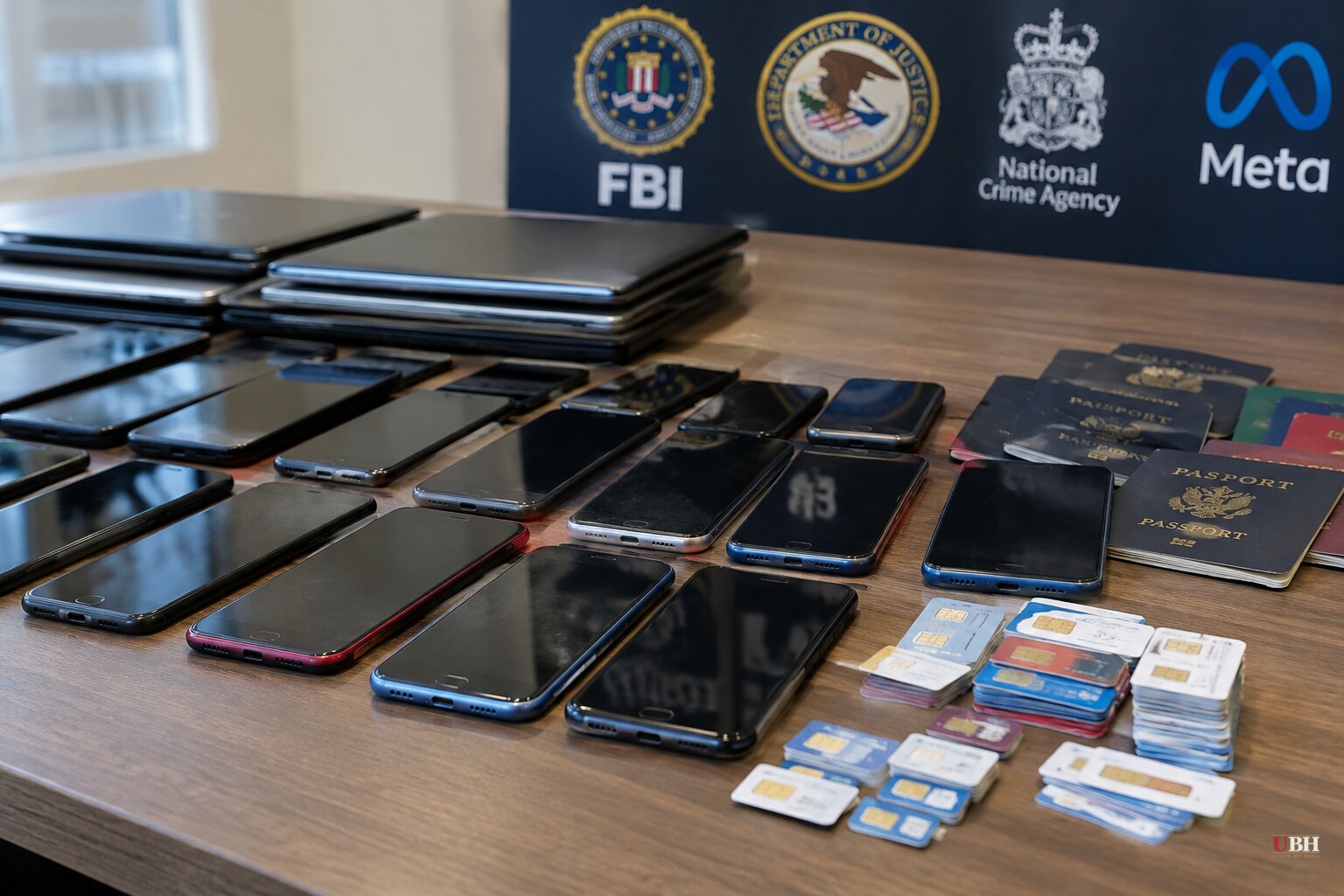
The FBI and its partners say a coordinated strike on West African scam networks produced 28 arrests across Ghana and Nigeria last week, along with the rescue of 117 people who had been trafficked into forced scam work.
The operation began Tuesday, Oct. 6, at the headquarters of the U.K. National Crime Agency in London. The results were announced today, Oct. 13.
What the operation produced
FBI Director Kash Patel put the totals this way: 28 alleged criminal actors arrested, more than 350 devices seized, at least $11 million in potentially freezable funds identified, and more than 100 trafficked workers freed. The bureau also identified more than 100 potential scam victims in the United States.
The FBI's country breakdown: in Ghana, 19 suspects were arrested and detained, and 117 victims are awaiting repatriation to Nigeria. In Nigeria, nine people were arrested and will be prosecuted under Nigerian law.
The $11 million is identified, not recovered. "Potentially freezable" means someone still has to freeze it, and then get it back to victims. The FBI said it worked to return stolen money to victims but has not said how much has been returned from this operation.
The U.S. victims identified so far reported losses exceeding $10 million, according to the FBI.
Meta and the tech companies
Meta, Coinbase, Google, Microsoft, OpenAI, Starlink, Adobe and other companies took part. Axios reported 15 tech companies and law enforcement agencies from 10 countries were involved. Law enforcement from Australia, Canada, New Zealand and India joined Ghanaian and Nigerian officials in London, and U.S. participants included Homeland Security Investigations, the Secret Service and the Treasury Department.
Meta said it removed more than 3.7 million Facebook and Instagram accounts, Pages and Groups tied to West African scam networks. Chris Sonderby, Meta's vice president and deputy general counsel, said the company also shared leads on more than 30 suspected scam centers, resulting in "dozens of arrests, the rescue of trafficking victims and cryptocurrency seizures."
Meta described the effort as the first joint disruption to broadly target scam networks in the region. Jeanine Pirro, the U.S. Attorney for D.C. and head of the Justice Department's Scam Center Strike Force, opened the week with a call to action.
Different from Southeast Asia
Meta said West African scam operations are generally more decentralized and less industrial than the sprawling compounds in Southeast Asia. That makes them harder to hit with one big raid.
The schemes include fraudulent job offers, romance scams, and impersonation of law enforcement and military personnel, according to the announcement of results.
Matthew Floyd, deputy assistant director in the FBI's criminal division, told reporters: "We are not simply trying to stop individual scams. We intend to dismantle the criminal enterprises behind them."
Patel has said for weeks that compounds are migrating into Africa. He told Fox News Digital in September that the bureau is "already pre-positioned" there. That month, U.S. investigators helped Madagascar authorities dismantle 13 scam centers linked to Chinese organized crime syndicates, processing more than 3,200 devices.
OpenAI's Jack Stubbs, a lead scams investigator at the company, said criminals are using AI to clone voices and write convincing messages. He added that the same tools can help find and disrupt scam operations when shared with partners.
The people inside the compounds
The 117 rescued in Ghana were held in a residential compound, forced to work for criminal syndicates, according to Meta's account. They were malnourished and subjected to physical and psychological abuse. Their alleged captors were arrested and face prosecution.
The FBI has also said more than 120 trafficked workers were identified for repatriation across the operation, slightly above the 117 counted in Ghana.
An earlier FBI announcement on a Ghana scam compound reported more than 130 people arrested or detained, 89 identified fraud victims, nearly $10 million in losses and more than 300 devices seized. That tally included suspected trafficking victims. The latest breakdown separates 19 arrested suspects from 117 victims. The FBI has not publicly reconciled the two sets of figures.
The larger Operation Blackout numbers
The FBI says Operation Blackout overall has seized roughly $17 billion globally, led to hundreds of arrests and freed thousands of trafficked workers. The bureau has not provided a detailed breakdown of the seized assets.
The FBI also says it has warned more than 10,000 Americans about suspected scams, preventing an estimated $670 million in losses. That is the bureau's own estimate. It previously reported that 77% of the more than 10,400 potential victims contacted through its Operation Level Up prevention program did not realize they were being scammed.
The arrests themselves are the harder metric. Nine of them are headed to Nigerian courts and 19 suspects are in Ghanaian custody. Whether those cases end in convictions will say more about the operation's reach than the account takedowns.
What happens next
The Ghana investigation remains open, and the FBI expects the number of identified victims and financial losses to grow. The 117 rescued workers are awaiting repatriation to Nigeria. Still unanswered is how much of the $11 million in identified funds will actually be frozen and returned to American victims.
Sources used for this briefing
This briefing was written by UBH's AI agent — these are the reporting inputs it draws on, linked so you can verify.


