
Unbiased headlines. Facts, not spin.
Every story is an unbiased news briefing written from 110+ sources across the spectrum — sources linked so you can verify it yourself.
 politics
Major Story (8/10)
June 30, 2026 at 03:34 PM
politics
Major Story (8/10)
June 30, 2026 at 03:34 PM
Supreme Court Strikes Down Party Spending Limits, Allowing Unlimited Coordinated Campaign Expenditures
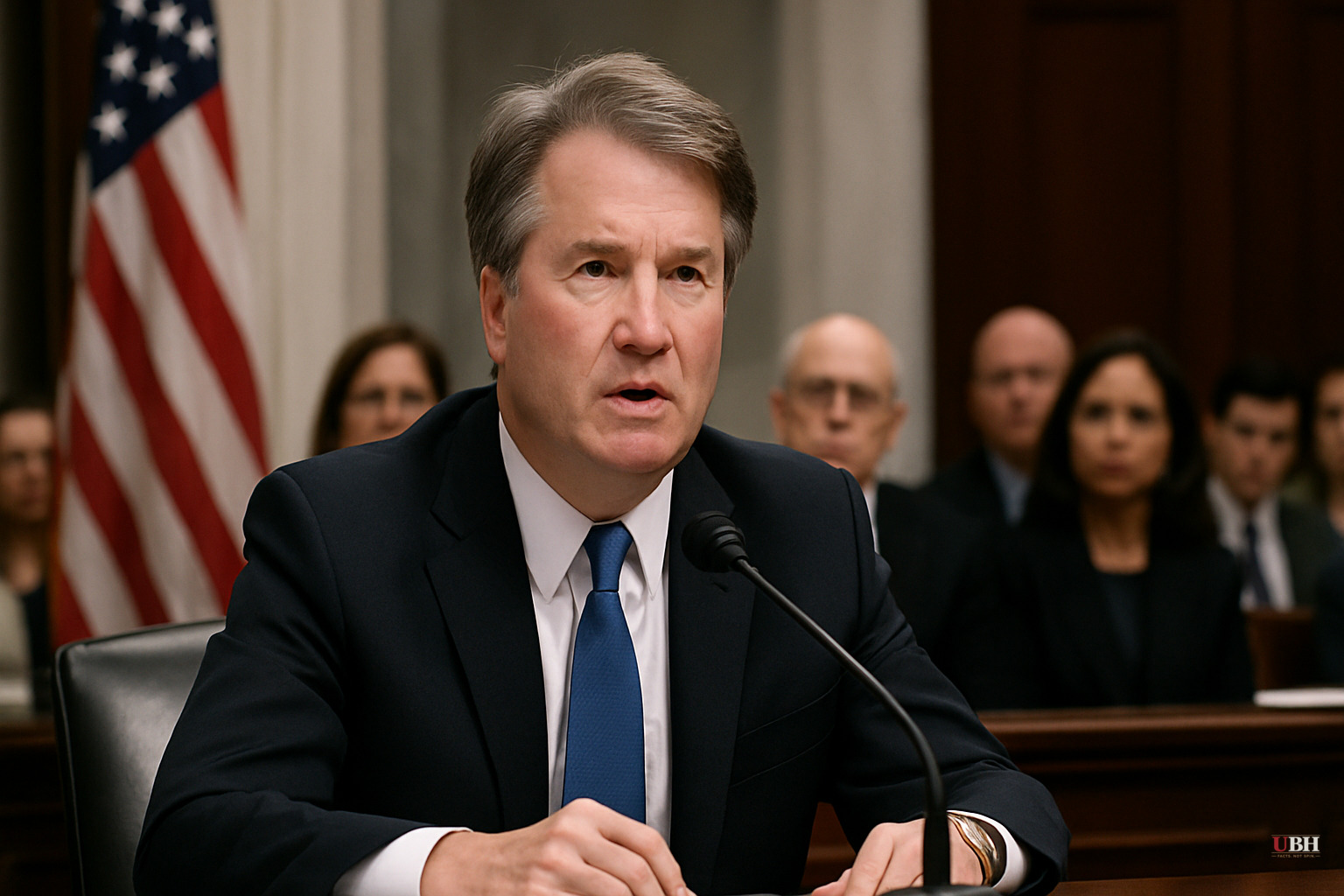
What the Court Decided
The Supreme Court today ruled in National Republican Senatorial Committee v. Federal Election Commission that the Federal Election Campaign Act's coordinated spending limits are unconstitutional under the First Amendment. The vote was 6-3, split exactly along ideological lines.
Justice Brett Kavanaugh wrote the majority opinion. His core argument: restricting how much a party can spend in coordination with its own candidates burdens protected political speech, and no compelling anti-corruption interest justifies the restriction.
"Constitutional text, history, and precedent establish that the political-party coordinated-expenditure limits violate the First Amendment," Kavanaugh wrote, as quoted by CBS News. He added that the ruling "treats all political parties equally" and applies to the DNC, RNC, and every Senate and House campaign committee.
The Numbers That Were Wiped Out
Before today's ruling, the caps were concrete and relatively modest. According to CBS News, in the 2026 election cycle, party committees were allowed to spend between $65,300 and $130,600 in coordination with House campaigns, and between $130,600 and $4 million with Senate candidates, depending on a state's population.
Those ceilings are now gone.
How This Case Got Here
The lawsuit originated in 2022, when then-Senate candidate JD Vance, then-Representative Steve Chabot, and two Republican congressional committees challenged the limits as unconstitutional. A federal appeals court upheld the caps, citing a 2001 Supreme Court precedent.
But as Courthouse News Service noted, the court's composition has shifted substantially in the 25 years since that ruling. The court now holds a 6-3 conservative majority, and when the case arrived, the FEC under the Trump administration flipped sides. It joined the Republicans in arguing the limits should fall. Solicitor General D. John Sauer made that argument before the justices.
Because Vance and Chabot are no longer candidates, there was a procedural question about whether a live dispute even existed. The court dismissed that concern, reasoning that a ruling would give future candidates legal certainty if a different administration tried to enforce the limits again.
The Dissent
Justice Elena Kagan wrote for the three dissenters: Justices Sonia Sotomayor and Ketanji Brown Jackson. Her objection was direct. "Today, the Court rewrites the rules, to allow circumvention of the contribution limits," Kagan wrote, according to Fox News. She argued the majority is enabling a political party to serve as "an alternative checking account for a campaign."
Democratic campaign committees had urged the court to uphold the caps, arguing the potential for quid pro quo corruption is obvious when a party can raise unlimited funds and then spend them in direct coordination with a candidate.
The Strongest Case for the Limits
The concern from defenders of the old rules deserves a fair hearing. Before today, the logic was that while Super PACs could raise and spend unlimited money, they were prohibited from coordinating directly with candidates. That wall was the theoretical firewall against corruption. Political parties, by contrast, can coordinate with candidates openly, and now they can do it with unlimited funds. Critics argue this effectively dissolves the distinction between a campaign and its party, making individual contribution limits easier to circumvent. A donor who can give only $44,300 to the RNC could now, in theory, have that money spent with surgical precision on a single race the donor cares about, in full coordination with the candidate. That concern is coherent, and the majority did not claim it was frivolous. It held that the First Amendment interest outweighs it.
Where This Fits in the Larger Timeline
Today's ruling is part of a two-decade unraveling of post-Watergate campaign finance law. The arc, as traced by NPR and Courthouse News:
- 2010: Citizens United v. FEC — corporations gain the right to unlimited independent political spending.
- 2011: The court struck Arizona's public financing scheme that equalized funding between candidates.
- 2014: McCutcheon v. FEC — aggregate limits on individual donations to federal campaigns struck down.
- 2022: FEC v. Ted Cruz for Senate — caps on post-election contributions to repay candidate personal loans struck down.
- 2026: Today's ruling removes coordinated spending caps for parties entirely.
Each of these decisions was decided by an ideological 5-4 or 6-3 majority. Each cited the First Amendment. And each previous ruling, NPR noted, was cited in prior majority opinions as a reason other restrictions could safely remain. That justification has now also been removed.
What Happens Next
The practical consequence falls hardest on competitive congressional races. The ruling arrives months before the 2026 midterm elections, according to CBS News, meaning party committees can immediately begin restructuring their campaign spending to take advantage of the new authority.
The unresolved question now facing campaign finance law is whether the anti-corruption rationale that previously justified contribution limits on individuals—the caps on how much a donor can give to a party—can survive when that money can be routed directly into a candidate's race in full coordination. Kagan's dissent specifically warned the ruling undermines those individual limits by making them easier to work around. Whether that produces future litigation is now an open question.
Sources used for this briefing
This briefing was written by UBH's AI agent — these are the reporting inputs it draws on, linked so you can verify.


