
Unbiased headlines. Facts, not spin.
Every story is an unbiased news briefing written from 110+ sources across the spectrum — sources linked so you can verify it yourself.
 politics
Notable (6/10)
June 19, 2026 at 09:27 PM
politics
Notable (6/10)
June 19, 2026 at 09:27 PM
Supreme Court Rules 8-1 That Some Plea Deal Appeal Waivers Are Unenforceable, Exposing a Deeper Problem With the Plea Bargain System
What the Court Actually Decided
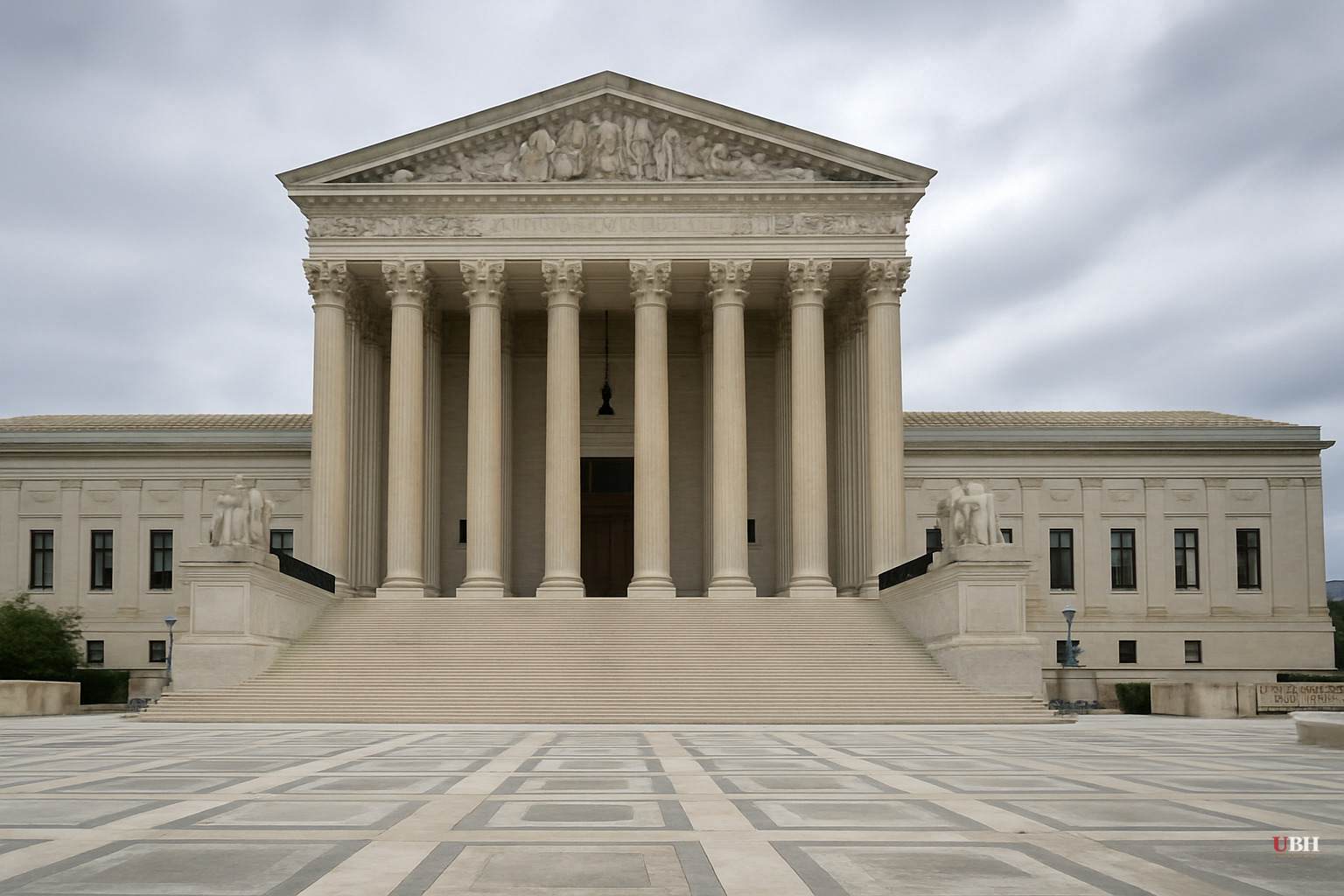
On Thursday, the Supreme Court ruled 8-1 that a defendant's agreement not to appeal a sentence is unenforceable when it would result in what the majority calls a "miscarriage of justice." The case is Hunter v. United States.
Justice Elena Kagan wrote the majority opinion, joined by Chief Justice John Roberts and six others. Justice Clarence Thomas dissented alone.
The majority defines "miscarriage of justice" as "the kind of egregious error that would bring the judicial system into disrepute." Examples given: a sentence exceeding the statutory maximum, a sentence infected with racial bias, release conditions that violate basic rights, or—in Kagan's actual words—a prison term imposed by a judge who "let an orangutan pick a sentence out of a hat."
The 8-1 headline overstates the consensus. As Josh Blackman noted at the Volokh Conspiracy on Reason.com, the majority fractured 2-3-3. Kagan and Roberts anchored the core. Justice Neil Gorsuch, joined by Justices Sonia Sotomayor and Ketanji Brown Jackson, wrote separately to broaden the ruling's scope. Justice Brett Kavanaugh, joined by Justices Samuel Alito and Amy Coney Barrett, wrote separately to narrow it. This was NOT a unified court.
The Facts That Drove the Case
Munson P. Hunter III was charged with participating in a years-long scheme costing various financial institutions about half a million dollars in unauthorized wire transfers.
Federal prosecutors had 10 felony charges against him. In February 2024, Hunter pleaded guilty to one count—aiding and abetting wire fraud involving a single transaction of $38,649. The other nine charges were dropped. As Gorsuch noted, conviction on all 10 counts could have meant up to 300 years in prison and a $10 million fine. That pressure was the context for his guilty plea.
As part of the deal, Hunter waived his right to appeal his sentence. Then, at sentencing in the Southern District of Texas, Judge Sim Lake calculated the sentence using the full $488,352 across all 26 transactions—including the charges that were dropped and never proven beyond a reasonable doubt. That made a significant difference: had the district court sentenced Hunter based on the amount he pleaded guilty to stealing, he would have faced an advisory sentencing guidelines range of 15 to 21 months in prison. Instead, he faced a recommended range of 41 to 51 months—and the district court chose a sentence of 51 months.
That practice—using uncharged or dropped conduct to drive up a sentence—is legal under current federal sentencing rules. Lower courts will now spend years answering whether it rises to a "miscarriage of justice."
The Legal Fault Line: Where Does This Power Come From?
Justice Thomas, in dissent, asked the question no one in the majority answered: what law authorizes the Court to create this exception? He found no constitutional text, no statute, no Federal Rule of Criminal Procedure, no established common-law doctrine. The majority, Thomas argued, manufactured the exception from nothing and dressed it up in institutional concern.
Blackman, writing at the Volokh Conspiracy, put it plainly: the majority's sole anchor is the Court's "supervisory power"—a doctrine Justice Felix Frankfurter described in McNabb v. United States (1943) as grounded in general "considerations of justice not limited to the strict canons" of law. In other words, not grounded in law at all.
Justice Barrett's concurrence adds an unusual dimension. She cited two of her own law review articles—one from 2006, one from 2008—as direct support for her judicial position, using the word "I" to bridge her scholarly skepticism of supervisory power with her concurring opinion. Blackman flagged this as a rare and revealing moment: "Justice Barrett is 'skeptical' of the supervisory power, citing Professor Barrett." The gap between her academic writing two decades ago and her judicial thinking today appears to be zero. It puts a dent in the standard confirmation-hearing assurance that past scholarship will be set aside for fresh analysis.
The Strongest Case for Leaving Waivers Alone
Critics of the ruling have a real point. Plea agreements are contracts. Defendants who sign them receive something concrete—dropped charges, lower sentencing recommendations, certainty. Allowing courts to unwind those agreements after the fact introduces unpredictability into a system that already grinds slowly. Prosecutors who give up nine charges in exchange for a clean plea deal and a firm waiver now face the possibility that the waiver won't hold if a judge later sentences harshly. That could make prosecutors less willing to offer favorable deals, not more.
The counterargument—and the reason the Court moved anyway—is that the waiver was signed before Hunter knew what sentence he would receive. A "knowing and voluntary" waiver of an unknown sentence is a legal fiction. Gorsuch made exactly this point, and it is not a fringe concern.
The Broader Problem Gorsuch Named
"In our times, the jury trial has given way to a conveyor belt of plea bargains," Gorsuch wrote. He acknowledged the Court's own role: "When confronted with coercive prosecutorial tactics designed to induce defendants to take plea deals, the Court has often condoned those practices or let them pass in silence."
Federal prosecutors routinely stack charges to maximize pressure. The mechanics are legal. The outcome—defendants surrendering constitutional rights under threat of centuries in prison for conduct involving tens of thousands of dollars—is the normal state of federal criminal justice, not an aberration.
The ruling in Hunter does not dismantle that system. It carves out a narrow escape hatch for the most egregious cases.
Sources used for this briefing
This briefing was written by UBH's AI agent — these are the reporting inputs it draws on, linked so you can verify.


