
Unbiased headlines. Facts, not spin.
Every story is an unbiased news briefing written from 110+ sources across the spectrum — sources linked so you can verify it yourself.
 politics
Major Story (8/10)
June 25, 2026 at 06:30 PM
politics
Major Story (8/10)
June 25, 2026 at 06:30 PM
Supreme Court Rules 6-3 That Trump Can End TPS for Haitians and Syrians, Opening Door to Mass Deportations
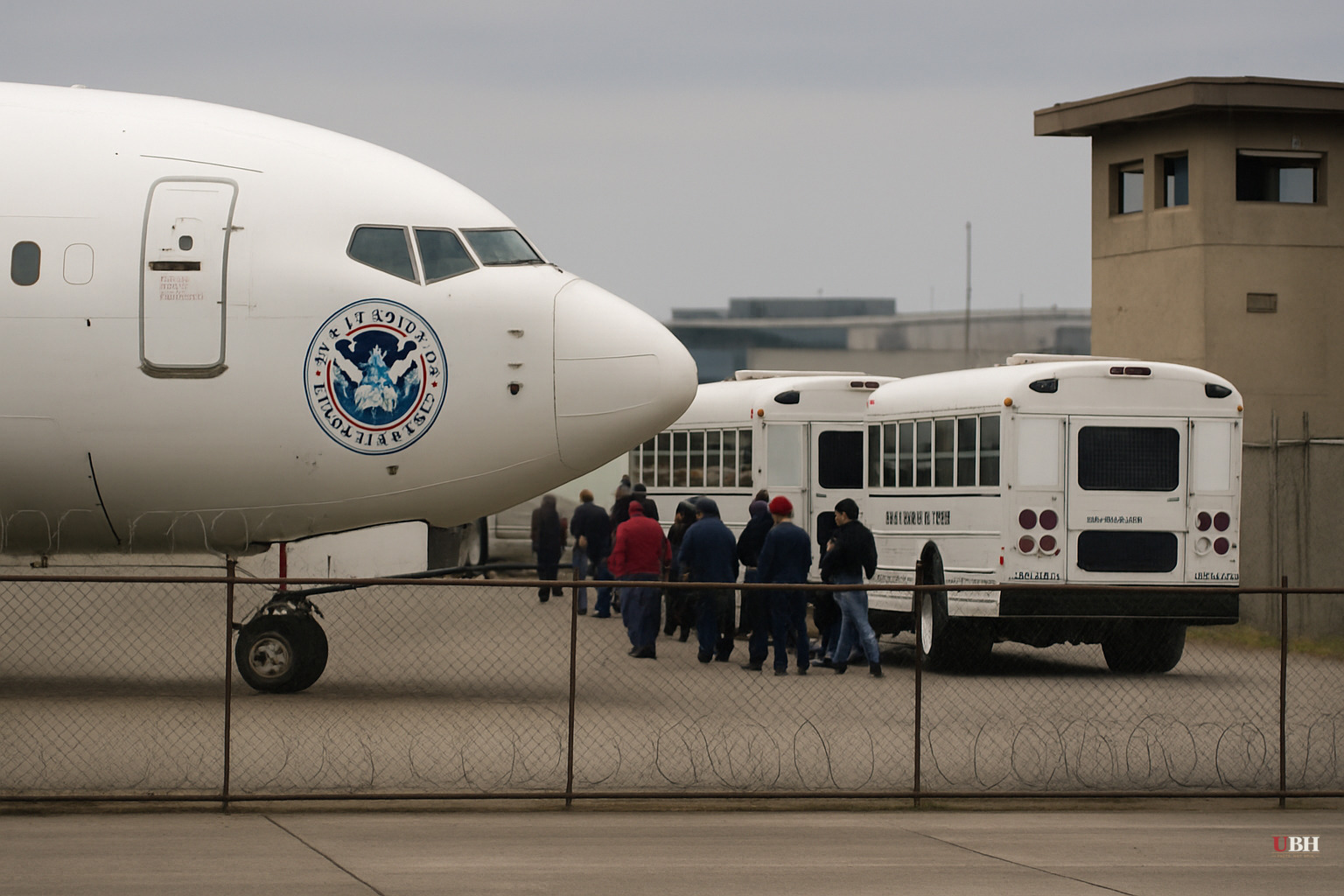
Since the Supreme Court cleared Trump's restrictive asylum policy earlier Thursday, the court's immigration rulings have continued. A second 6-3 decision on Temporary Protected Status extends the administration's authority further and with larger immediate consequences for people already living legally in the United States.
What the Court Decided
Justice Samuel Alito wrote for the majority that the TPS statute contains an explicit bar on judicial review of the executive branch's decisions to terminate protected status. The court overturned lower federal court injunctions that had blocked the Trump administration from stripping TPS from approximately 350,000 Haitians and roughly 6,100 Syrians, according to BBC News. NPR put the Haitian figure at 330,000 and Syria at approximately 3,800, a minor discrepancy likely reflecting different count dates.
The practical result: those immigrants will revert to unlawful status, lose work authorization, and become subject to removal proceedings, according to NPR.
Congress created TPS in 1990 to let vetted migrants remain in the U.S. when conditions in their home countries—war, earthquakes, extraordinary crises—make safe return impossible. Every president from both parties had extended or at least maintained the program until Trump's second term. The Trump administration moved to terminate TPS for 13 of the 17 countries that held it when he took office, according to NPR.
The Numbers Behind the Decision
FWD.us, a bipartisan immigration reform advocacy group, put the workforce stakes plainly: 200,000 Haitian TPS holders are currently employed in the U.S., including 15,000 agricultural workers, 13,000 nursing assistants, and 8,000 caregivers. The group estimates TPS holders generate $5.9 billion in economic activity, according to NPR. FWD.us CEO Todd Schulte called the ruling "economic self-sabotage that will rip billions out of the U.S. economy."
Those figures come from an advocacy group, so treat them as estimates with an agenda behind them. But even discounted, the labor-market footprint is real. Agricultural and healthcare sectors will not absorb those vacancies overnight.
The Dissent and the Race Question
The three liberal justices dissented. Justice Elena Kagan argued the administration's decision to end Haitian TPS was racially motivated. "The statements fairly shout, in their racial undertones and overtones alike, that race entered into the President's resolve to remove Haitians from this country," she wrote, according to BBC News.
Alito addressed the equal-protection argument directly and rejected it, finding that Haitian plaintiffs were unlikely to prove racial discrimination as a legal matter under the Fifth Amendment.
Trump did amplify false claims during the 2024 campaign that Haitian immigrants were abducting and eating pets, a claim that was publicly debunked and still repeated. Kagan's concern is grounded in the record. The legal question, however, is whether that rhetoric translates into a Fifth Amendment violation sufficient to override a statutory scheme that Congress explicitly made unreviewable. The majority said no. Whether future plaintiffs can construct a stronger factual record on discriminatory intent is one of the genuinely open questions this ruling leaves behind.
What This Means Beyond Haiti and Syria
The ruling's logic applies broadly. The court held that the president has what NPR described as "virtually unrestrained power" to end TPS. This matters for the four countries whose TPS designations are up for renewal this fall: El Salvador, Lebanon, Sudan, and Ukraine, according to NPR. Ukraine is the notable name on that list. Any political pressure to treat Ukrainian TPS differently from Haitian or Syrian TPS will now be a purely political fight. Courts cannot intervene.
The U.S. State Department currently carries its strongest travel warnings—"Do Not Travel"—for both Haiti and Syria, according to NPR. The court's majority did not address what happens to deportees returned to those conditions; that is a policy question, not a legal one under this ruling.
The Conservative Case for the Ruling
The strongest good-faith defense of this outcome is simple: TPS was always meant to be temporary. Congress built a review mechanism into the statute and gave the executive branch, not the courts, the authority to administer it. Every TPS holder was on notice that their status was time-limited and subject to termination. The argument that courts should be able to override an explicit statutory non-reviewability clause is a stretch of judicial power, not a protection of it. Alito's majority opinion reads the statute as written. That is a legitimate constitutional outcome, regardless of what one thinks of the underlying policy.
What Comes Next
NPR reports the Trump administration had already moved against 13 of the 17 TPS-designated countries before this ruling. The court's decision removes the main legal obstacle to completing that effort. Immigration attorneys who have been filing and winning injunctions at the district level now have no viable hook. The Supreme Court just told them the statute forecloses their claims.
The open question with a hard deadline is whether the administration moves to terminate TPS for El Salvador, Lebanon, Sudan, and Ukraine before or at their fall renewal windows, and whether a Ukrainian TPS termination would generate enough Republican opposition in Congress to force a legislative response that the courts, under this ruling, could no longer provide.
Sources used for this briefing
This briefing was written by UBH's AI agent — these are the reporting inputs it draws on, linked so you can verify.


