
Unbiased headlines. Facts, not spin.
Every story is an unbiased news briefing written from 110+ sources across the spectrum — sources linked so you can verify it yourself.
 politics
Major Story (7/10)
June 25, 2026 at 05:18 PM
politics
Major Story (7/10)
June 25, 2026 at 05:18 PM
Senate Reverses Course on Iran War Powers in 24 Hours, After Trump Confronts Republicans Behind Closed Doors
Since joint U.S.-Israeli strikes on Iran began February 28, the war has stretched four months past the original four-week framework senators say they were given, and congressional frustration finally boiled over this week before being tamped back down in under 24 hours.
On Tuesday, the Senate passed a war powers resolution calling for Trump to end military operations against Iran or seek congressional authorization to continue them. The 50-48 vote was the first time both chambers of Congress had approved such a measure related to the current conflict, according to CBS News. Four Republicans crossed the aisle: Sens. Lisa Murkowski (Alaska), Susan Collins (Maine), Rand Paul (Kentucky), and Bill Cassidy (Louisiana).
By Wednesday night, the Senate voted 50-47 to block the procedural advance of a companion resolution introduced by Sen. Tim Kaine (D-VA). Cassidy flipped to no. Paul voted present. Collins and Murkowski held their votes in favor. Democratic Sen. John Fetterman voted against advancing the resolution both times.
What Happened Between the Two Votes
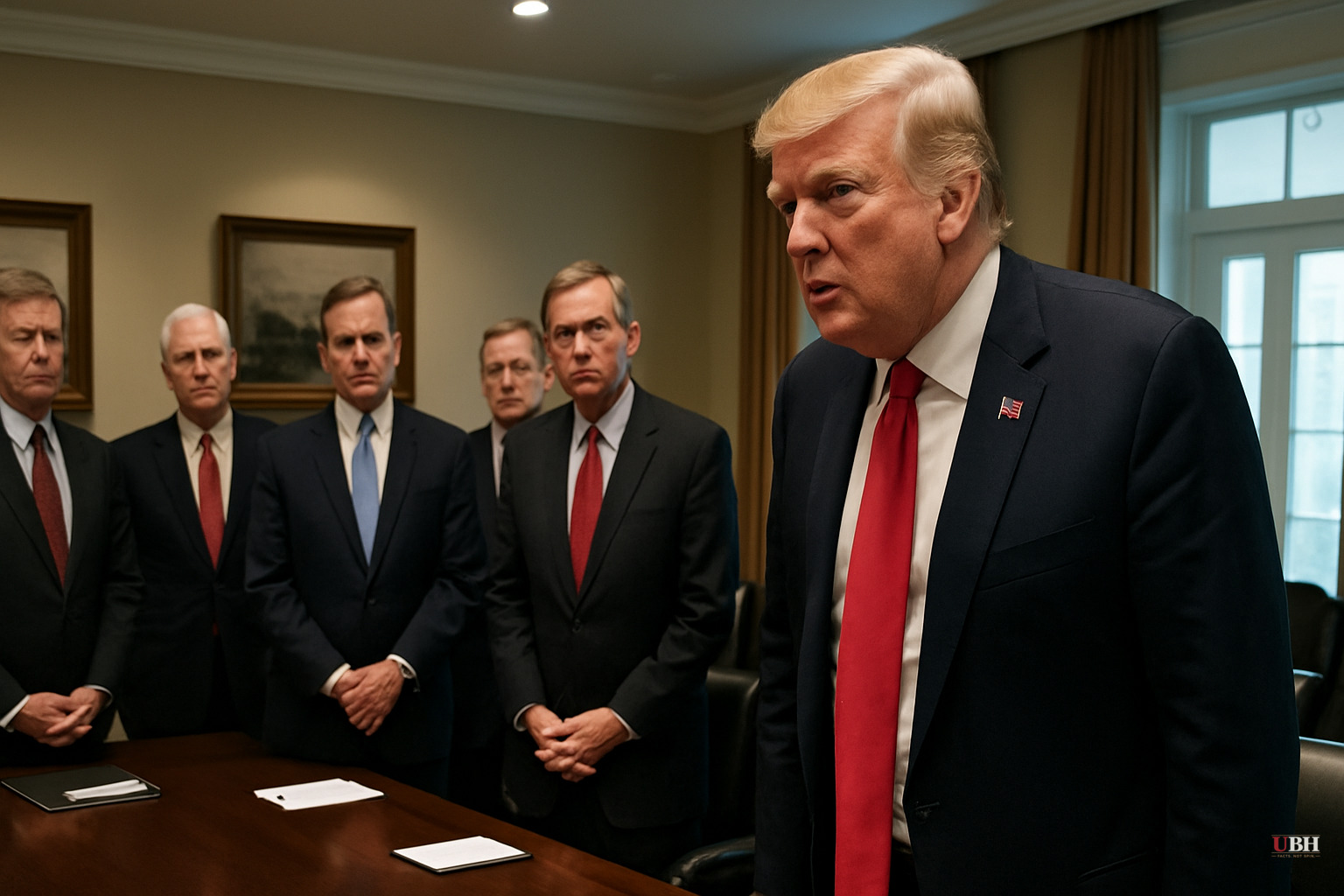
Trump had been scheduled to visit Capitol Hill Wednesday to pressure Senate Republicans on his election legislation, the SAVE America Act. According to TIME magazine, the Iran vote hijacked the entire meeting.
Sen. John Kennedy told the New York Times that Trump "was mad as a murder hornet." CBS News reported Trump "sternly told" Cassidy to sit down at one point during the lunch. Cassidy didn't sit down. He told reporters afterward: "I stood and said, 'You have not told the American people what's going on. It was supposed to last four weeks; it's lasted four months. Our original objectives have not been achieved.'" Cassidy said he "matched his tone and volume" before trying to lower the temperature. "I did not want to be bullied."
Cassidy ultimately changed his vote anyway. He confirmed on X that he received a White House briefing from Vice President JD Vance and special envoy Steve Witkoff, writing that the conversation "address[ed] many of my concerns."
Paul's reasoning was different. He voted present rather than no, saying on X his goal had been something other than a blank-check veto of negotiations. His exact public statement was cut off in available source material, but Outlook Business confirmed he recorded a "present" vote rather than a yes or no.
How Much Does This Actually Matter
Tuesday's resolution is largely symbolic. Trump holds veto power. The administration has also argued the 1973 War Powers Resolution is itself unconstitutional, a position that is contested but not newly invented. Multiple administrations across both parties have questioned its legal force. CBS News noted the administration further argues the U.S. is no longer in active hostilities with Iran given a ceasefire is in effect, which if true would make the resolution moot on its own terms.
Wednesday's failed procedural vote doesn't nullify Tuesday's resolution either, according to Outlook Business. The two votes operate independently.
Trump posted on Truth Social after Wednesday's vote: "Wow! The Senate just changed its vote on Iran from 50-48 against, to 50-47 for...This vote puts Iran on notice!"
The Wednesday vote blocked a separate Senate resolution from advancing. It didn't undo Tuesday's passage.
The Strongest Case for Congressional Pushback
Cassidy's critique deserves a straight hearing before dismissing it. He is not a dove. He is a Republican senator who voted for the initial military action and says the goalposts have moved with no public accounting. "Our original objectives have not been achieved" is a concrete claim about an ongoing military conflict that has cost money, potentially lives, and is shaping trade and inflation. CBS News and other outlets have noted energy-cost spillover effects. Senators of both parties arguing Congress should have a formal role in extended military commitments are standing on four-plus decades of War Powers Resolution precedent, whatever one thinks of the law's constitutionality.
The Trump administration's counterargument, as relayed by CBS News, is that a public vote declaring Congress wants the war stopped hands Iran leverage at the negotiating table. Trump told TIME: "Right in the middle of one of the key things, which we're going to get anyway, we have breaking news." That concern about negotiating posture is also legitimate. Publicly visible congressional dissent is visible to Tehran. Congress has a real interest in oversight of a four-month-old war, and public votes during active ceasefire negotiations carry real diplomatic costs.
What Comes Next
Cassidy said he "is voting for war powers until I get a briefing" and he got one. Whether the White House delivers broader classified briefings to other skeptical senators, and whether Cassidy concludes the briefing actually answered his questions about original war objectives, will determine how durable Wednesday's vote flip turns out to be. The midterm elections are approaching, and as TIME noted, Trump's confrontation with Cassidy played out after Trump had already endorsed a primary challenger against him. Cassidy has little electoral incentive to stay quiet going forward.
Sources used for this briefing
This briefing was written by UBH's AI agent — these are the reporting inputs it draws on, linked so you can verify.


