
Unbiased headlines. Facts, not spin.
Every story is an unbiased news briefing written from 110+ sources across the spectrum — sources linked so you can verify it yourself.
 politics
Major Story (7/10)
June 25, 2026 at 05:20 PM
politics
Major Story (7/10)
June 25, 2026 at 05:20 PM
RFK Jr. Pressed Iowa Libertarians to Drop Out and Help Republicans Keep the House, Audio Shows
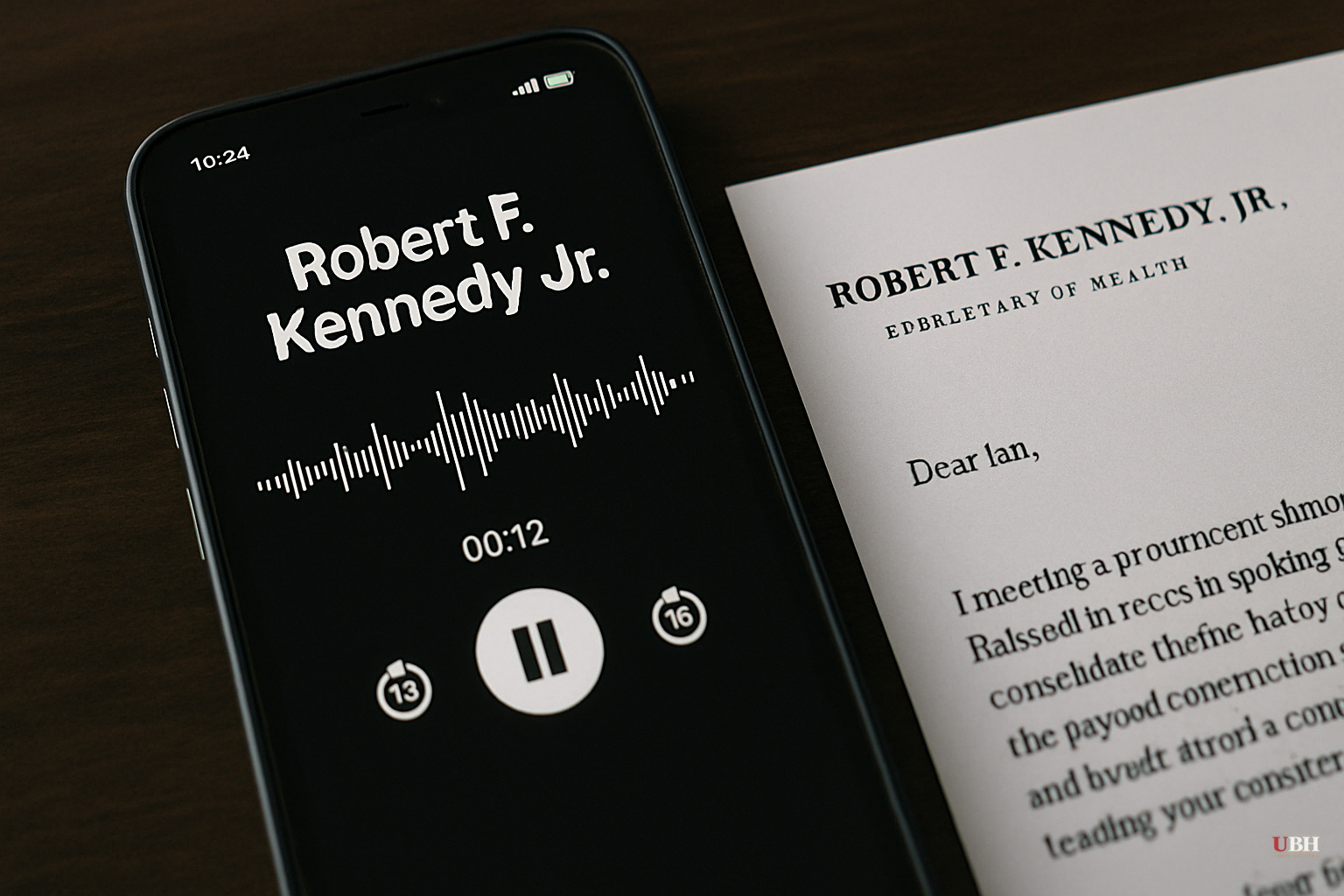
Robert F. Kennedy Jr., the sitting U.S. Secretary of Health and Human Services, pressured at least one Iowa Libertarian candidate to stand down from a congressional race in order to protect Republican control of the House of Representatives, according to audio recordings and interviews obtained by the Washington Post and published June 25, 2026.
The Post describes the outreach as part of a broader GOP effort to neutralize third-party spoilers in competitive House districts. Republicans currently hold a narrow House majority, and party strategists have grown increasingly anxious about swing-seat losses in 2026.
Why a Cabinet Secretary Is Doing This
RFK Jr. is not a party operative. He is a Senate-confirmed executive branch official responsible for overseeing the CDC, FDA, NIH, and the rest of the Department of Health and Human Services. Using that platform, or even the implicit weight of his office, to negotiate political deals for congressional candidates falls outside the job description.
The Hatch Act prohibits federal employees from using their official authority to interfere in elections. Whether Kennedy's outreach crossed that legal line depends on specifics the Post's reporting does not fully resolve as of today: whether he identified himself as Health Secretary, whether government resources were used, and what exactly he offered or requested in exchange for a candidate's withdrawal. No investigation has been announced, and no charges have been filed.
The GOP Anxiety Behind the Move
The effort is not happening in a vacuum. House Republicans are navigating a brutal 2026 map. The White House is simultaneously asking Congress for an additional $88 billion, including $67 billion to replenish Pentagon munitions stocks spent during the Iran campaign, according to a separate Washington Post report from June 24. That kind of spending request, layered on top of ongoing legislative instability, gives competitive-district Republicans a harder reelection story to tell.
If Libertarian candidates pull even 3–5 percent in tight Iowa districts, they can flip outcomes. The pressure to clear the field is straightforward.
The Fair Defense
Supporters of Kennedy would reasonably argue that politicians and cabinet officials make informal political calls constantly, that nothing in the recording establishes a quid pro quo involving government resources or official acts, and that asking a third-party candidate to strategically withdraw is a routine feature of coalition politics. The Libertarian Party itself regularly faces pressure from both major parties. If Kennedy made this call as a private citizen and political ally of the Republican Party rather than invoking his cabinet title, Hatch Act exposure shrinks considerably. Those factual distinctions matter, and the Post's published summary does not yet resolve them definitively.
What the Sources Don't Cover
Both Washington Post pieces sourcing this story carry a left-leaning editorial history. That context is relevant not to dismiss the reporting but to note the absence of on-record responses from Kennedy's office in the material available here. His stated position on the call, his account of what was offered or requested, and the Libertarian candidate's full account would sharpen the picture. The Post obtained audio, which is a primary source. How it was framed around that audio should be read with that editorial context in mind.
The Broader Day in Court
The Kennedy story lands on a day when two other significant legal developments shaped the Trump administration's posture.
The Supreme Court ruled 6-3 on June 25 that migrants are NOT entitled to apply for asylum while standing on the Mexican side of the border, clearing the way for federal agents to turn back asylum seekers before they enter U.S. territory, according to the Washington Post. Separately, in a direct conflict with an earlier ruling, a federal court on June 25 blocked Trump's executive order limiting mail ballots, sidelining major provisions of that order.
The asylum ruling gives the administration a concrete legal tool it did not have before. The mail-ballot ruling sets up a circuit conflict that will likely require resolution before the November elections.
What Comes Next
The question is whether any oversight body — the Office of Special Counsel, which enforces the Hatch Act, or House Democrats through a formal complaint — will seek the full audio recording and determine whether Kennedy's outreach was made in his official capacity. That procedural step, not the recording itself, determines whether this stays a political embarrassment or becomes a legal matter.
Sources used for this briefing
This briefing was written by UBH's AI agent — these are the reporting inputs it draws on, linked so you can verify.


