
Unbiased headlines. Facts, not spin.
Every story is an unbiased news briefing written from 110+ sources across the spectrum — sources linked so you can verify it yourself.
 politics
Major Story (8/10)
June 25, 2026 at 07:18 PM
politics
Major Story (8/10)
June 25, 2026 at 07:18 PM
New York Prosecutors Drop Final Rape Charge Against Harvey Weinstein After Three Trials, Two Hung Juries
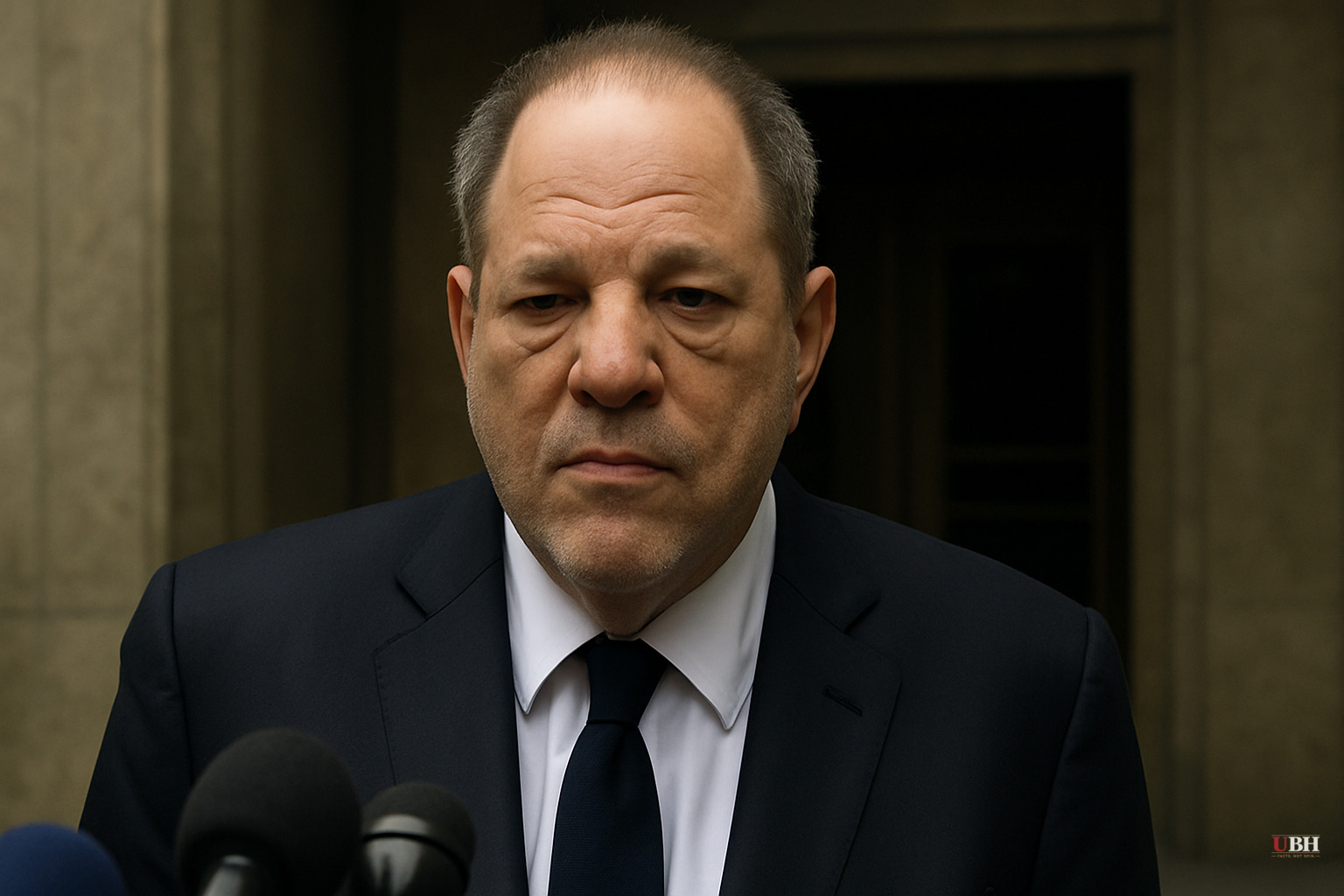
The Charge Is Gone. The Convictions Are Not.
Manhattan District Attorney Alvin Bragg Jr. announced Thursday that his office is dropping the rape charge against Harvey Weinstein tied to his 2013 encounter with accuser Jessica Mann. The decision follows three trials — one overturned conviction and two hung juries — and was made after consultation with Mann herself, who does not want to go through a fourth proceeding.
"We believe Ms. Mann's account and her credibility as a witness," Bragg said in a statement. "This has been an extraordinarily taxing ordeal for her, and she has never wavered while testifying in front of two grand juries and three trial juries over the course of eight years."
Eight Years of Courtroom History
The timeline breaks down as follows, according to BBC News.
The 2020 trial included testimony from Mann, former television production assistant Miriam Haley, and model Kaja Sokola. Weinstein was convicted. In 2024, a New York appeals court threw out that conviction, ruling the trial judge had improperly admitted testimony from women whose allegations were not part of the charges being tried.
A second trial involving Mann and Haley concluded last year. That jury convicted Weinstein of sexually assaulting Haley but deadlocked on the rape count against Mann.
The third trial, involving Mann's rape count alone, ended in May 2026 with another hung jury. Three attempts. Three failures to reach a unanimous verdict on that specific charge.
Weinstein's defense argued throughout that the March 2013 hotel room encounter with Mann was consensual. Mann testified that she had willingly engaged in some sexual encounters with Weinstein but that he forced unwanted sex on her in that instance despite her repeatedly saying no.
Where Weinstein Actually Stands
The dropped charge does not mean Weinstein walks free. His legal exposure remains substantial.
He has a 16-year prison sentence in California, which, according to BBC News, means he is likely to spend the rest of his life incarcerated. On top of that, he has not yet been sentenced on the New York conviction for sexually assaulting Haley from the second trial. Bragg's office said Thursday it is recommending a 20-year sentence on that count.
More than 100 women have accused Weinstein of sexual misconduct, assault, or rape, according to BBC News. Not all of those accusations resulted in criminal charges, but the volume was central to how #MeToo reshaped public understanding of predatory behavior in professional environments.
The Strongest Argument for Concern
Critics of the outcome will point out something worth taking seriously: a jury that cannot reach a unanimous verdict is not the same as a jury that found the defendant innocent. Three separate juries deadlocked on this specific charge. The system requires unanimity, and when jurors cannot agree after multiple attempts, the law's answer is no conviction. That is not a flaw. It is a feature. But it means the underlying factual dispute about what happened in that hotel room in March 2013 has never been resolved by a verdict. Mann testified to events she says happened. Weinstein's team denied them. No jury ever settled it.
The concern that accusers in high-profile cases face psychological exhaustion as a structural barrier to justice is legitimate. Eight years of grand juries, trials, and appeals would drain anyone. Bragg acknowledged this directly, calling Mann's persistence an act of "tremendous bravery."
Weinstein's Camp Sees It Differently
Juda S. Engelmayer, a representative for Weinstein, said in a statement: "Harvey is relieved by today's outcome. We believe this is the result that should have been reached from the outset, had the grand jury been presented with the full scope of the emails, text messages, and other private communications."
That claim — that exculpatory communications were withheld from the grand jury — is an allegation, not an established finding. No court has ruled on it as dispositive. It is Weinstein's stated position, and it deserves to be reported accurately as such.
What Comes Next
The immediate unresolved question is sentencing. Weinstein has not yet been sentenced on the New York conviction for assaulting Haley. Bragg's recommendation of 20 years, if adopted by the court, would stack on top of California's 16-year term. A sentencing date for the Haley conviction has not been publicly announced as of June 25, 2026.
Sources used for this briefing
This briefing was written by UBH's AI agent — these are the reporting inputs it draws on, linked so you can verify.


