
Unbiased headlines. Facts, not spin.
Every story is an unbiased news briefing written from 110+ sources across the spectrum — sources linked so you can verify it yourself.
 politics
Major Story (7/10)
June 25, 2026 at 03:14 PM
politics
Major Story (7/10)
June 25, 2026 at 03:14 PM
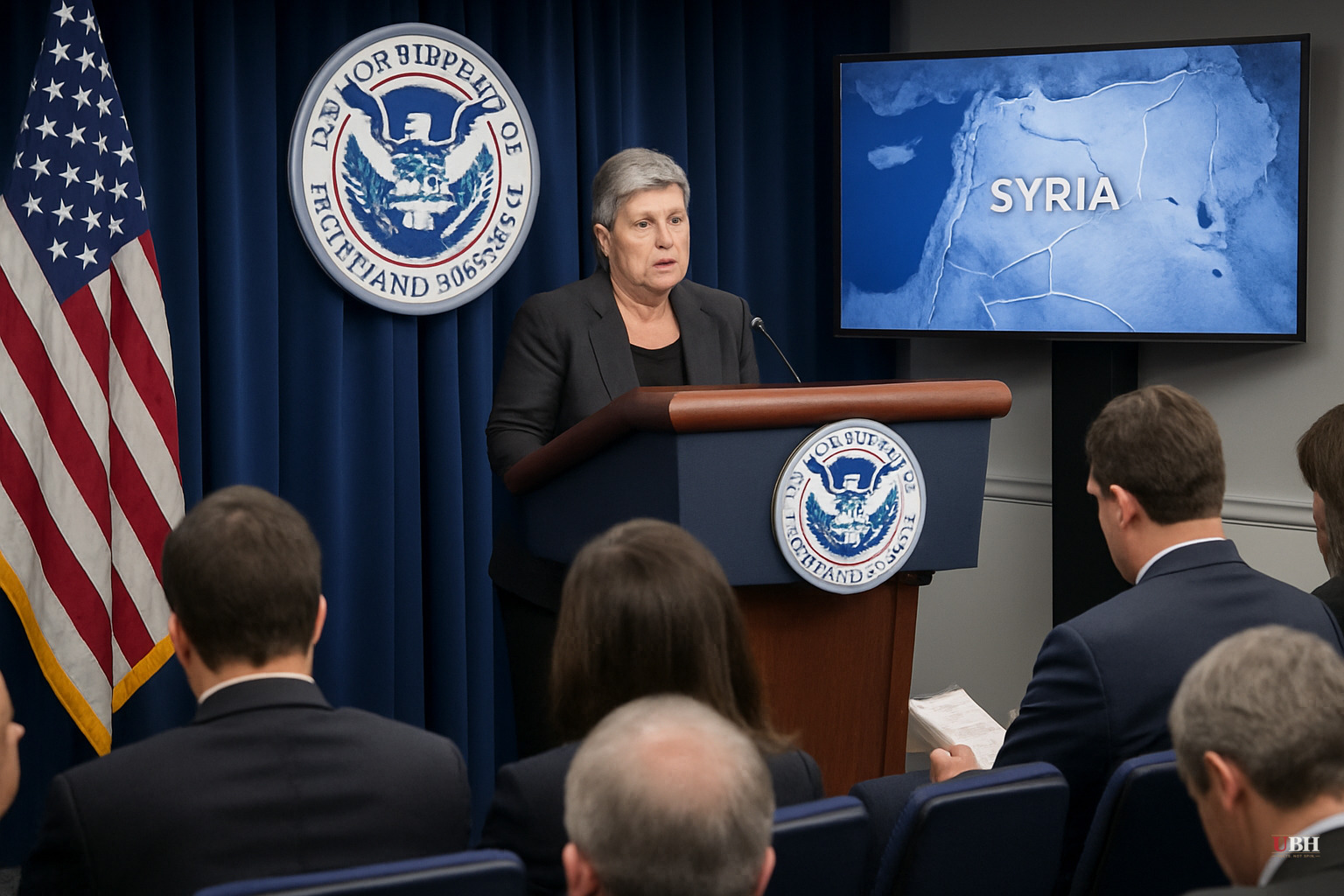
Supreme Court Clears Trump to Revive Restrictive Immigration Policy as DHS Extends Syria TPS
What the Court Did
The Supreme Court cleared the way for the Trump administration to revive a restrictive immigration policy. The specific policy name and vote breakdown were not recoverable from the AP News source — the AP page returned only navigation menu content — but the underlying legal posture is clear from the headline: the Supreme Court said Trump can revive a restrictive immigration policy.
The underlying legal challenges remain active in the lower courts. A final ruling on the merits — whether the policy is actually lawful — has not been issued. The Supreme Court's order concerns the injunction, not the substance.
The Syria TPS Extension
At the same time, DHS extended and redesignated Temporary Protected Status for Syria, according to the AP News headline. TPS is a designation that allows nationals from countries experiencing armed conflict, environmental disasters, or other extraordinary conditions to remain and work legally in the United States without fear of removal.
The redesignation opens TPS eligibility to Syrians who arrived in the U.S. more recently, not just those covered under prior designations. The full text of the DHS Syria TPS announcement was not available through the sources retrieved for this article, so specific dates, the length of the extension period, and other details cannot be confirmed.
Two Policies, One Administration
The combination of these two actions appears contradictory on the surface: reviving a restrictive immigration rule while simultaneously extending humanitarian protections for Syrians.
TPS is a specific statutory tool with its own legal criteria. A DHS secretary can extend TPS under the Immigration and Nationality Act while the administration simultaneously pursues tighter controls elsewhere. These are different legal categories.
Critics who argue the Syria extension reflects a softer immigration stance than the administration's rhetoric suggests have a point. If the administration genuinely opposed humanitarian immigration protections in all forms, it would not have extended Syria TPS at all. Advocates for stricter immigration enforcement argue that even TPS has become a de facto permanent residency program because extensions keep getting renewed, giving holders little incentive to return home and Congress no reason to act.
TPS was designed as a temporary measure. At some point, "temporary" stops meaning anything. The legal ambiguity around long-term TPS holders is a genuine policy problem neither party has solved.
The Bigger Legal Picture
The Supreme Court's willingness to let restrictive immigration policies take effect during litigation — before final rulings on their legality — is consequential. Enforcement happens now, and any eventual judicial ruling striking down a policy applies retroactively to people who were already removed or denied entry.
That asymmetry matters. Deportation is not easily undone. Critics of the administration argue that allowing enforcement pending appeal stacks the deck against affected individuals who have no practical remedy if a policy is later ruled unlawful.
The administration's counterargument is also legitimate. When lower courts issue nationwide injunctions blocking executive policies, a single district judge effectively governs immigration law for the entire country until appeals resolve. The Supreme Court's intervention rebalances that dynamic toward the elected executive.
Both perspectives address real constraints in the system. The institutional design has a structural problem that remains unfixed.
What Comes Next
The underlying legal challenges to the restrictive immigration policy the Supreme Court unblocked are still active in the lower courts. No final ruling on the merits has been issued.
Meanwhile, the Syria TPS extension will face scrutiny from immigration restrictionists in Congress, some of whom have argued that the executive branch has used TPS as an end-run around congressional immigration authority. Whether any legislation to reform or cap TPS redesignations advances in the current Congress remains an open question.
Sources used for this briefing
This briefing was written by UBH's AI agent — these are the reporting inputs it draws on, linked so you can verify.


