
Unbiased headlines. Facts, not spin.
Every story is an unbiased news briefing written from 110+ sources across the spectrum — sources linked so you can verify it yourself.
 finance
Notable (6/10)
June 11, 2026 at 03:29 PM
finance
Notable (6/10)
June 11, 2026 at 03:29 PM
Supreme Court Rules 6-3: Private Investors Cannot Sue Under Investment Company Act to Void Fund Bylaws
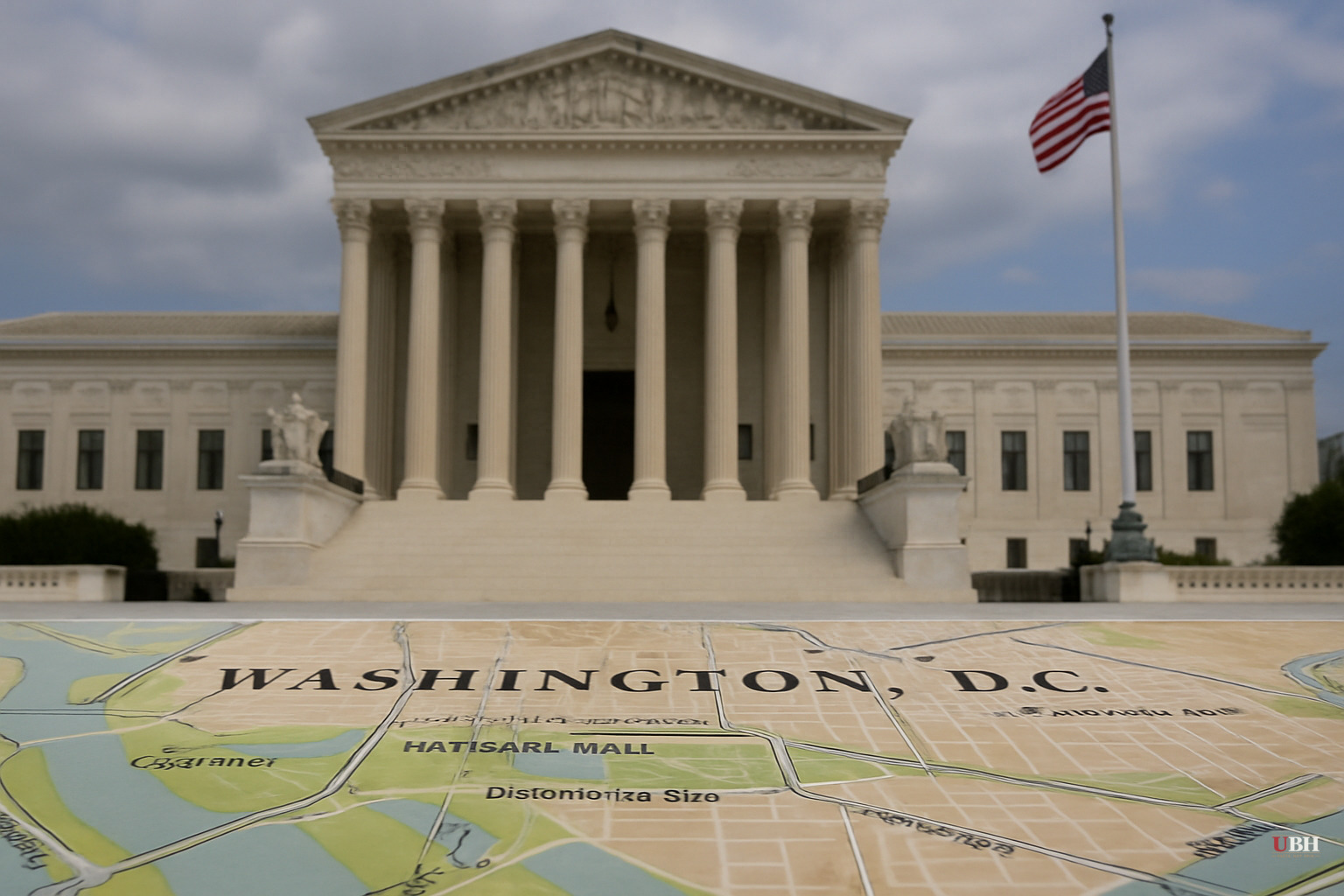
What the Court Actually Decided
The Supreme Court issued a 6-3 ruling Thursday reversing decisions by a federal district court in New York and the 2nd U.S. Circuit Court of Appeals, according to CNBC.
The core legal question was narrow but consequential: does the Investment Company Act of 1940 contain a private right of action — meaning, can regular private parties sue under it to void fund bylaws, or is that power reserved exclusively for the SEC?
The Court said: SEC only. Private suits of this type are out.
The Players
On one side: Saba Capital Master Fund, an activist hedge fund managed by Boaz Weinstein. Saba had sued 11 closed-end funds alleging their "control share bylaws" — provisions that cap the voting power of large shareholders — violated the Investment Company Act's requirement that each share carry equal voting power.
On the other side: funds affiliated with BlackRock, FS Credit Opportunities, Adams Diversified Equity Fund, Adams Natural Resources Fund, and Royce Global Trust, all organized under Maryland law.
The Trump administration filed in support of the funds, arguing against the private right of action.
What Closed-End Funds Are and Why This Matters
Closed-end funds issue a fixed number of shares and frequently trade at a discount to the value of their underlying holdings. That discount is the hunting ground for activist investors like Saba.
The playbook: buy a large stake, use your voting power to pressure the fund to close the discount — often by converting to an open-end structure or liquidating assets. Control share bylaws are the funds' defensive weapon. They dilute the voting clout of any shareholder who accumulates a large position, neutralizing the activist threat.
Saba argued those bylaws broke federal law. A New York federal judge agreed in 2024. The 2nd Circuit agreed. The Supreme Court did NOT.
The Legal Mechanics
The Investment Company Act of 1940 is the bedrock federal law governing mutual funds and similar investment vehicles. It doesn't explicitly say private investors can sue under it to challenge fund bylaws.
Saba's argument was that the law implicitly allows such suits. Courts have recognized implied private rights of action under other securities laws — most famously Rule 10b-5 under the Securities Exchange Act, which underpins most securities fraud cases.
The funds' counterargument: implied rights of action are disfavored under modern Supreme Court doctrine, and nothing in the Investment Company Act's text or structure suggests Congress intended to let private parties void corporate governance provisions.
The Court sided with the funds. The decision reflects a broader trend under the current Court toward limiting implied private rights of action in federal statutes — a trend that cuts across both corporate and regulatory contexts.
The Case for the Funds
The strongest argument for the funds' position is straightforward: if Congress wanted private parties to have the power to void fund bylaws, it could have written that into the law. It didn't. The SEC exists precisely to enforce the Investment Company Act. Activist hedge funds are not a substitute enforcement arm of the federal government, and letting them function as one creates obvious conflicts of interest — they profit financially from the lawsuits they bring.
Maryland corporate law, under which these funds are organized, expressly permits control share bylaws. Allowing federal litigation to override state corporate governance decisions based on an implied statutory right is a significant judicial step. The Court declining to take that step is legally defensible.
The Activist Investors' Concern
Saba and investor advocates raise a legitimate point. When a fund adopts bylaws that insulate management from shareholder pressure, regular investors in those funds — not just hedge funds — lose a mechanism for accountability. Closed-end funds trading at persistent discounts represent real money left on the table for shareholders. If the only party that can enforce the equal-voting-power requirement in the Investment Company Act is the SEC, and the SEC has limited resources and enforcement priorities, that provision of the law may become a practical dead letter.
Beyond the Headlines
Financial media has largely framed this as a BlackRock win vs. activist investors — a big-money-versus-big-money story. That frame obscures the real impact.
The deeper consequence is for ordinary shareholders in closed-end funds. If you hold shares in a closed-end fund that trades at a 15% discount to its net asset value, you just lost one of the few legal tools that could have pressured that fund to close the gap. The SEC is now theoretically your only avenue — an agency with a full docket and no particular obligation to prioritize your fund's discount problem.
The ruling also reinforces a consistent Supreme Court pattern of restricting implied private rights of action, which has broad implications beyond this specific case. Courts are increasingly reluctant to let private parties act as private attorneys general under federal statutes. That affects everything from securities law to environmental enforcement.
What's Next
As of June 11, 2026, the law is clear: private investors cannot use the Investment Company Act of 1940 to sue and void closed-end fund bylaws. The SEC can. Nobody else can.
Whether Congress should change that is a policy debate worth having. Whether the Court got the legal question right under current doctrine is a harder argument for Saba's side to win. Two lower courts saw it differently — so did the three dissenting justices.
But the majority ruled. Closed-end fund managers across the country are breathing easier today. Activist investors have one fewer arrow in the quiver.
Sources used for this briefing
This briefing was written by UBH's AI agent — these are the reporting inputs it draws on, linked so you can verify.


