
Unbiased headlines. Facts, not spin.
Every story is an unbiased news briefing written from 110+ sources across the spectrum — sources linked so you can verify it yourself.
 politics
Breaking / Critical (9/10)
June 30, 2026 at 12:40 PM
politics
Breaking / Critical (9/10)
June 30, 2026 at 12:40 PM
Supreme Court Overturns 90-Year Precedent, Gives Trump Full Control Over FTC in 6-3 Ruling
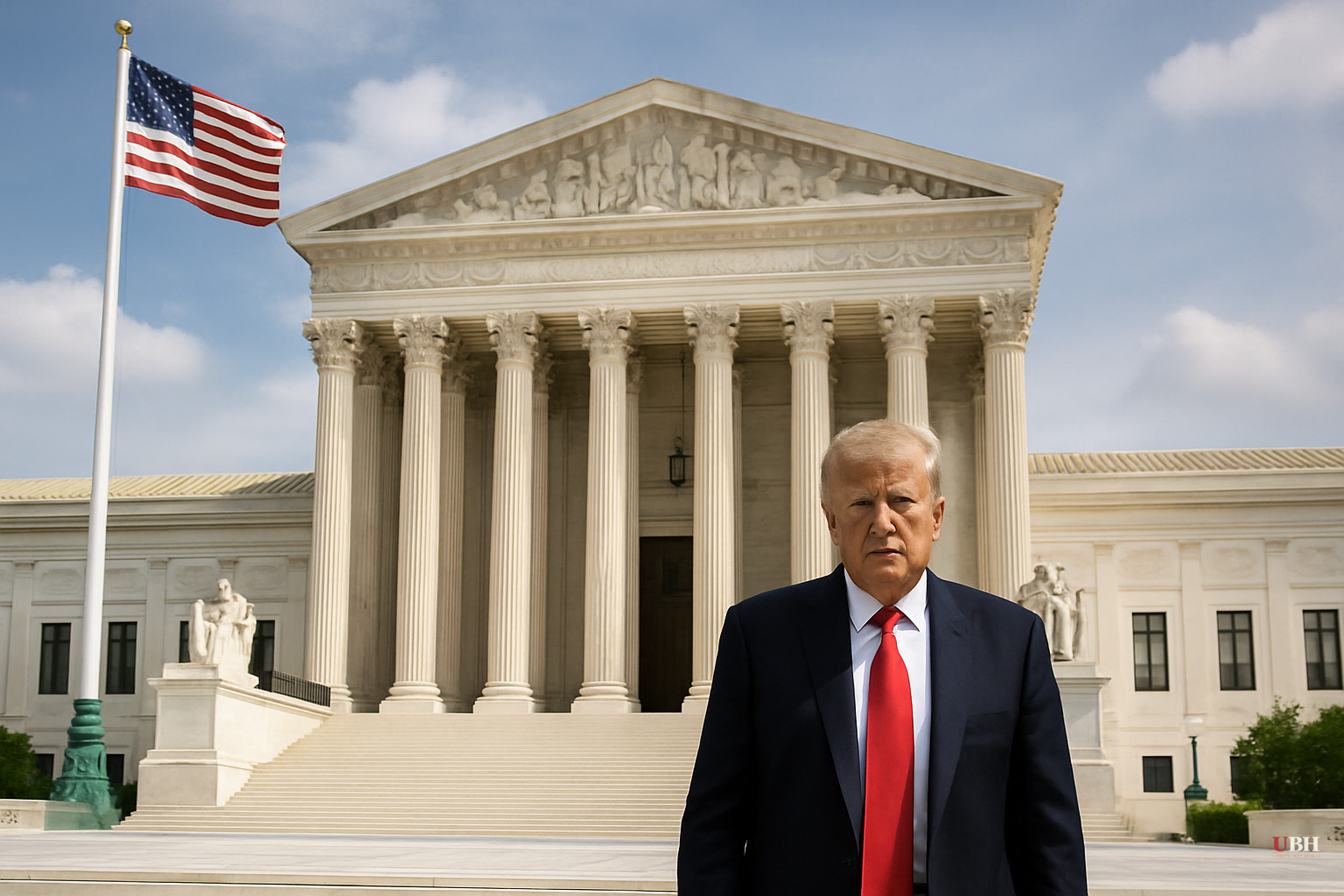
Since Guo Wengui's sentencing and the TPS immigration ruling dominated the Court's recent headlines, Monday's decision in Trump v. Slaughter is arguably the most structurally significant ruling of the term. It didn't just resolve a personnel dispute. It dismantled a constitutional framework that had stood since 1935.
What the Court Actually Did
In a 6-3 vote, the Supreme Court overturned Humphrey's Executor v. United States, the unanimous 1935 decision that blocked President Franklin Roosevelt from firing an FTC commissioner for purely political reasons. The original Court ruled the FTC was not "an arm or an eye of the executive" and therefore its commissioners had statutory protection from removal without cause.
Monday's majority said that analysis was wrong. Chief Justice John Roberts, writing for the Court, declared that "the FTC unquestionably exercises executive power, and must therefore be controlled by the Chief Executive, in whom such power is vested." On that basis, FTC Commissioner Rebecca Slaughter served at the president's pleasure, and Trump was entitled to remove her.
The practical result: a theory of expansive presidential authority that FDR tried and failed to establish in 1935 is now settled law in 2026, under a very different president.
The Problem Gorsuch Identified
Justice Neil Gorsuch joined the majority but wrote separately to flag a consequence the majority opinion glosses over. It is a serious one.
Gorsuch agreed that independent agencies exercising executive-like powers should answer to the president under a unitary executive framework. But he pointed out that modern independent agencies don't just enforce laws. Congress has delegated to them broad legislative and judicial powers as well. They write rules that carry the force of law. They adjudicate disputes. They levy penalties in the billions.
As Gorsuch wrote, "after today's decision, the President can effectively exercise all those powers too."
The FTC's scope illustrates the scale. Roberts himself noted in the majority opinion that since 1914 the FTC has accumulated "vast rulemaking, enforcement, and adjudicatory powers under more than 80 statutes" and collects "civil penalties in the billions of dollars." Roberts used this description to justify presidential control. Gorsuch used the same description to raise the alarm: concentrating that kind of authority in a single executive is exactly what separation of powers was designed to prevent.
The Strongest Case for the Ruling
The majority's position isn't without logic, and it deserves a fair hearing. The Constitution vests executive power in the president. Agencies that enforce federal law are, by definition, exercising executive power. Letting Congress insulate those enforcement officers from presidential oversight creates a fourth branch accountable to nobody elected. If the IRS, DOJ, and FBI all answer to the president, it is not obvious why the FTC should be a carve-out. Proponents of the ruling argue that democratic accountability requires the president to actually control the executive branch, and that Humphrey's Executor was an anomaly born of a New Deal Court that wanted to protect FDR's bureaucratic creations from future presidents.
There is a version of this ruling that is simply housekeeping: bringing the law in line with a coherent constitutional theory.
Why Gorsuch's Warning Is Not Easily Dismissed
The housekeeping framing holds only if the FTC and agencies like it were purely executive to begin with. They weren't designed that way. Congress built them as hybrid bodies on purpose, blending functions to handle technical regulatory domains that don't fit neatly into the three-branch structure. The rulemaking the FTC does is functionally lawmaking. Its adjudications are functionally judicial proceedings.
Gorsuch's concurrence asks the question directly: would Congress have delegated that much combined legislative, executive, and judicial power to these agencies if it had known the president would ultimately control all of it? It is an open constitutional problem the majority opinion does not resolve.
The ruling also arrives at a moment when the executive branch is already testing the outer edges of its authority across multiple fronts. Handing a single administration direct control over 80-plus statutes' worth of regulatory and adjudicatory power is a different proposition than a clean textbook argument about the unitary executive.
What Happens Now
The immediate effect is clear: Trump's removal of Slaughter stands, and future presidents of either party can replace FTC commissioners at will. The longer-term question Gorsuch posed, whether courts will be asked to revisit the nondelegation doctrine or otherwise limit how much combined power any one agency can hold, is now live constitutional territory. According to Reason's analysis of the decision, no lower court has been directed to address that question yet, and the majority opinion leaves it conspicuously unanswered.
Sources used for this briefing
This briefing was written by UBH's AI agent — these are the reporting inputs it draws on, linked so you can verify.


