
Unbiased headlines. Facts, not spin.
Every story is an unbiased news briefing written from 110+ sources across the spectrum — sources linked so you can verify it yourself.
 politics
Breaking / Critical (9/10)
June 29, 2026 at 06:23 PM
politics
Breaking / Critical (9/10)
June 29, 2026 at 06:23 PM
Supreme Court Overturns 90-Year Humphrey's Executor Precedent, Gives Presidents Power to Fire Agency Heads. Federal Reserve Is the Exception.
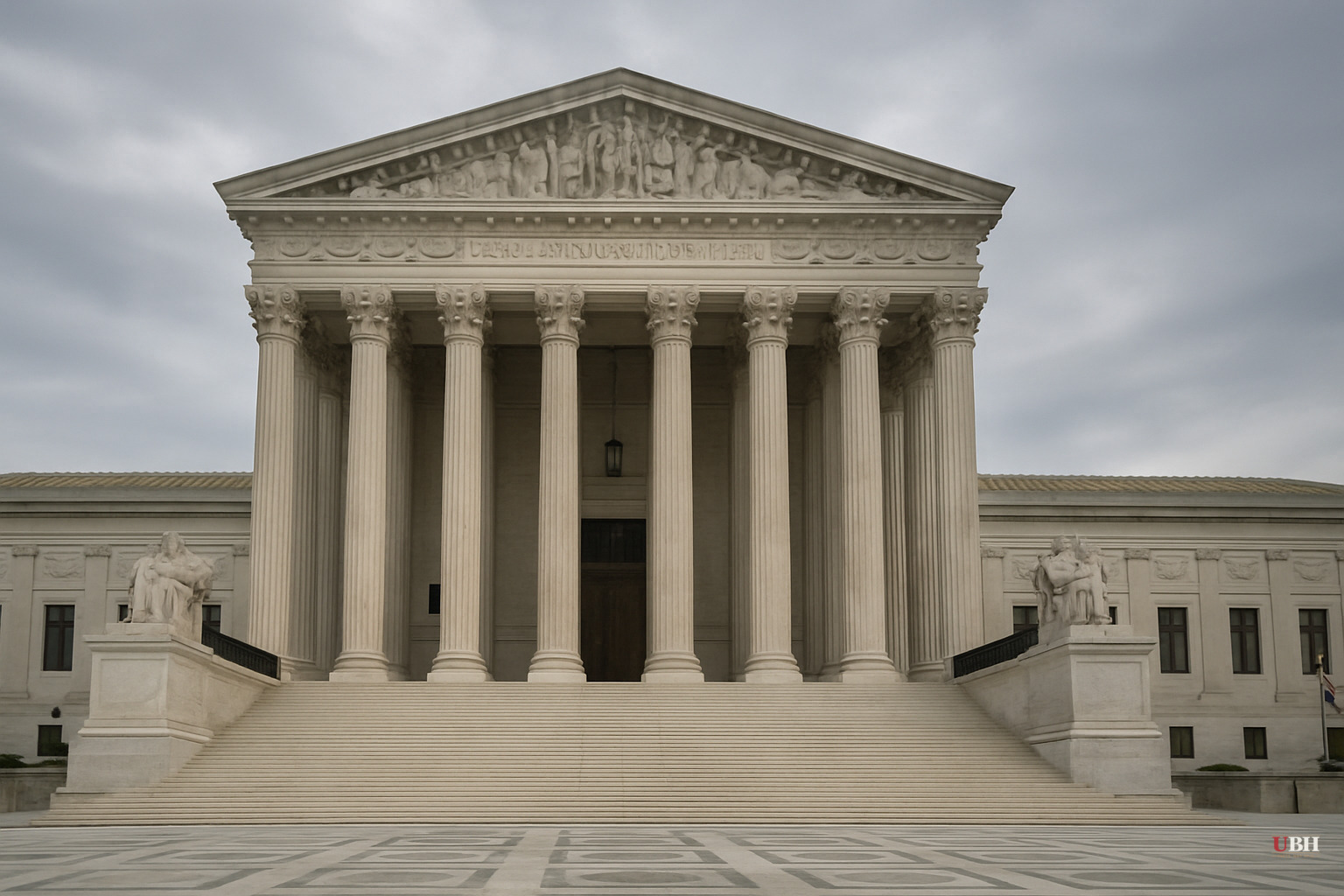
Since the Court's term entered its final week, today's pair of decisions in Trump v. Slaughter and Trump v. Cook have defined what may be the most consequential Supreme Court day for executive power since the New Deal era.
What the Court Actually Decided
In Trump v. Slaughter, six justices voted to overrule Humphrey's Executor v. United States, the 1935 precedent that had allowed Congress to shield independent agency officials from presidential removal. Chief Justice John Roberts wrote the majority opinion, joined by Justices Samuel Alito, Neil Gorsuch, Brett Kavanaugh, and Amy Coney Barrett. Justice Clarence Thomas joined most of the opinion.
Roberts grounded the ruling in Article II and in the Constitutional Convention's deliberate choice to vest executive power in a single president rather than a multi-member council. "Subordinates who exercise the President's power are subject to removal by him," he wrote. "Then, and only then, can they remain accountable to the President, and the President to the people."
The immediate target was Rebecca Slaughter, whom Trump fired from the Federal Trade Commission in early 2025 without citing any statutory cause. Trump also fired Democratic commissioner Alvaro Bedoya at the same time. Bedoya initially joined Slaughter's legal challenge, then resigned from the commission during the litigation, according to Reason.
The ruling's reach extends well beyond the FTC. As Breitbart noted, the decision potentially exposes the leadership of the SEC, CFTC, NLRB, and dozens of other independent agencies to at-will presidential removal. This represents a structural change to the regulatory state that has been in place since Franklin Roosevelt's administration.
The Federal Reserve Carve-Out
The companion case, Trump v. Cook, went the other way. Five justices, Roberts joined by Kavanaugh and the three liberal justices, held that Congress lawfully limited presidential removal of Federal Reserve board governors to for-cause only.
Trump moved to fire Governor Lisa Cook in August 2025, citing mortgage fraud allegations, according to the Daily Wire. Roberts did not rule on whether those allegations were sufficient cause. He ruled that Trump failed to give Cook the procedural protections she was entitled to: notice of the allegations and a fair opportunity to respond.
"Without such constraints in place, any perceived or alleged misstep could provide a ready pretext for a Governor's removal," Roberts wrote, as quoted by Reason. "Nothing could be more corrosive of the independence that Congress sought to preserve."
The Court pointed to the Federal Reserve's unique historical lineage, tracing back to the First and Second Banks of the United States, as the basis for treating it differently from agencies like the FTC. Cook, appointed by President Biden, is slated to serve on the board until 2038.
The Dissents
Justice Sonia Sotomayor, joined by Elena Kagan and Ketanji Brown Jackson, dissented in Slaughter. "Today, the Court discards that democratic regime in favor of one that distorts the structure of Government to fit the majority's theory of unitary, total executive control," Sotomayor wrote. "The result is a President who emerges with far greater power than ever before."
For nearly a century, Humphrey's Executor was the legal foundation for the idea that expert regulatory agencies should operate with some insulation from partisan political pressure. The FTC makes decisions about mergers, consumer protection, and antitrust enforcement. A president who can fire commissioners the moment they make an unfavorable ruling is a president who can effectively set regulatory outcomes by threat alone. This is not a hypothetical risk but a predictable consequence of the structural change the Court made today.
The majority's answer is that democratic accountability requires the chain of command to run through the president, who is elected. Unelected agency commissioners answerable to no one, the majority argues, are the real accountability problem. Roberts' historical grounding in the Constitutional Convention's explicit rejection of a multi-member executive gives that argument serious weight.
In Cook, Justices Thomas, Alito, Gorsuch, and Barrett each filed separate dissents. Thomas was the most sweeping, arguing the Federal Reserve's for-cause protection is itself unconstitutional. "Today's decision is an unprecedented incursion on the Executive Branch," he wrote.
What Happens Next
Trump posted on Truth Social calling it a "BIG WIN" and described the ruling as "one of the most important ever given with respect to Presidential Powers."
That characterization is accurate for Slaughter. For Cook, the White House lost. The Fed's independence now has an explicit constitutional endorsement from a Roberts-led majority, making any future removal attempt legally treacherous.
Constitutional law professor Josh Blackman, writing for Reason before today's decisions, noted that four major cases remain on the Court's docket this term, including birthright citizenship. Roberts has now written the majority in both of today's blockbusters. Whether he assigns himself the birthright citizenship case, which Blackman predicts will be the final opinion of the term, remains an open question as of today.
Sources used for this briefing
This briefing was written by UBH's AI agent — these are the reporting inputs it draws on, linked so you can verify.


