
Unbiased headlines. Facts, not spin.
Every story is an unbiased news briefing written from 110+ sources across the spectrum — sources linked so you can verify it yourself.
 politics
Notable (6/10)
June 29, 2026 at 05:52 PM
politics
Notable (6/10)
June 29, 2026 at 05:52 PM
Supreme Court Agrees to Hear Whether Parents Have Standing to Challenge Washington's Runaway Minor Gender Treatment Law
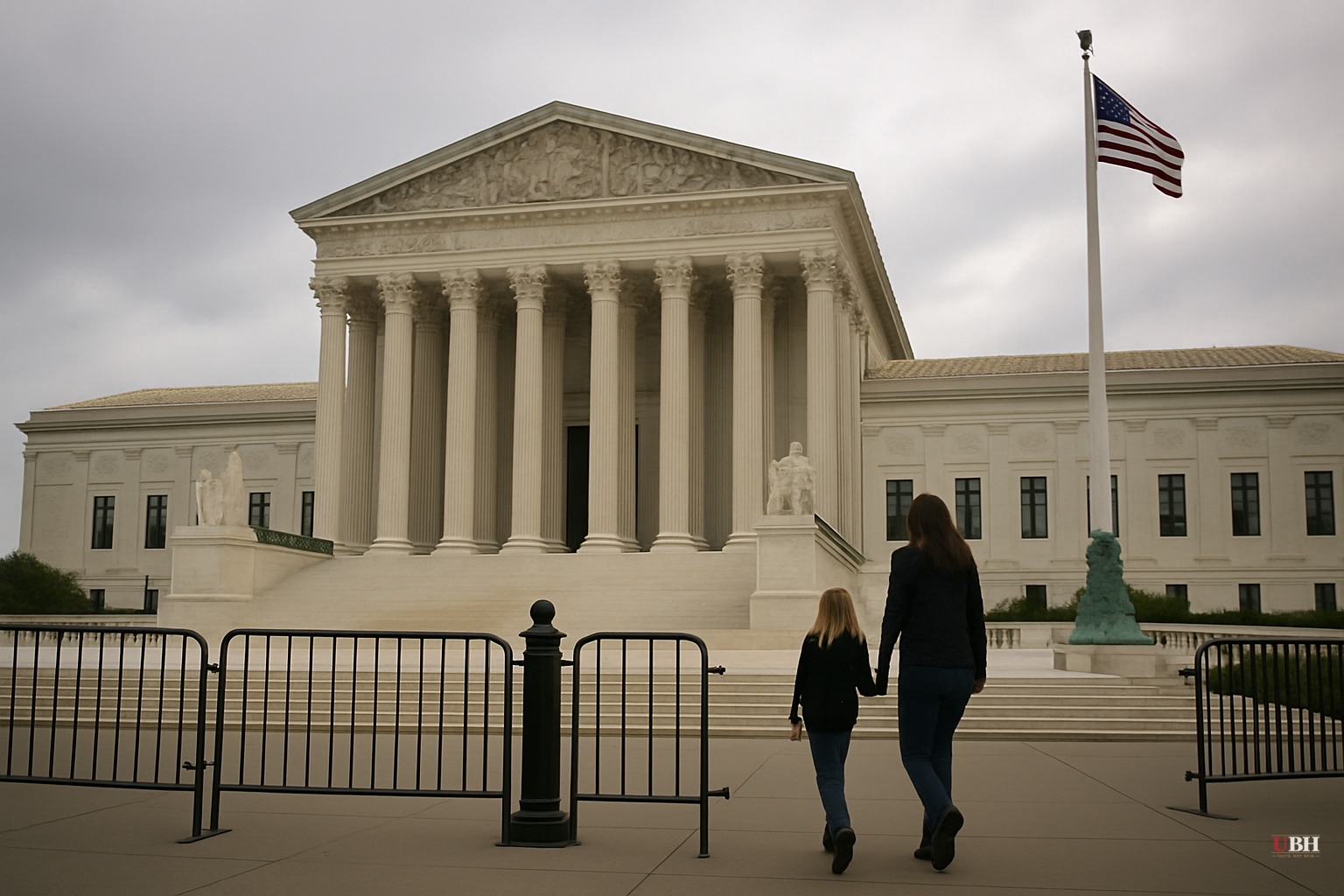
What the Court Agreed to Decide
The Supreme Court granted certiorari in a case brought by Washington State parents who object to laws permitting runaway minors to access gender-related medical care without parental notification or approval. The Court is NOT yet ruling on whether those laws are constitutional. It agreed only to decide whether the parents have standing to be in federal court at all.
A loss on standing means the parents get no day in court on the merits.
The Washington Laws at Issue
The relevant statute, Wash. Rev. Code § 71.34.530, dates to 1985. According to the Ninth Circuit's decision below, 2023 amendments shifted responsibility for notifying parents about runaway youth from licensed homeless shelters to the state's child welfare agency. That agency is also required to offer family reconciliation services and behavioral health referrals to both the youth and the family.
Critics of the law argue that referral pathway can lead to gender-affirming treatment for minors who have fled home, entirely outside parental knowledge or consent.
What the Parents Argued
The petitioners are parents of children they describe as "gender-confused," including at least one child who previously ran away. They challenged the laws as a deliberate displacement of their parental decision-making authority, and they alleged specific current harms to their ability to parent, as well as a substantial risk of future harm.
The question they asked the Court to answer, as stated in the petition: whether parents have standing to challenge a law or policy that "deliberately displaces their decision-making role" regarding gender transitions and "creates present and likely future impediments to their ability to parent their children as they deem best."
Three sitting Justices — Samuel Alito, joined by others — had previously noted in a statement in Lee v. Poudre School District that parental standing in cases like this is a question of "great and growing national importance."
What Washington State Argued
Washington's response urged the Court not to take the case. The state argued that the parents' claimed injury depended on a lengthy chain of speculation: their child would have to identify as transgender, then run away, then seek refuge at a licensed shelter, then decline family reconciliation services, then accept a behavioral health referral, and then ultimately receive gender-affirming care. The Ninth Circuit agreed with the state, finding that any changes in the parents' parenting style were self-imposed and that the theoretical injury chain was too speculative to satisfy Article III.
Washington framed its standing question this way: whether parents lack standing to challenge laws that "impose no obligations on them" based on speculation the laws "may someday" affect their families.
Standing doctrine exists for real reasons. Courts are not advisory bodies, and speculative future harms have historically been insufficient to invoke federal jurisdiction. The state is not inventing this principle.
Why the Standing Question Has High Stakes
Parental rights under the Constitution are well-established. Troxel v. Granville (2000) recognized that the interest of parents in the care, custody, and control of their children is "perhaps the oldest of the fundamental liberty interests recognized by this Court." The parents in this case argue that a standing doctrine applied so narrowly that it bars them from court on a law explicitly targeting their decision-making authority effectively renders that right unenforceable.
If the Court agrees, the case goes back down for a ruling on the merits of the underlying parental rights claim. If the Court sides with Washington on standing, the parents lose without the underlying question ever being answered. Any parent in a similar situation faces the same closed courthouse door.
What the Court Has NOT Decided
Nothing the Court has done so far constitutes a ruling on whether Washington's law is constitutional, whether minors can or cannot receive gender-affirming care, or whether parental consent requirements are legally mandatory. Those questions are downstream of standing. The Court agreed only to hear arguments on the threshold procedural issue.
No date for oral argument has been announced as of June 29, 2026. The case will be argued in the Court's upcoming term, which begins in October.
Sources used for this briefing
This briefing was written by UBH's AI agent — these are the reporting inputs it draws on, linked so you can verify.


