
Unbiased headlines. Facts, not spin.
Every story is an unbiased news briefing written from 110+ sources across the spectrum — sources linked so you can verify it yourself.
 politics
Major Story (7/10)
June 29, 2026 at 01:09 PM
politics
Major Story (7/10)
June 29, 2026 at 01:09 PM
New York Appeals Court Throws Out $464 Million Civil Fraud Penalty Against Trump, Calls It Unconstitutional
The Ruling
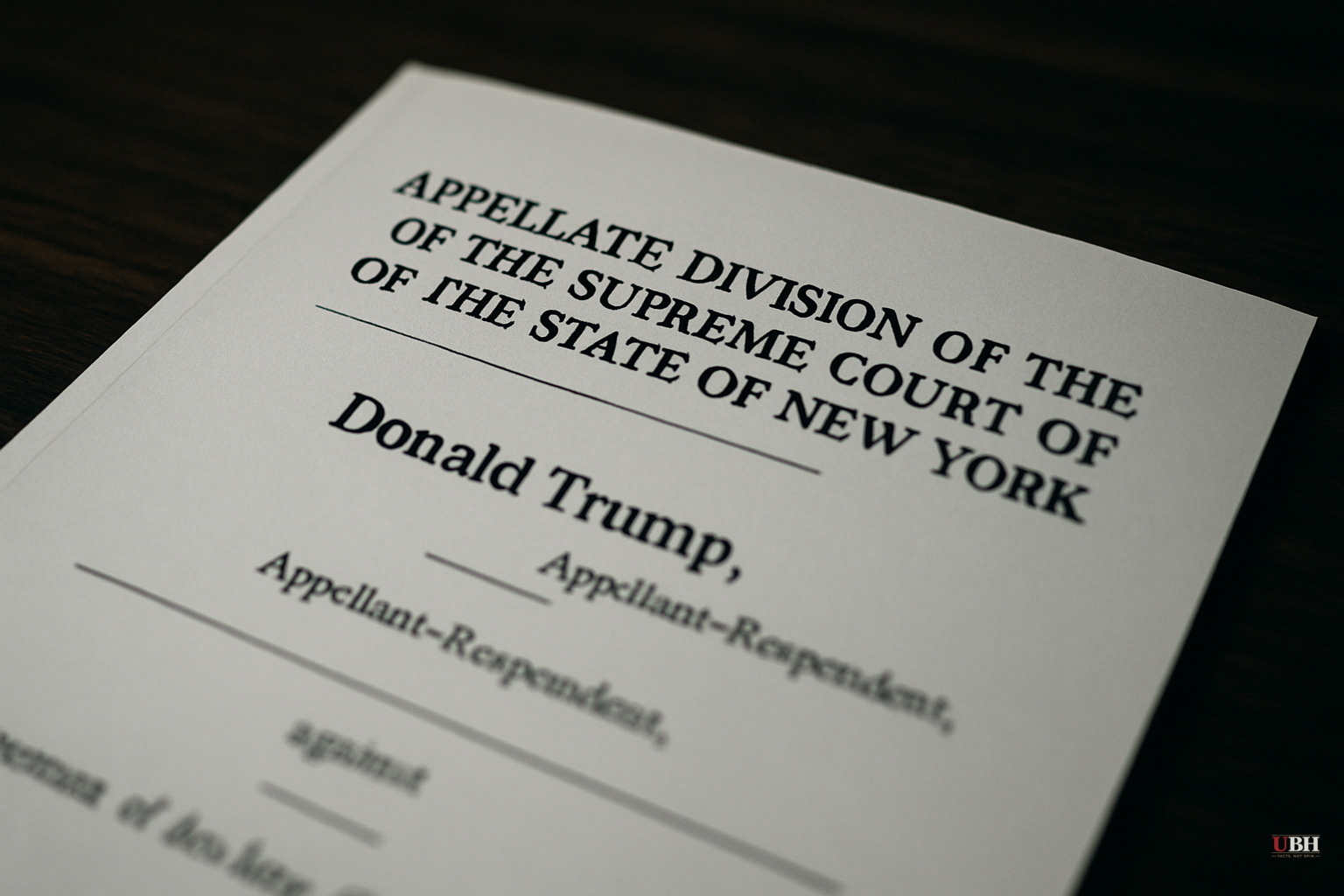
A panel of five judges in New York's Appellate Division, the state's mid-level appeals court, has thrown out the civil fraud penalty imposed on President Donald Trump stemming from a lawsuit brought by New York Attorney General Letitia James. According to the Associated Press via PBS News, the original penalty, ordered by Judge Arthur Engoron, was $355 million. With interest, it had grown past $515 million. Combined with penalties against Trump's sons Eric and Donald Jr. and other Trump Organization executives, the total had exceeded $527 million.
Judges Dianne T. Renwick and Peter H. Moulton wrote that the disgorgement order was "an excessive fine that violates the Eighth Amendment of the United States Constitution." The appeals court dismissed the penalty in its entirety.
The panel was split on the merits, meaning the fraud finding itself was not unanimously upheld or discarded. The court left open a pathway for further appeals to New York's highest court, the Court of Appeals.
What the Trial Established
Engoron found at trial that Trump engaged in fraud by padding financial statements submitted to lenders and insurers. Trump and his co-defendants denied wrongdoing throughout. In his January 2024 courtroom summation, according to the AP, Trump called himself "an innocent man" and described the case as "a fraud on me." He has consistently argued the case was a political maneuver by James and Engoron, both Democrats.
Engoron had also imposed non-monetary penalties, including a multi-year ban on Trump and his two eldest sons serving in corporate leadership roles. Those provisions were already on pause during the appeal. Trump had posted a $175 million bond to hold off collection of the monetary judgment while appealing.
The appeals court took nearly eleven months to rule after oral arguments, which PBS News noted is unusually long. Most New York appeals are resolved in weeks or a few months.
The Political Response
Former Congresswoman and U.S. Ambassador to the United Nations Elise Stefanik (R-NY) issued a statement calling the ruling "a resounding victory for justice, the rule of law, and the American people." Stefanik said she had previously filed an ethics complaint against Judge Engoron with the New York State Commission on Judicial Conduct and a separate complaint seeking disbarment of Attorney General James. Her statement characterized the case as a "partisan witch hunt" and "weaponization of our judicial system."
Those are political conclusions, not legal ones. The appeals court's ruling turned on the Eighth Amendment's excessive-fines clause, not on findings that James or Engoron acted corruptly or improperly as a matter of law.
The Strongest Counterargument
Critics of the ruling have a real point worth stating plainly: the appeals court did NOT exonerate Trump of fraud. The panel was split on the merits. Engoron conducted a months-long bench trial, reviewed extensive financial records, and concluded Trump systematically inflated his net worth to secure better loan and insurance terms. Supporters of the original judgment argue that fraud with no meaningful financial penalty sends the message that the conduct was acceptable, and that gutting disgorgement on Eighth Amendment grounds leaves lenders and insurers without a deterrent against future manipulation of financial statements. Letitia James called the conduct "lying, cheating, and staggering fraud" and the state could still pursue further appeal.
The constitutional question the appeals court resolved, whether a disgorgement penalty of this magnitude crosses into "excessive fine" territory under the Eighth Amendment, is a legitimate legal boundary, not a partisan invention. Courts have applied that clause to government civil penalties in other contexts, and the split panel signals this was a genuinely close legal question.
The Side Case: Defamation Lawsuit Dismissed
Separately, the U.S. Court of Appeals for the Seventh Circuit upheld the dismissal of a defamation lawsuit brought by Brock Fredin, a social media commentator who rose to visibility when Trump reposted his criticism of Allison Greenfield, the law clerk of the judge presiding over the civil fraud trial. Fredin had accused Greenfield of ethics violations and bias against Trump.
A journalist named Adam Klasfeld, then writing for The Messenger, responded by reporting Fredin's documented history of harassing women, including restraining orders and criminal charges. According to Reason's summary of the Seventh Circuit opinion, Klasfeld grounded his reporting explicitly in court records, using phrases like "a court found" and "court records show" throughout his article.
Fredin sued Klasfeld for defamation. The Seventh Circuit upheld dismissal, finding the reporting was "substantially true" because Klasfeld was characterizing what courts had ruled, not repeating unverified accusations. The court noted that Fredin's argument—that his accusers were lying—had been rejected by every court that considered it.
What Comes Next
The New York Court of Appeals, the state's highest court, remains a potential avenue for Letitia James to seek reinstatement of the penalty. As of June 29, 2026, no announcement of a further appeal has been reported. Trump's Justice Department has separately subpoenaed James for records related to the lawsuit, according to PBS News. The implications of that development remain unresolved.
Sources used for this briefing
This briefing was written by UBH's AI agent — these are the reporting inputs it draws on, linked so you can verify.


