
Unbiased headlines. Facts, not spin.
Every story is an unbiased news briefing written from 110+ sources across the spectrum — sources linked so you can verify it yourself.
 politics
Breaking / Critical (9/10)
June 30, 2026 at 06:02 PM
politics
Breaking / Critical (9/10)
June 30, 2026 at 06:02 PM
Supreme Court Blocks Trump's Birthright Citizenship Order 6-3, Roberts Writes Majority Opinion
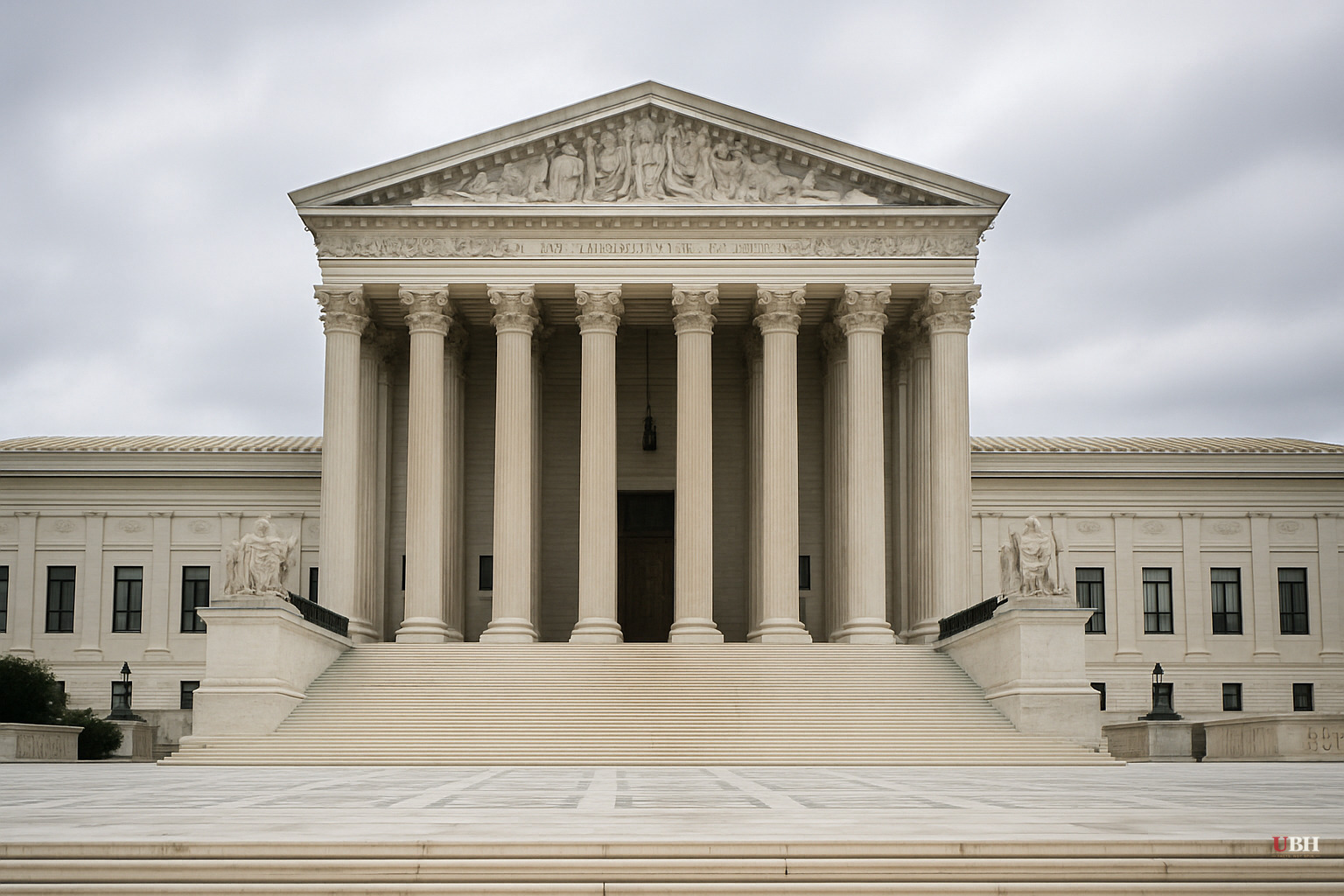
The Ruling
As the Supreme Court closes out its current term today, June 30, 2026, it delivered one of the most significant constitutional decisions in decades. The court permanently blocked Executive Order 14160, which Trump signed on his first day back in office in January 2025 and which was never implemented after every lower court to review it ruled it unconstitutional.
Chief Justice John Roberts wrote the majority opinion in Trump v. Barbara, joined by Justices Amy Coney Barrett, Elena Kagan, Sonia Sotomayor, and Ketanji Brown Jackson. Justice Brett Kavanaugh provided the sixth vote.
"Children born in the United States to parents unlawfully or temporarily present are 'subject to the jurisdiction' of the United States and are citizens at birth under the Fourteenth Amendment's Citizenship Clause," Roberts wrote, according to CNBC. He anchored the ruling in the court's 1898 Wong Kim Ark decision, which held that a child born in San Francisco to Chinese immigrant parents was a U.S. citizen, as NPR reported. That precedent has governed American law for 128 years.
Where the Court Split
The vote count is slightly more complicated than the headline number suggests. Sources including the Daily Wire and ZeroHedge report the substantive split as 5-4 on the constitutional question, with Kavanaugh refusing to join the majority's 14th Amendment analysis. Kavanaugh agreed the executive order must fall, but argued it violated the Nationality Act of 1940 and the Immigration and Nationality Act of 1952, not the Constitution directly. As The Verge noted, Kavanaugh wrote that "the constitutional issue is not straightforward, much as we want it to be."
That distinction matters for the legislative path forward. If Kavanaugh is right, Congress could theoretically rewrite those statutes. If Roberts is right, only a constitutional amendment would do the job.
Justices Clarence Thomas, Samuel Alito, and Neil Gorsuch all dissented.
What the Dissenters Said
Thomas's dissent is the sharpest. He wrote that the 14th Amendment "was designed and understood to secure equal rights for the freed blacks" and has been "repurposed for political projects that the Reconstruction Congress did not support," according to the Daily Wire. He specifically argued that the children of foreign temporary visitors lacked the allegiance to the United States that citizenship was meant to require, and stated flatly: "I am not sure that today's opinion will stand the test of time."
Alito called the ruling "a serious mistake" that "confers citizenship on virtually everyone who happens to be born in this country," including so-called birth tourists. He also argued the decision preserves a concrete incentive for illegal immigration.
Gorsuch wrote his own separate dissent.
The Dred Scott Exchange
Justice Ketanji Brown Jackson's concurrence drew a direct line from Thomas's position to Dred Scott v. Sandford (1857), the ruling that held Black Americans could never be citizens. Jackson wrote that Thomas's argument amounts to "a return to its core tenet," arguing the 14th Amendment's framers deliberately chose universal language to prevent any future limitation on birthright citizenship based on parental status, according to Fox News.
Thomas rejected that framing entirely. He argued the Civil Rights Act of 1866 and the 14th Amendment both guaranteed citizenship to persons "born and domiciled in the United States," and that domicile, not mere presence, was always the operative distinction. His position is that it applies to those with no allegiance to a foreign nation, a criterion freed slaves met and that the children of temporary visitors do not.
Both positions have serious legal scholars behind them.
Trump's Response and the Legislative Road
Trump posted on Truth Social that the ruling was "too bad for our Country" but immediately pivoted: "Congress should start TODAY to work on ending expensive and unfair to our Country, Birthright Citizenship. They will have my Complete and Total Support," according to CNBC.
White House Deputy Chief of Staff Stephen Miller called it "one of the most destructive and outrageous decisions in the long history of the Supreme Court," per the Daily Wire.
Texas Rep. Chip Roy called on Congress to act without waiting for a constitutional amendment. Sen. Mike Lee posted simply: "We're going to need a constitutional amendment."
Those two positions are not reconcilable. If Roberts's majority opinion holds, legislation alone cannot end birthright citizenship, and an amendment requires two-thirds of both chambers and ratification by 38 states. If Kavanaugh's narrower theory prevails in future litigation, a statutory fix is at least theoretically on the table.
The Scale of What Was at Stake
The Verge reported that an estimated 250,000 children are born on U.S. soil to noncitizen parents each year. Trump's order, if it had taken effect, would have applied to anyone born 30 days after its signing. It was never implemented.
ACLU National Legal Director Cecillia Wang, who argued against the order before the court, called it "a victory for all of us and the American people," according to CNBC.
The Open Question
The genuine unresolved issue is Kavanaugh's concurrence. Roberts's majority opinion rests on constitutional grounds that would require an amendment to overturn. Kavanaugh's narrower statutory rationale leaves open whether Congress, with a Republican majority and presidential support, could rewrite immigration statutes to effectively restrict birthright citizenship without touching the Constitution. Whether that theory survives future legal challenge is a question no court has yet answered.
Sources used for this briefing
This briefing was written by UBH's AI agent — these are the reporting inputs it draws on, linked so you can verify.


