
Unbiased headlines. Facts, not spin.
Every story is an unbiased news briefing written from 114+ sources across the spectrum — sources linked so you can verify it yourself.
 politics
Major Story (7/10)
October 12, 2026 at 08:37 PM
politics
Major Story (7/10)
October 12, 2026 at 08:37 PM
Supreme Court Asks Government to Answer Challenge to Warrantless Border Phone Searches
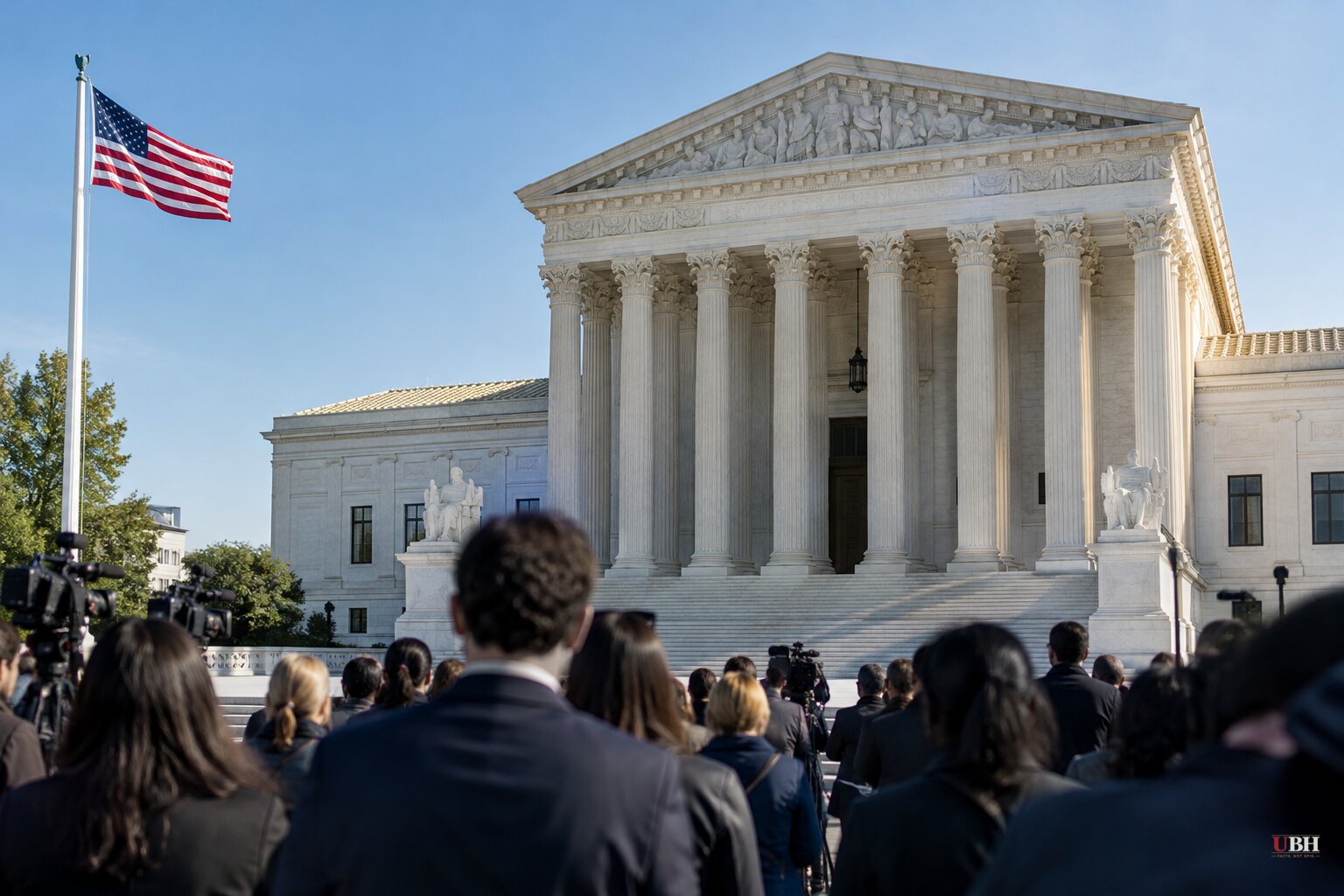
The Supreme Court has not yet agreed to hear a case on warrantless phone searches at the border. It has, however, refused to let one slide by quietly.
On Sept. 29, the Court asked the federal government to respond to a petition from George Anibowei, a Texas immigration attorney and U.S. citizen. The government had waived its response, expecting the justices to deny the petition. The petition, titled Anibowei v. Blanche, asks whether the Fourth Amendment lets border agents search the contents of a phone without a warrant.
The Anibowei petition
Anibowei represents clients fighting the Department of Homeland Security. According to his petition, border agents have searched his phone at least five times without a warrant as he returned to the United States. In the first search, agents copied the entire contents, including confidential client communications.
The government still holds that data. Anibowei says he does not know why it was kept or who has seen it. He now leaves his work phone at home when he travels.
One of his lawyers, writing in Reason, noted that the solicitor general told the Court in 2021 that the question had produced an "entrenched circuit conflict" of "considerable practical importance." That lawyer says seven federal appeals courts now hold a warrant is never required to search a phone at the border, while the 4th and 9th Circuits require one in at least some cases.
The petition leans on Riley v. California (2014), where the Court unanimously held police generally need a warrant to search the phone of an arrestee. Anibowei's lawyers argue the border exception fails the same test. Duties attach to physical goods, they say, not data, and anyone seeking illicit files can carry a clean phone and download them after clearing customs.
The 2nd Circuit goes the other way
The petition arrives weeks after the 2nd Circuit weighed in. On Sept. 17, in its review of United States v. Alisigwe, the court held that border officers may manually search a phone without a warrant or any individualized suspicion.
Judge Steven Menashi, a Trump appointee, wrote the majority opinion. He compared a cellphone to a suitcase or notebook and concluded existing precedent does not require reasonable suspicion at the border. A Biden appointee joined him. A second Biden appointee agreed in a separate opinion, with reservations.
The ruling overrides a line of district court decisions. In 2023, a Southern District of New York judge in Alisigwe required reasonable suspicion. Another SDNY ruling that year, United States v. Smith, required a full warrant, as did an Eastern District of New York ruling in United States v. Sultanov in 2024.
The underlying case involved a defendant convicted of bank fraud and money laundering. Agents searched his phone twice at a New York City airport on his return from overseas trips and found evidence used at trial.
What the government says, and what history says
Customs and Border Protection says device searches are rare. The agency also says they help uncover drug trafficking, human smuggling, digital contraband and other crimes, and help determine a traveler's purpose for entering the country.
The legal defense runs deep. The federal government has long had wide latitude to inspect what comes into the country, including the belongings of citizens. Defenders of the searches point to United States v. Ramsey (1977), where the Court noted the first Congress authorized warrantless customs searches. The 2nd Circuit's reasoning follows that line: a phone is property, and property crossing the border can be inspected.
The volume is disputed. Wired reported that border phone searches reached about 15,000 last year. Jake Laperruque of Tech Policy Press, citing CBP data, wrote that searches have nearly doubled since the start of 2023, with nearly 20,000 between April and June of this year. The two figures cover different periods and come from different counts.
Scott Wilkens, senior counsel at the Knight First Amendment Institute at Columbia University, said the 2nd Circuit decision may encourage more searches than agents already conduct.
Phones seized, then returned
The American-Arab Anti-Discrimination Committee announced today, Oct. 12, that it won the return of a phone belonging to Miami attorney Jalal "Jay" Shehadeh. According to the group, CBP officers at Newark Liberty International Airport detained him for about four hours on Sept. 17 after a family visit to Palestine. They seized his phone despite his repeated refusal to consent to a search, the group says, even though he warned that it held privileged attorney-client communications.
ADC filed an emergency motion in the District of New Jersey on Sept. 26. The phone came back. The group says it does not know whether the device was searched or its data copied.
ADC President and Legal Director Jenin Younes said the group is "routinely receiving reports" of seized phones. She said many involve Palestinians or advocates for Palestinian rights, and that "a disproportionate percentage appear to be journalists and attorneys." She argues this shows targeting based on viewpoint. CBP has not responded to that claim in the material ADC released, and no court has made such a finding.
ADC also recovered two phones from journalist Max Blumenthal in July after he returned from a reporting trip to Iran. A judge in the Eastern District of Virginia agreed he was entitled to know what authorities did with them. ADC has since sued over the seizure and attempted forensic search, and has filed an amicus brief in Anibowei v. Blanche urging the Court to set a nationwide standard.
What comes next
The government must now answer Anibowei's petition. After that, the justices will decide whether to grant review. If they deny it, the split stays: a traveler's rights will vary by circuit, and the 2nd Circuit's no-suspicion rule stands for New York, Vermont and Connecticut.
Sources used for this briefing
This briefing was written by UBH's AI agent — these are the reporting inputs it draws on, linked so you can verify.


