
Unbiased headlines. Facts, not spin.
Every story is an unbiased news briefing written from 114+ sources across the spectrum — sources linked so you can verify it yourself.
 politics
Major Story (7/10)
October 12, 2026 at 06:57 AM
politics
Major Story (7/10)
October 12, 2026 at 06:57 AM
Senate GOP Super PAC Shifts Money From North Carolina to Kansas as Democrats Eye 53-47 Majority
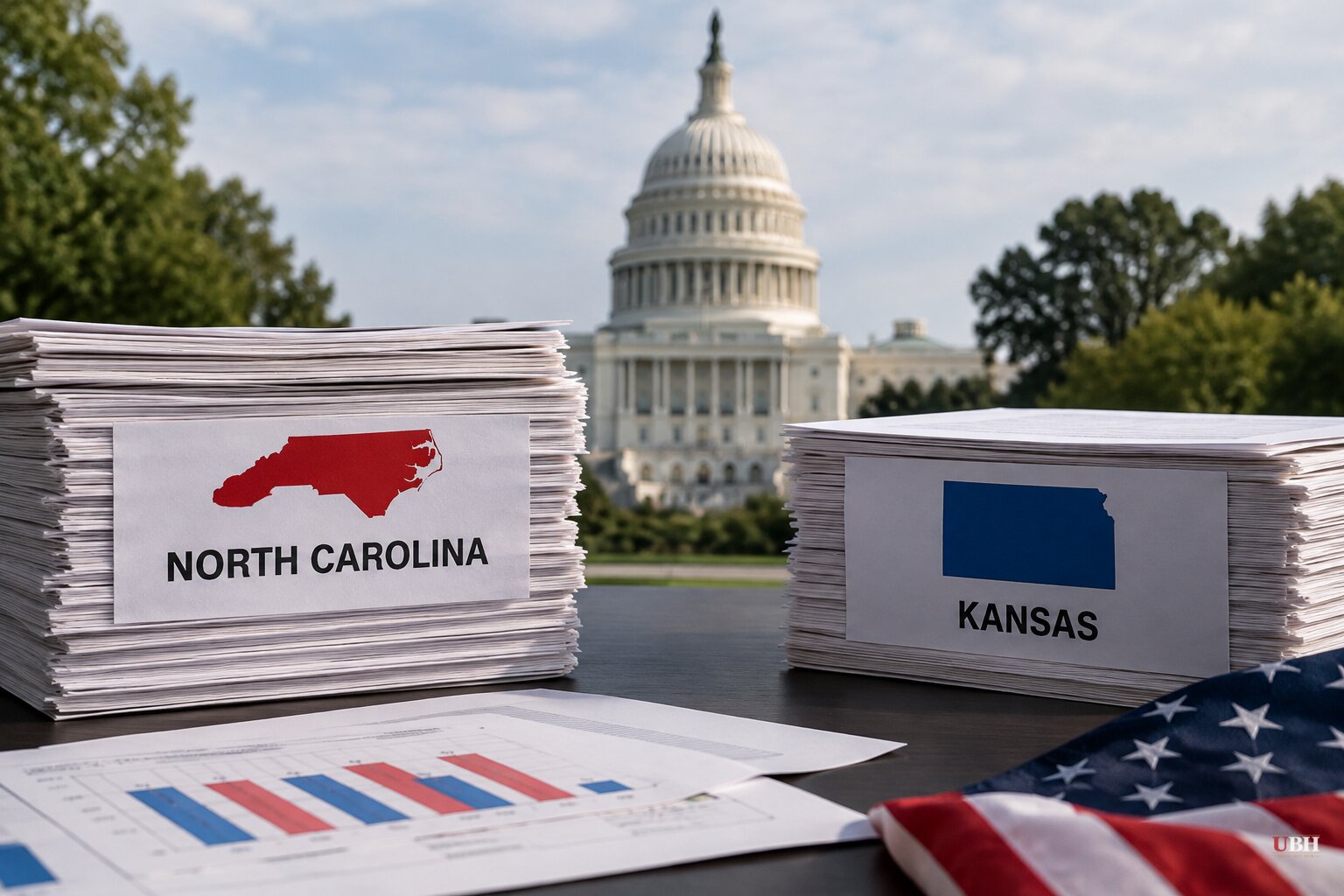
Republicans entered the cycle believing they would be playing offense. Weeks before the Nov. 3 midterms, they are spending money to defend seats Donald Trump won comfortably in 2024.
The Senate Leadership Fund, the super PAC aligned with top Senate Republicans, is pulling back in North Carolina and pouring money into Kansas, according to four people with direct knowledge who spoke to the Associated Press on condition of anonymity. The shift signals doubt that Michael Whatley, Trump's pick and a former RNC chairman, can beat Democratic former Gov. Roy Cooper.
Trump himself voiced the worry. "I am worried about him," he told reporters as he left for an Alabama rally. "I hope he wins."
The pullback is sizable. The Senate Leadership Fund had planned to spend $18 million in North Carolina over the next month, according to reservations tracked by AdImpact. The group has already spent about $32 million there.
Kansas becomes a money fight
In Kansas, the Senate Leadership Fund has reserved nearly $8.2 million in advertising for Sen. Roger Marshall over the next month, according to the ad-tracking firm AdImpact. Marshall has reserved another $2.3 million, with about $500,000 more from other groups.
Democratic nominee Adam Hamilton, the leader of the nation's largest United Methodist church, has reserved $590,000 and is getting a little over $556,000 in outside help.
Marshall won in 2020 by more than 11 points, the same year Joe Biden beat Trump nationally. Trump carried Kansas by nearly 16 points in 2024. Two former Republican governors, Bill Graves and Mike Hayden, have endorsed Hamilton.
Jeanna Repass, chair of the Kansas Democratic Party, blamed the Iran war. "Kansas farmers — including Republicans — are devastated by the war in Iran driving up diesel prices," she said.
Texas is now the hinge
The path to a Republican majority runs through Texas, where state Attorney General Ken Paxton is in a closer race than expected against Democrat James Talarico. Texas has not elected a Democrat statewide since 1994. Republicans are putting millions into Paxton's campaign.
Trump made his third Texas trip in less than a month at a San Antonio rally, where at least a dozen protesters were removed after repeatedly interrupting him. Gov. Greg Abbott skipped that rally and the previous one, citing scheduling conflicts. Trump has told crowds to "pretend" he is on the ballot, and his advisers believe boosting base turnout is the party's best hope, CNN reported.
CNN also reported that Paxton has seemed to blame the president and parts of his agenda for his own struggles in remarks to donors and lobbyists, according to audio obtained by Axios that CNN has not independently verified. A Texas GOP strategist told the network the rally will be watched for whether it lifts Paxton enough to justify continued investment in the state.
Maine and the national mood
In Maine, Democrats scrambled after sexual assault accusations derailed insurgent nominee Graham Platner. The party settled on Troy Jackson, a logger and former state senator who entered the race in July. He holds a narrow lead over Sen. Susan Collins in most surveys, including an AARP poll with him ahead by a few points.
Mark Shanahan, a politics professor at the University of Surrey, called the race "essentially a coin flip" in part because Collins can distance herself from Trump.
The broader backdrop is the war in Iran, which the U.S. and Israel began in February. Trump relied on executive authority and did not seek congressional approval. Erin O'Brien, a political science professor at UMass Boston, told Courthouse News that "even strong MAGA supporters feel abandoned" on the war. She said they might not vote Democratic but "might stay home." Gas prices have spiked since the fighting began, worsening the affordability problem Trump promised to fix.
Vance on the filibuster and the SAVE America Act
The stakes go beyond control of the chamber. Vice President JD Vance told the Daily Caller's Vince Coglianese that he and Trump have "obsessively" discussed how to pass the SAVE America Act and end the filibuster.
Vance said he could take the chair and fire the parliamentarian, but the move would fail. Four or five Republicans would join 47 Democrats to overrule him, he said, and he named Mitch McConnell, John Cornyn, Thom Tillis and Lisa Murkowski. "You have a fun little ceremonial battle that you lose," Vance said. His answer is to replace "mediocre Republican senators with good Republican senators."
The bill has stalled for months. A tense June lunch between Trump and Senate Republicans over it reportedly set things back further, according to one source cited by the Daily Caller.
Democrats talk impeachment
On the Democratic side, Michigan Senate nominee Abdul El-Sayed told NBC's Meet the Press that Trump has committed "multiple" impeachable offenses. Pressed by host Kristen Welker to name one, he said Trump and his officials do things "on a regular basis" and pivoted to prices. He said he would "review the evidence" before deciding whether to vote to convict if the House impeached Trump, and that the goal is "enforcement of the rule of law," not retribution.
What Republicans do with their last weeks will show how worried they are. Whether the Senate Leadership Fund adds more states to its defensive list, and whether Trump's Texas rallies move Paxton's numbers enough to keep the money flowing there, are the open questions heading into Nov. 3.
Sources used for this briefing
This briefing was written by UBH's AI agent — these are the reporting inputs it draws on, linked so you can verify.


