
Unbiased headlines. Facts, not spin.
Every story is an unbiased news briefing written from 110+ sources across the spectrum — sources linked so you can verify it yourself.
 politics
Major Story (7/10)
June 30, 2026 at 10:51 PM
politics
Major Story (7/10)
June 30, 2026 at 10:51 PM
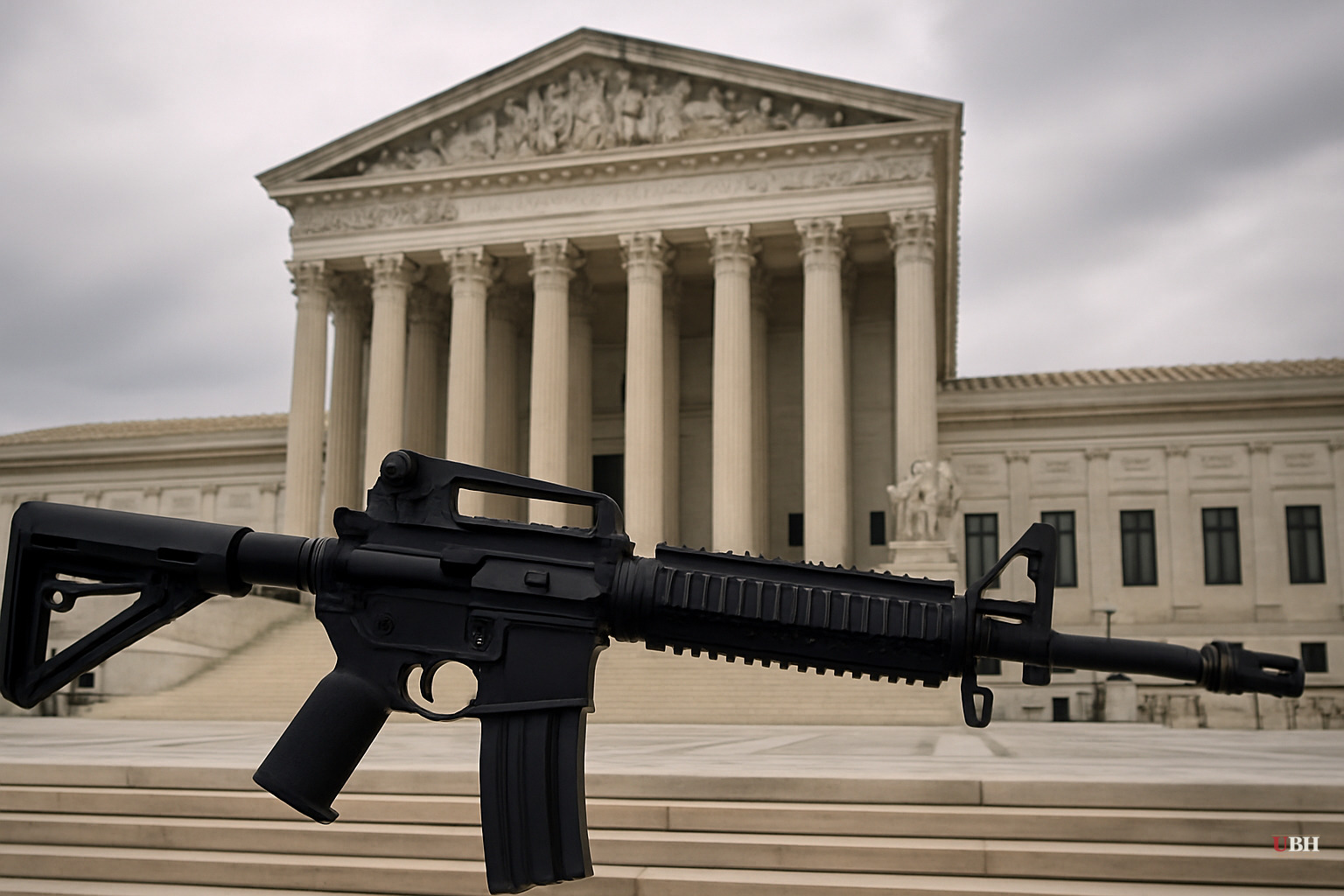
Supreme Court Agrees to Hear AR-15 Ban Cases, Setting Up Major Second Amendment Ruling
What the Court Agreed to Do
The Supreme Court on Tuesday, June 30, agreed to hear Viramontes v. Cook County and Grant v. Higgins, two cases asking whether the Second Amendment protects the right to own AR-15-style rifles and similar semi-automatic weapons. The court issued a brief order granting review, according to CBS News. Arguments will be heard in the term that begins in October.
The cases have been pending before the court for nearly a year. Both involve laws that make it a crime to possess, sell, or transfer assault weapons, including the AR-15.
The Legal Backdrop
The court's 2008 ruling in District of Columbia v. Heller established that weapons "in common use" for "lawful purposes" are constitutionally protected. Its 2022 ruling in New York State Rifle & Pistol Association v. Bruen added another layer: modern gun restrictions must be consistent with firearms regulations from early American history to pass constitutional muster.
That 2022 ruling set off years of lower-court litigation over exactly what counts as a historical analog. The results have been inconsistent.
The U.S. Court of Appeals for the 2nd Circuit upheld Connecticut's ban, finding that AR-style rifles are "dangerous and unusual" and "particularly suited for criminal violence," and that Connecticut's restrictions fall within a historical tradition of regulating such weapons, according to CBS News. The 7th Circuit took a different route to the same destination, upholding Cook County's ordinance by classifying assault weapons as more analogous to military weapons, which Heller explicitly excluded from Second Amendment protection, according to The Trace.
The History Behind the Bans
Connecticut first banned assault weapons in 1993, then significantly tightened the law after a gunman used an AR-15-style rifle and large-capacity magazines to kill 26 children and teachers at Sandy Hook Elementary School in Newtown in December 2012, according to CBS News. The state still permits residents to own a wide range of semi-automatic handguns, rifles, and shotguns.
Cook County's ordinance also dates to 1993. Illinois later passed a statewide ban following a mass shooting at a Fourth of July parade in Highland Park, according to The Trace. Fourteen states and the District of Columbia currently restrict access to semi-automatic weapons in some form.
A federal assault weapons ban passed by Congress in 1994 expired in 2004 and has not been renewed.
Why the Court Took It Now
The court had previously declined challenges to Maryland's assault weapons ban. In 2025, Justice Brett Kavanaugh wrote separately to note there was a "strong argument" that AR-15s are protected by the Second Amendment and signaled the court would take up the issue before long, according to The Trace. Tuesday's order is the follow-through.
Andrew Willinger, a Second Amendment expert and law professor at Georgia State University, told The Trace he believes the court is likely to strike the bans down, given the current composition of the bench and the trajectory of its recent Second Amendment decisions. Earlier this month, the court ruled that occasional marijuana users cannot be barred from owning firearms, and it struck down a Hawaii law that generally prohibited concealed carry permit holders from bringing guns onto private property open to the public, according to CBS News.
The Strongest Case for Keeping the Bans
Defenders of the Connecticut and Cook County laws make a straightforward argument: the Second Amendment does not require the government to allow civilians access to weapons originally designed for military battlefield use. The 2nd Circuit's "dangerous and unusual" framework, borrowed directly from Heller, was designed for exactly this scenario. Proponents also note that the bans leave a broad universe of firearms available for self-defense, which is the core right Heller identified. The Sandy Hook shooting specifically is cited as evidence of the asymmetric lethality of high-capacity semi-automatic rifles versus other legal weapons.
That argument has prevailed at the district and circuit court levels in both of these cases. The question is whether the current Supreme Court, which has consistently expanded Second Amendment protections since 2022, sees it the same way.
What's at Stake
If the court rules that assault weapons bans are unconstitutional, laws in approximately a dozen states would be in immediate legal jeopardy, according to The Trace. The court did not take a companion case that would have also addressed magazine-capacity restrictions, so those laws are not directly before the justices in this round.
The combined case is expected to be argued sometime after October, with a ruling possible by the end of the court's term next year. The unresolved question at the center of both cases is whether the historical "dangerous and unusual" carve-out from Heller applies to a weapon that gun-rights groups describe as owned by tens of millions of Americans — a number they cite as evidence of "common use."
Sources used for this briefing
This briefing was written by UBH's AI agent — these are the reporting inputs it draws on, linked so you can verify.


