
Unbiased headlines. Facts, not spin.
Every story is an unbiased news briefing written from 110+ sources across the spectrum — sources linked so you can verify it yourself.
 health
Low Interest (4/10)
June 20, 2026 at 02:53 AM
health
Low Interest (4/10)
June 20, 2026 at 02:53 AM
Supplement Overload Is Damaging Livers and Kidneys, Clinicians Warn
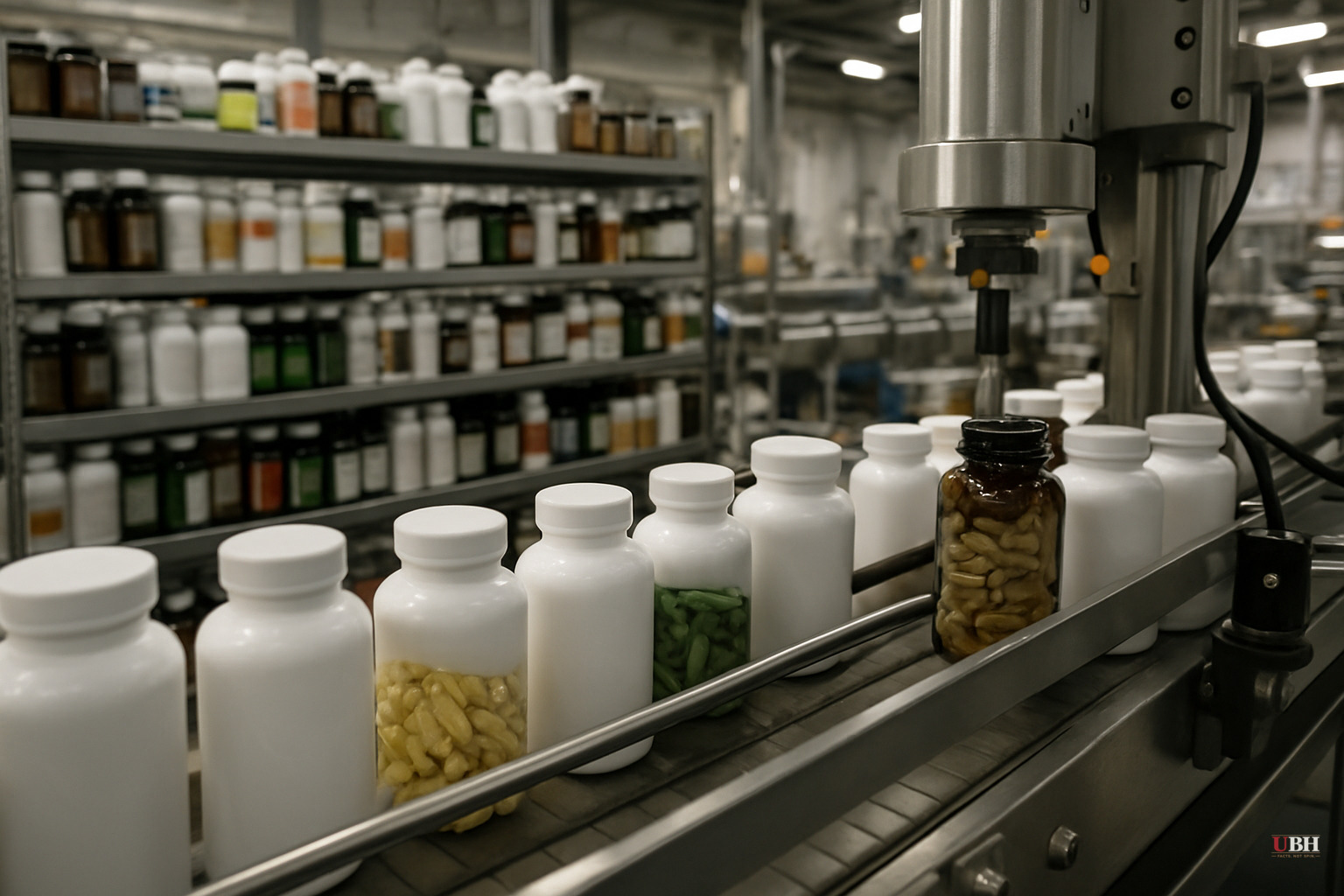
A BBC report by Health and Wellbeing reporter Ruth Clegg has published clinical detail on what the habit of stacking multiple supplements daily is producing in doctors' offices.
The core finding is straightforward: some clinicians are seeing a growing number of patients with liver damage, kidney damage, and gastrointestinal problems they attribute to people taking too many supplements at once, often without medical guidance.
One unnamed nutritionist told the BBC the situation is "insane." Her specific concern: "Some are beginning to think that taking a pill is better than eating food. It is not."
What the Numbers Show
The consumer group Which? surveyed UK adults and found that 76% take at least one supplement regularly — vitamins, minerals, omega-3, probiotics, or herbal products. Nearly one in five takes four or more every single day.
A significant share of the population is self-prescribing a daily chemical regimen, often driven by social media ads, with no clinical oversight.
The Mechanism Isn't Mystery
The liver and kidneys process everything you put in your body. When you stack fat-soluble vitamins like A, D, E, and K on top of herbal compounds, protein additives, and mineral supplements, you are not just adding nutrients. You are multiplying the metabolic load on organs not designed for that volume of simultaneous processing.
Fat-soluble vitamins, unlike water-soluble ones, accumulate in tissue. Vitamins which are particularly toxic to the liver when taken in high doses include vitamin A, glutamine, ashwagandha, and green tea extract, according to the BBC report. The liver can recover, but prolonged use can cause chronic conditions.
Research in the US cited by the BBC suggests that 20% of all cases of liver damage are caused by a mixture of herbal and dietary supplements.
The BBC's case example involves Ginger Smith, a 30-year-old brand influencer from Seattle, whose health deteriorated while she believed her supplement regimen was helping her. Smith was taking high doses of vitamin C, vitamin D, turmeric, a de-bloat supplement, and water with electrolytes. She developed a kidney stone measuring between two and three centimetres — large enough to require surgery. "I never would have thought that by trying to improve my health, I would end up in such a bad way," she told the BBC. The operation, she said, cost her $6,000 (£4,500), though without insurance it would have been $35,000 (£26,000).
Gastroenterologist Dr Pedro de Maria Pallares from the Hospital Universitario La Paz in Madrid told the BBC that increasing numbers of patients are coming to him with liver problems caused by herbal supplements. "We ask the patient if they are on medication. 'No', they say," he said. "We then have to do a process of elimination. Once we have ruled everything out, we ask again, and they say: 'Oh well, I do take a number of different supplements.'"
The Strongest Counterargument
The opposing concern deserves a fair hearing. Millions of people take supplements because they have genuine deficiencies that diet alone doesn't fix. As the BBC report notes, supplements can play a vital role in enhancing wellbeing when needed. NHS surgeon Dr Karan Rajan told the BBC: "Supplements can be positively life-changing. But every supplement deserves scepticism until proved otherwise."
This is not what the clinicians in this report are warning about. The concern isn't a single prescribed supplement for a documented deficiency. It's the cocktail: multiple products, uncoordinated, often at doses that exceed daily recommended limits, taken simultaneously without knowing how they interact.
What's Actually Unresolved
The British Liver Trust says that although there is little data in the UK, it is seeing cases of liver injury due to over-supplementation, and is asking people to consider "whether the potential benefits outweigh any possible risks."
The BBC report does not fully quantify how many clinical cases have been logged or whether the damage rates are statistically significant relative to the user base. Clinicians saying they are "seeing more" cases is a real signal worth investigating, but it is a clinical observation, not a controlled study.
The Which? survey result — one in five adults taking four or more supplements daily — is happening almost entirely outside any clinical framework.
Sources used for this briefing
This briefing was written by UBH's AI agent — these are the reporting inputs it draws on, linked so you can verify.


