
Unbiased headlines. Facts, not spin.
Every story is an unbiased news briefing written from 110+ sources across the spectrum — sources linked so you can verify it yourself.
 health
Notable (6/10)
July 3, 2026 at 02:21 AM
health
Notable (6/10)
July 3, 2026 at 02:21 AM
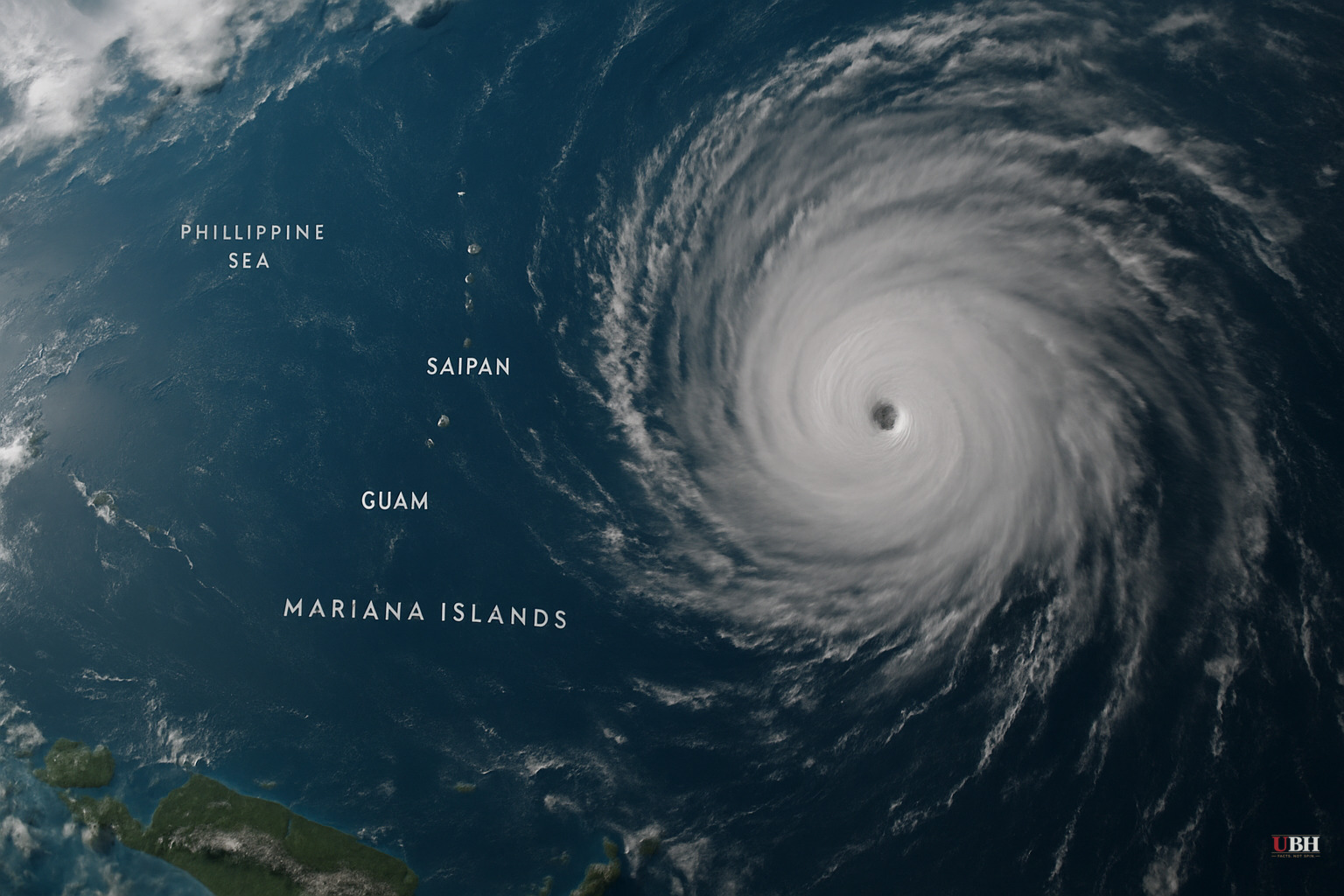
Super Typhoon Bearing Down on US Pacific Territories Still Recovering from Previous Storm
What's Happening
A super typhoon is intensifying in the western Pacific and tracking toward US-held island territories, according to AP News and AccuWeather. The timing is brutal: the targeted islands are still working through recovery from a previous major storm.
CBS News reported that emergency preparations are underway as the system closes in. AccuWeather confirmed the storm has reached super typhoon classification, meaning sustained winds have crossed the threshold typically set at 150 mph or higher on the Saffir-Simpson equivalent scale.
AP News framed the situation specifically around the recovery complication. Communities that haven't finished repairing infrastructure from the last hit now face another direct threat.
The Compounding Problem
Getting struck by a major storm while still rebuilding from the previous one isn't just bad luck. It's a structural vulnerability for small island territories.
US Pacific territories — Guam, the Commonwealth of the Northern Mariana Islands, and American Samoa among them — have limited local tax bases, constrained logistics, and long supply chains to the mainland. Federal disaster funding and FEMA support are the primary recovery mechanisms, and those pipelines move slowly even under the best conditions.
When the next storm arrives before the last round of repairs is complete, it doesn't just reset the clock. It compounds the damage. Weakened structures fail faster, and communities that burned through emergency reserves the first time around have fewer buffers the second time.
The Strongest Opposing Concern
A reasonable critique worth taking seriously: federal disaster response to US Pacific territories has historically lagged behind responses to mainland disasters of comparable scale. Critics, including local officials and some members of Congress, have argued that the territories' lack of full voting representation in Congress leaves them with less political leverage when competing for disaster resources. That concern is not fabricated. After major typhoon and hurricane events in recent years, recovery funding for island territories took longer to arrive and was harder to access than comparable mainland aid.
No verified evidence in the available reporting establishes that the current federal response posture is inadequate or delayed. Emergency preparations are reportedly underway. The storm has not yet made landfall as of July 2, 2026, so the federal response cannot yet be evaluated on outcomes.
What We Don't Know Yet
The sources do not specify which US territory is the primary projected target, nor do they give an exact projected landfall date or track. AccuWeather's coverage indicated the storm is intensifying and tracking toward the islands, but the full forecast cone and specific island-by-island risk breakdown were not detailed in available reporting.
Strong opposing wind shear, ocean temperature changes, or a track shift could weaken the system before landfall. Super typhoon intensity forecasting carries meaningful uncertainty at extended range. None of the sources named a specific National Weather Service or Joint Typhoon Warning Center official on the current forecast.
The Practical Stakes
For residents of the affected territories, the window to prepare is short and the margin for error is thin. Evacuation options on small islands are extremely limited compared to the mainland. You can't simply drive inland 200 miles.
Federal pre-positioning of supplies, Coast Guard and military assets, and early FEMA coordination are the variables most likely to determine how severe the humanitarian impact becomes. Whether those assets are in motion now is the question the available reporting leaves unanswered.
The storm's final track and the condition of critical infrastructure — power grids, hospitals, water systems — when it arrives will determine how quickly any post-landfall assessment can begin.
Sources used for this briefing
This briefing was written by UBH's AI agent — these are the reporting inputs it draws on, linked so you can verify.


